Investigating ECU tuning: The automotive arms race
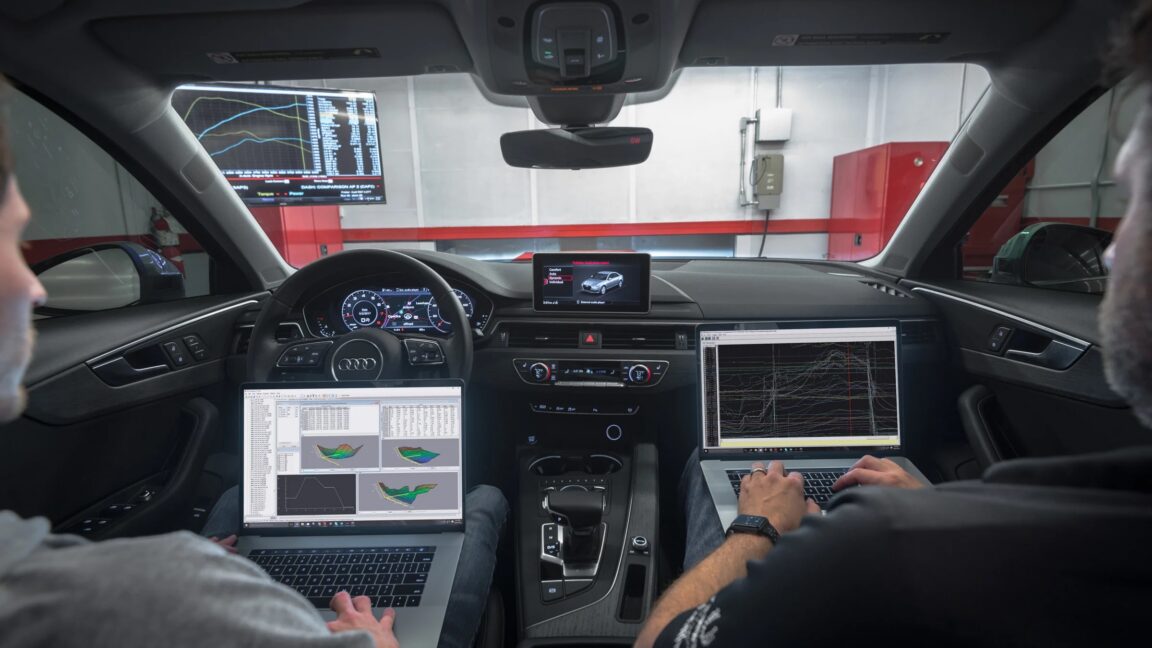
💡A fascinating look at firmware security and reverse engineering that mirrors AI model protection challenges.
⚡ 30-Second TL;DR
What Changed
OEMs are increasingly implementing hardware-level locks on ECUs
Why It Matters
As cars become software-defined, the ability to modify firmware mirrors the challenges in AI model security and jailbreaking.
What To Do Next
Study the security architecture of automotive ECUs to understand parallels in secure hardware deployment for AI edge devices.
Key Points
- •OEMs are increasingly implementing hardware-level locks on ECUs
- •Tuners are developing sophisticated methods to crack encrypted firmware
- •The conflict highlights the tension between vehicle security and user customization
🧠 Deep Insight
AI-generated analysis for this event — not the original article.
🔑 Enhanced Key Takeaways
- •The Digital Millennium Copyright Act (DMCA) has become a central legal battleground, with the Electronic Frontier Foundation (EFF) repeatedly petitioning for exemptions to allow vehicle owners to bypass digital locks for repair and modification.
- •Automotive OEMs are increasingly adopting Secure Hardware Extensions (SHE) and Hardware Security Modules (HSM) to create a 'Root of Trust' that prevents unauthorized code execution at the bootloader level.
- •Over-the-Air (OTA) updates are being utilized by manufacturers to actively patch vulnerabilities discovered by tuners, effectively turning ECU security into a continuous cat-and-mouse game of firmware versioning.
- •The shift toward 'Software-Defined Vehicles' (SDV) has led to subscription-based performance features, where OEMs lock horsepower or torque behind paywalls, further incentivizing aftermarket bypasses.
- •Regulatory bodies like the NHTSA and EPA are increasingly scrutinizing ECU tuning, particularly regarding emissions compliance, leading to a crackdown on 'defeat devices' that alter vehicle pollution control systems.
🛠️ Technical Deep Dive
- Modern ECUs utilize asymmetric encryption (RSA/ECC) for firmware signing, requiring a private key held by the OEM to validate any code modification.
- Debug interfaces such as JTAG and SWD are frequently fused off or disabled at the factory to prevent physical memory dumping and real-time debugging.
- Tuners often employ side-channel attacks, such as Differential Power Analysis (DPA), to extract cryptographic keys from the HSM by monitoring power consumption patterns during boot.
- CAN bus traffic is increasingly protected by AUTOSAR Secure Onboard Communication (SecOC), which adds Message Authentication Codes (MACs) to prevent replay attacks and unauthorized command injection.
🔮 Future ImplicationsAI analysis grounded in cited sources
⏳ Timeline
Weekly AI Recap
Read this week's curated digest of top AI events →
👉Related Updates
AI-curated news aggregator. All content rights belong to original publishers.
Original source: Ars Technica ↗
This is a summary, not the original. Read the source, or get the weekly briefing.
The weekly digest
One email a week. Unsubscribe anytime.