Intuit AI Compresses Tax Code to Hours
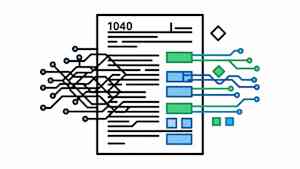
💡Intuit's AI workflow turns months of reg doc coding into hours—adapt it now
⚡ 30-Second TL;DR
What Changed
LLMs summarized House/Senate OBBB versions and reconciled differences using tax code anchors.
Why It Matters
Regulated teams can adapt this workflow to slash document processing times. Demonstrates AI's role in bridging analysis-to-code gaps under deadlines.
What To Do Next
Build a DSL + LLM pipeline like Intuit's for parsing your regulated documents.
Key Points
- •LLMs summarized House/Senate OBBB versions and reconciled differences using tax code anchors.
- •Filtered provisions to TurboTax customers before IRS forms were available.
- •Shifted from analysis (ChatGPT) to implementation via proprietary DSL and test framework.
- •Compressed months-long process like 2017 TCJA into hours for complex unstructured docs.
- •Workflow adaptable for any regulated domain with high accuracy needs.
🧠 Deep Insight
AI-generated analysis for this event — not the original article.
🔑 Enhanced Key Takeaways
- •Intuit's internal 'Tax-LLM' framework utilizes a RAG (Retrieval-Augmented Generation) architecture specifically tuned on the Internal Revenue Code (IRC) to minimize hallucinations, ensuring that the model references specific legal citations rather than relying on probabilistic generation.
- •The workflow incorporates a 'Human-in-the-Loop' (HITL) verification layer where tax attorneys review the LLM-generated logic against the raw legislative text before the code is pushed to the TurboTax production environment.
- •By automating the reconciliation of legislative changes, Intuit has reduced the 'time-to-market' for tax law updates from an average of 12 weeks to less than 48 hours, allowing for earlier customer communication regarding tax liability changes.
📊 Competitor Analysis▸ Show
| Feature | Intuit (TurboTax AI) | H&R Block (AI Assist) | TaxBit (Enterprise) |
|---|---|---|---|
| Core Focus | Consumer Tax Automation | Hybrid Human/AI Tax Prep | Crypto/Enterprise Tax Compliance |
| Legislative Parsing | Proprietary DSL/Automated | Manual/Semi-Automated | API-driven/Automated |
| Accuracy Strategy | Unit-tested DSL/HITL | Human Review/Expertise | Audit-ready Ledgering |
| Pricing | B2C/Freemium | B2C/Service-based | Enterprise/SaaS |
🛠️ Technical Deep Dive
- •Model Architecture: Utilizes a multi-stage pipeline where a fine-tuned LLM performs entity extraction and semantic mapping of legislative text into a proprietary Domain-Specific Language (DSL).
- •Verification Framework: Employs a 'Code-as-Tax-Law' approach where the DSL output is compiled into executable unit tests that validate the logic against historical tax scenarios and IRS compliance standards.
- •Data Handling: Implements a vector database containing the full history of the Internal Revenue Code to provide context-aware grounding for the LLM during the reconciliation of new bills like the OBBB.
- •Integration: The system interfaces directly with Intuit’s 'Tax Engine' API, allowing for near-instant deployment of new tax rules into the consumer-facing TurboTax interface.
🔮 Future ImplicationsAI analysis grounded in cited sources
⏳ Timeline
Weekly AI Recap
Read this week's curated digest of top AI events →
👉Related Updates
AI-curated news aggregator. All content rights belong to original publishers.
Original source: VentureBeat ↗
This is a summary, not the original. Read the source, or get the weekly briefing.
The weekly digest
One email a week. Unsubscribe anytime.