Intel Z990 Chipset to Feature PCIe 5.0 Focus
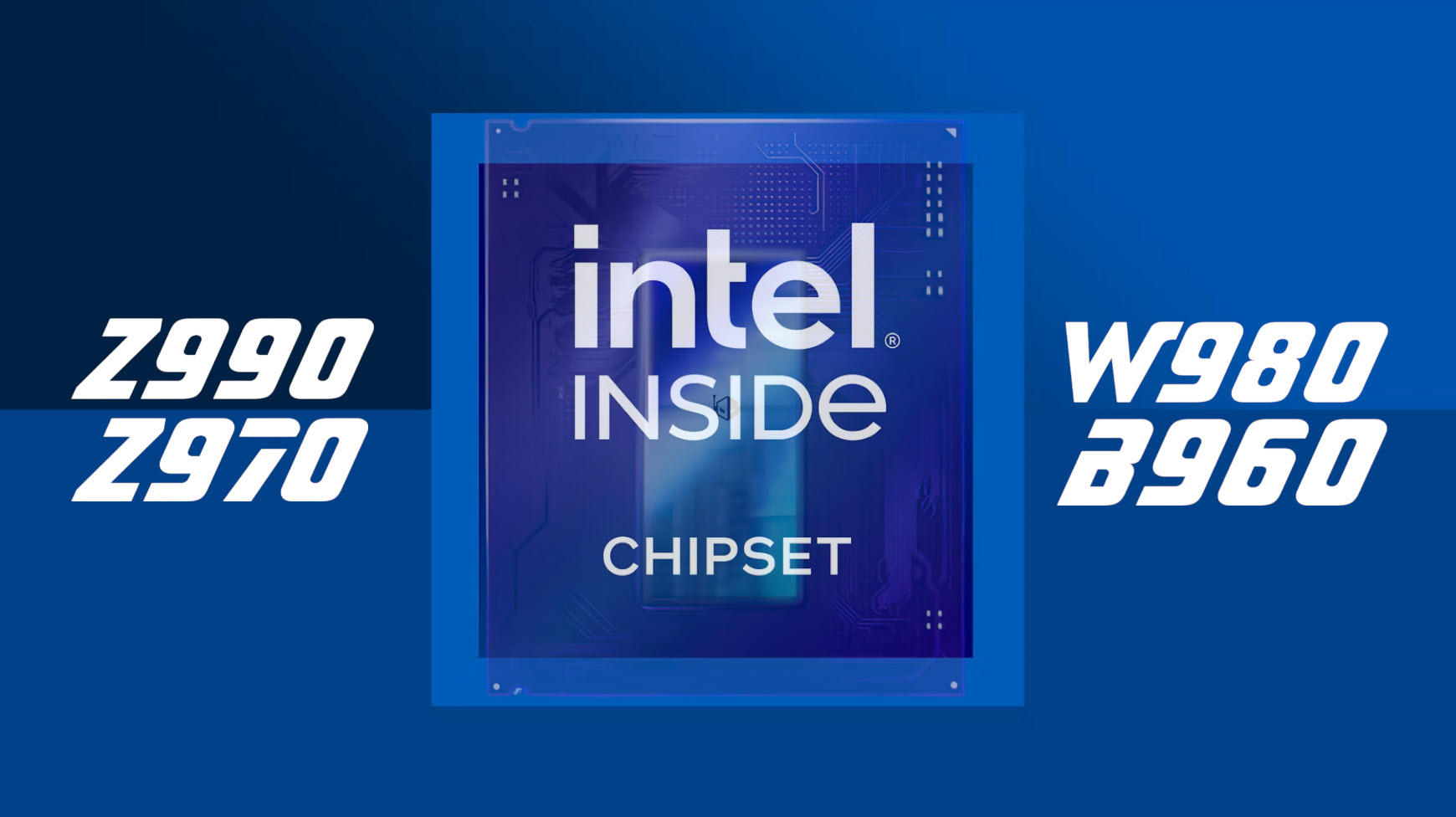
💡Upcoming Intel chipset specs reveal infrastructure shifts for future high-performance desktop AI workstations.
⚡ 30-Second TL;DR
What Changed
Supports next-gen LGA 1954 platform and Nova Lake-S CPUs
Why It Matters
The shift to PCIe 5.0 across mainstream platforms will significantly improve data throughput for AI accelerators and high-speed storage in local workstations.
What To Do Next
Plan future workstation hardware upgrades around PCIe 5.0 compatibility to ensure maximum throughput for local LLM inference and training tasks.
Key Points
- •Supports next-gen LGA 1954 platform and Nova Lake-S CPUs
- •Features a 22% reduction in chip area with up to 14W power consumption
- •Prioritizes expanded PCIe 5.0 lanes and I/O capabilities
🧠 Deep Insight
Background and context from public sources — not the original article. 24 sources cited.
🔑 Enhanced Key Takeaways
- •The LGA 1954 socket, designed for Nova Lake-S, is expected to support at least three generations of Intel CPUs, including Nova Lake (NVL), Razor Lake (RZL), and Hammer Lake (HML), indicating a shift towards longer platform longevity similar to AMD's approach.
- •The Z990 chipset will feature a DMI Gen 5 x4 link, doubling the bandwidth between the CPU and the chipset to an astonishing 128 Gbps, which is a significant upgrade from previous generations.
- •Nova Lake-S processors, compatible with the Z990 chipset, are rumored to feature significantly higher core counts, with flagship models potentially offering up to 52 cores (16 P-Cores + 32 E-Cores + 4 LP-E Cores) in a dual-compute tile design.
- •The Z990 platform will natively support DDR5-8000 memory in optimal 1-DIMM-per-channel (1 DPC) configurations, a substantial increase from the native DDR5-6400 of the previous generation.
- •Intel's 900-series chipsets, including Z990, will be among the first to support Thunderbolt 5.0, offering up to 80 Gbps symmetric or 120 Gbps asymmetric bandwidth directly from the CPU's integrated I/O logic.
📊 Competitor Analysis▸ Show
While direct pricing and benchmarks for the Z990 are not yet available, a comparison with current high-end platforms and anticipated future trends can be made:
| Feature | Intel Z990 (Projected) | AMD X670E (Current High-End) |
|---|---|---|
| CPU Support | Nova Lake-S (LGA 1954), future Razor Lake, Hammer Lake | Ryzen 7000 series (AM5), future Zen 5/6 |
| PCIe 5.0 Lanes | Up to 36 total (24 CPU + 12 Chipset) | Up to 28 total (24 CPU + 4 Chipset) |
| Chipset PCIe 5.0 | 12 dedicated PCIe 5.0 lanes | Limited, primarily from CPU |
| DMI Link | Gen 5 x4 (128 Gbps) | PCIe 4.0 x4 (64 Gbps) |
| Memory Support | Native DDR5-8000+ | Native DDR5-5200/6000+, OC to 8000+ |
| USB Support | Thunderbolt 5, USB 3 Gen2x2, USB 2.0 removed | USB4, USB 3.2 Gen2x2, Thunderbolt 4 |
| Socket Longevity | Expected 3+ generations (Nova Lake, Razor Lake, Hammer Lake) | Expected 2+ generations (AM5 supports Zen 4, 5, 6) |
| Power Delivery | Triple 8-pin connectors, robust VRM for 700W+ peak CPU power | Robust VRM solutions |
AMD's current X670E platform offers a strong PCIe 5.0 foundation, primarily from the CPU, and has been praised for its socket longevity. Intel's Z990 aims to surpass this with a significant increase in chipset-provided PCIe 5.0 lanes and a faster DMI link, along with native DDR5-8000 support and Thunderbolt 5.0 integration. The Nova Lake-S CPUs are also expected to bring a substantial increase in core counts, directly competing with AMD's high-core-count offerings.
🛠️ Technical Deep Dive
- The Z990 chipset package measures 25 x 24mm (600mm²), with a die size of 11.15 x 6.5mm (72.5mm²), representing an 8.8% smaller package and a 22% smaller die compared to the Z890 chipset.
- The base power consumption for the Z990 chipset is rated at 7.9W, increasing to a peak of 14W when all PCIe 5.0 lanes are fully utilized. This is a notable increase from the Z890's 6W base power and 10W peak.
- The DMI (Direct Media Interface) link between the CPU and the Z990 chipset is upgraded to Gen 5 x4, providing 128 Gbps of bandwidth, double that of previous generations.
- The Z990 chipset will offer 12 dedicated PCIe 5.0 lanes, separate from the CPU's 24 PCIe 5.0 lanes (typically 1x16 for GPU and 2x4 for NVMe storage). These 12 PCH-sourced lanes are primarily for storage, configured as 3x4 PCIe 5.0.
- USB 2.0 support is entirely removed from the 900-series chipsets, while USB 3 Gen2x2 configuration remains the same. The Z990 is also expected to support Thunderbolt 5.0.
- Nova Lake-S CPUs will utilize new 'Coyote Cove' P-Cores and 'Arctic Wolf' E-Cores, and some SKUs may feature a dual-compute tile design and an integrated 'bLLC' (Big Last Level Cache) to enhance performance.
- The LGA 1954 socket features a 2-lever ILM (independent loading mechanism) for improved CPU stability and mounting security, while maintaining the same physical dimensions (45 x 37.5mm) as LGA 1851, potentially allowing for cooler compatibility.
- Motherboards supporting Z990 are expected to feature triple 8-pin power connectors to accommodate the high power demands of Nova Lake-S CPUs, which could have peak power draws exceeding 700W under extreme loads.
🔮 Future ImplicationsAI analysis grounded in cited sources
⏳ Timeline
📎 Sources (24)
Factual claims are grounded in the sources below. Forward-looking analysis is AI-generated interpretation.
- overclock3d.net
- laurentschoice.com
- laurentschoice.com
- wccftech.com
- tweaktown.com
- digitalcitizen.life
- wccftech.com
- hardwarezone.com.sg
- youtube.com
- tomshardware.com
- hostzealot.com
- youtube.com
- techspot.com
- vgtimes.com
- tomshardware.com
- club386.com
- techpowerup.com
- kad8.com
- evetech.co.za
- techpowerup.com
- reddit.com
- guru3d.com
- wccftech.com
- club386.com
Weekly AI Recap
Read this week's curated digest of top AI events →
👉Related Updates
AI-curated news aggregator. All content rights belong to original publishers.
Original source: cnBeta (Full RSS) ↗
This is a summary, not the original. Read the source, or get the weekly briefing.
The weekly digest
One email a week. Unsubscribe anytime.