Intel-Google Xeon Deal Powers Next-Gen AI
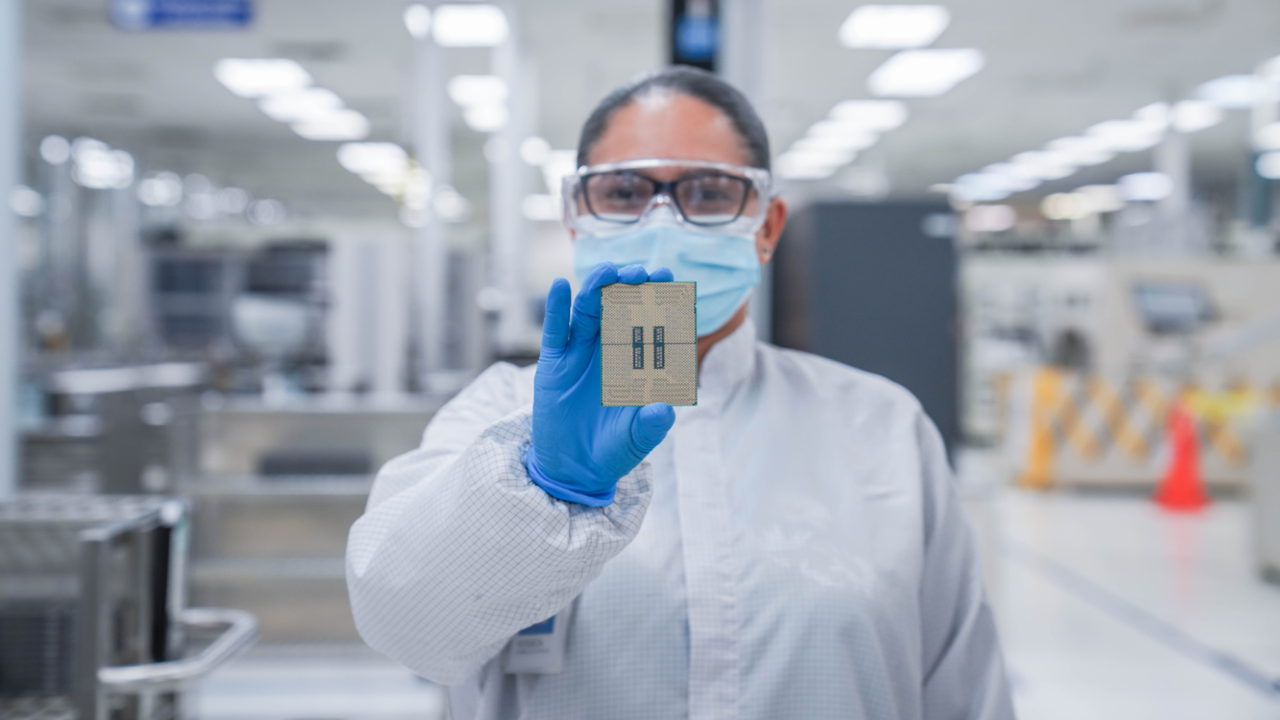
💡Intel-Google Xeon deal fights Arm in AI servers—key for data center scaling.
⚡ 30-Second TL;DR
What Changed
Intel-Google multiyear Xeon chip supply deal
Why It Matters
This deal bolsters Intel's AI hardware market share and aligns Google with x86 for data centers. It may influence AI practitioners' hardware choices by stabilizing Xeon supply amid Arm competition. Optimized Xeon-IPU combos could enhance AI training efficiency.
What To Do Next
Evaluate Intel Xeon with IPU configs for your next AI data center build via Google's cloud docs.
Key Points
- •Intel-Google multiyear Xeon chip supply deal
- •Co-developing Infrastructure Processing Units (IPUs)
- •Counters Arm's growing dominance in AI servers
- •Maintains x86 relevance for AI infrastructure
🧠 Deep Insight
AI-generated analysis for this event — not the original article.
🔑 Enhanced Key Takeaways
- •The collaboration focuses on integrating Intel's 'Mount Evans' IPU architecture with Google's custom-designed AI accelerators, specifically targeting the reduction of CPU overhead in data center networking and storage virtualization.
- •This deal represents a strategic pivot for Intel to leverage Google's hyperscale deployment expertise to refine its 'Xeon 6' (Sierra Forest/Granite Rapids) platform specifically for high-density AI inference workloads.
- •The partnership includes a joint commitment to open-source software optimization, specifically targeting the 'oneAPI' ecosystem to ensure Google's internal AI frameworks maintain parity with x86-optimized libraries.
📊 Competitor Analysis▸ Show
| Feature | Intel/Google (Xeon + IPU) | AWS (Graviton + Nitro) | NVIDIA (Grace + BlueField) |
|---|---|---|---|
| Architecture | x86-64 | Arm Neoverse | Arm Neoverse |
| Primary Focus | Legacy Compatibility | Cost/Performance Efficiency | AI/GPU Interconnect |
| Networking | Custom IPU | Nitro System | DPU/BlueField |
| Ecosystem | oneAPI / Open Source | AWS Proprietary | CUDA / NVLink |
🛠️ Technical Deep Dive
- •Integration of Intel's Mount Evans IPU, which offloads infrastructure tasks (NVMe storage, networking, and security) from the host Xeon CPU, freeing up cycles for AI model processing.
- •Utilization of Xeon 6 processors featuring E-cores for high-density cloud-native workloads and P-cores for performance-critical AI inference tasks.
- •Implementation of CXL (Compute Express Link) 2.0/3.0 protocols to enable memory pooling and low-latency communication between the Xeon host and Google's custom AI accelerators.
- •Optimization of the software stack to support Google's proprietary AI frameworks, ensuring seamless integration with Intel's oneAPI Deep Neural Network Library (oneDNN).
🔮 Future ImplicationsAI analysis grounded in cited sources
⏳ Timeline
Weekly AI Recap
Read this week's curated digest of top AI events →
👉Related Updates
AI-curated news aggregator. All content rights belong to original publishers.
Original source: TechRadar AI ↗
This is a summary, not the original. Read the source, or get the weekly briefing.
The weekly digest
One email a week. Unsubscribe anytime.