Industrial Giants Shift from Scale to Specialization
💡Understand why 'bigger is not better' in the AI era and how to structure your company for maximum agility.
⚡ 30-Second TL;DR
What Changed
Conglomerates often suffer from 'group discount' where market valuation is suppressed due to mixed business cycles.
Why It Matters
For AI-driven industrial firms, this trend highlights the need to avoid 'bloated' organizational structures that hinder the speed of AI integration and innovation.
What To Do Next
Evaluate your company's product portfolio; if AI-driven R&D is being slowed by legacy business units, consider a modular or independent business unit structure.
Key Points
- •Conglomerates often suffer from 'group discount' where market valuation is suppressed due to mixed business cycles.
- •AI and software-driven manufacturing require rapid iteration, which is often stifled by the bureaucratic layers of massive, diversified groups.
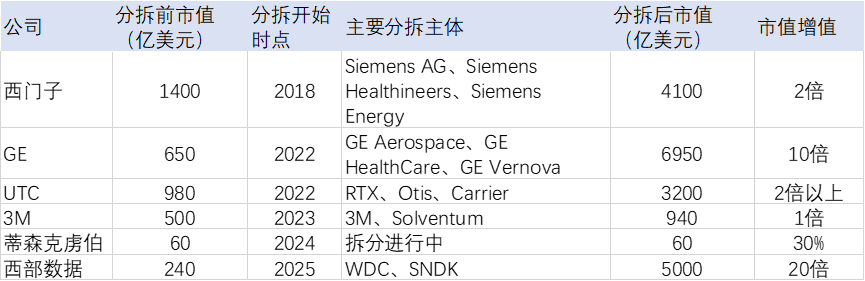
- •Successful spin-offs like Siemens Medical and GE Vernova demonstrate that focused entities can better capture market growth and capital efficiency.
🧠 Deep Insight
AI-generated analysis for this event — not the original article.
🔑 Enhanced Key Takeaways
- •The 'conglomerate discount' is increasingly driven by ESG (Environmental, Social, and Governance) mandates, as investors demand clearer carbon footprint reporting that is difficult to aggregate across diverse industrial sectors.
- •Capital allocation efficiency has shifted toward 'pure-play' strategies, allowing specialized firms to access sector-specific credit ratings and lower cost of capital compared to diversified groups.
- •Digital transformation initiatives in industrial sectors are now prioritizing 'edge-to-cloud' architectures, which require specialized software stacks that are often incompatible with legacy conglomerate IT infrastructures.
- •Activist investor pressure has become a primary catalyst for these breakups, with firms like Trian Partners and Elliott Investment Management specifically targeting industrial conglomerates to force divestitures.
- •Supply chain resilience strategies post-2023 have favored decentralized, regionalized manufacturing hubs, making the centralized management models of traditional conglomerates operationally obsolete.
🔮 Future ImplicationsAI analysis grounded in cited sources
⏳ Timeline
Weekly AI Recap
Read this week's curated digest of top AI events →
👉Related Updates


AI-curated news aggregator. All content rights belong to original publishers.
Original source: 虎嗅 ↗
This is a summary, not the original. Read the source, or get the weekly briefing.
Weekly AI briefing
One email a week. Unsubscribe anytime.