Huawei Returns, Xiaomi Retreats in AI Compute Shift
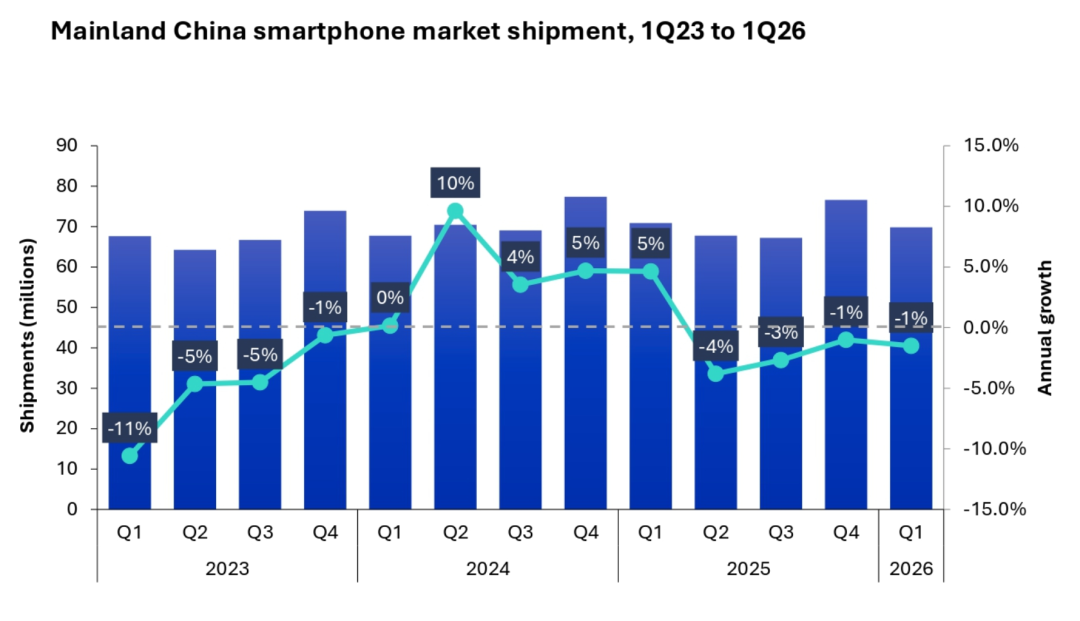
AI compute grabs chip capacity, reshaping phone giants' strategies—vital for infra planning.
30-Second TL;DR
What Changed
Huawei resurgence in Chinese phone market
Why It Matters
AI infrastructure boom pressures consumer hardware, forcing strategic pivots. Practitioners should monitor supply chain shifts for AI accelerators.
What To Do Next
Assess Huawei's AI chip roadmap for 2026 compute procurement alternatives.
Key Points
- •Huawei resurgence in Chinese phone market
- •Xiaomi strategic retreat amid AI compute surge
- •Semiconductor capacity redirected to AI by 2026
- •Market shift from volume to pricing competition
Deep Insight
AI-generated analysis for this event — not the original article.
Enhanced Key Takeaways
- •Huawei's resurgence is driven by the successful mass-production of 5nm-class domestic SoCs, bypassing previous US export restrictions that crippled their high-end smartphone output.
- •Xiaomi's strategic pivot is a direct response to the 'AI-Compute-First' policy mandated by major Chinese foundries, which prioritize high-margin GPU/NPU wafer allocations over consumer mobile chipsets.
- •The shift from volume to pricing power is being facilitated by the integration of on-device Large Language Models (LLMs), allowing manufacturers to justify premium pricing through proprietary AI features rather than hardware specifications alone.
Competitor Analysis
- Huawei (Mate/P Series)
- Ascend-integrated NPU
- Xiaomi (Digital Series)
- Cloud-Edge Hybrid
- Apple (iPhone)
- Neural Engine (A-series)
- Huawei (Mate/P Series)
- Premium/Luxury
- Xiaomi (Digital Series)
- Value-to-Performance
- Apple (iPhone)
- Premium/Fixed
- Huawei (Mate/P Series)
- High (Strategic/Gov)
- Xiaomi (Digital Series)
- Low (Commercial)
- Apple (iPhone)
- High (Global)
| Feature | Huawei (Mate/P Series) | Xiaomi (Digital Series) | Apple (iPhone) |
|---|---|---|---|
| AI Architecture | Ascend-integrated NPU | Cloud-Edge Hybrid | Neural Engine (A-series) |
| Pricing Strategy | Premium/Luxury | Value-to-Performance | Premium/Fixed |
| Foundry Priority | High (Strategic/Gov) | Low (Commercial) | High (Global) |
Technical Deep Dive
- •Huawei's 2026 flagship architecture utilizes a multi-die 'Chiplet' design to improve yield rates on domestic 5nm-class nodes.
- •The transition to 'AI-Compute-First' involves a shift toward heterogeneous computing, where the NPU (Neural Processing Unit) now occupies over 40% of the total SoC die area.
- •Xiaomi's retreat involves moving away from high-end mobile SoC procurement to focus on 'AI-Agent' software ecosystems that run on existing, lower-cost hardware.
Future ImplicationsAI analysis grounded in cited sources
Timeline
- 2023-08Huawei releases Mate 60 Pro, signaling a breakthrough in domestic 7nm chip production.
- 2024-02Xiaomi announces 'Human x Car x Home' ecosystem, shifting focus toward integrated AI services.
- 2025-06Chinese foundries officially prioritize AI-compute wafer allocations over consumer electronics.
- 2026-01Huawei reports record-high domestic semiconductor yield rates for 5nm-class chips.
Weekly AI Recap
Read this week's curated digest of top AI events →
AI-curated news aggregator. All content rights belong to original publishers.
Original source: 钛媒体 ↗
This is a summary, not the original. Read the source, or get the weekly briefing.
The weekly digest
One email a week. Unsubscribe anytime.