๐ฐ้ๅชไฝโขFreshcollected in 35m
Huang on Nvidia Moat, TPU Threat, Ecosystem
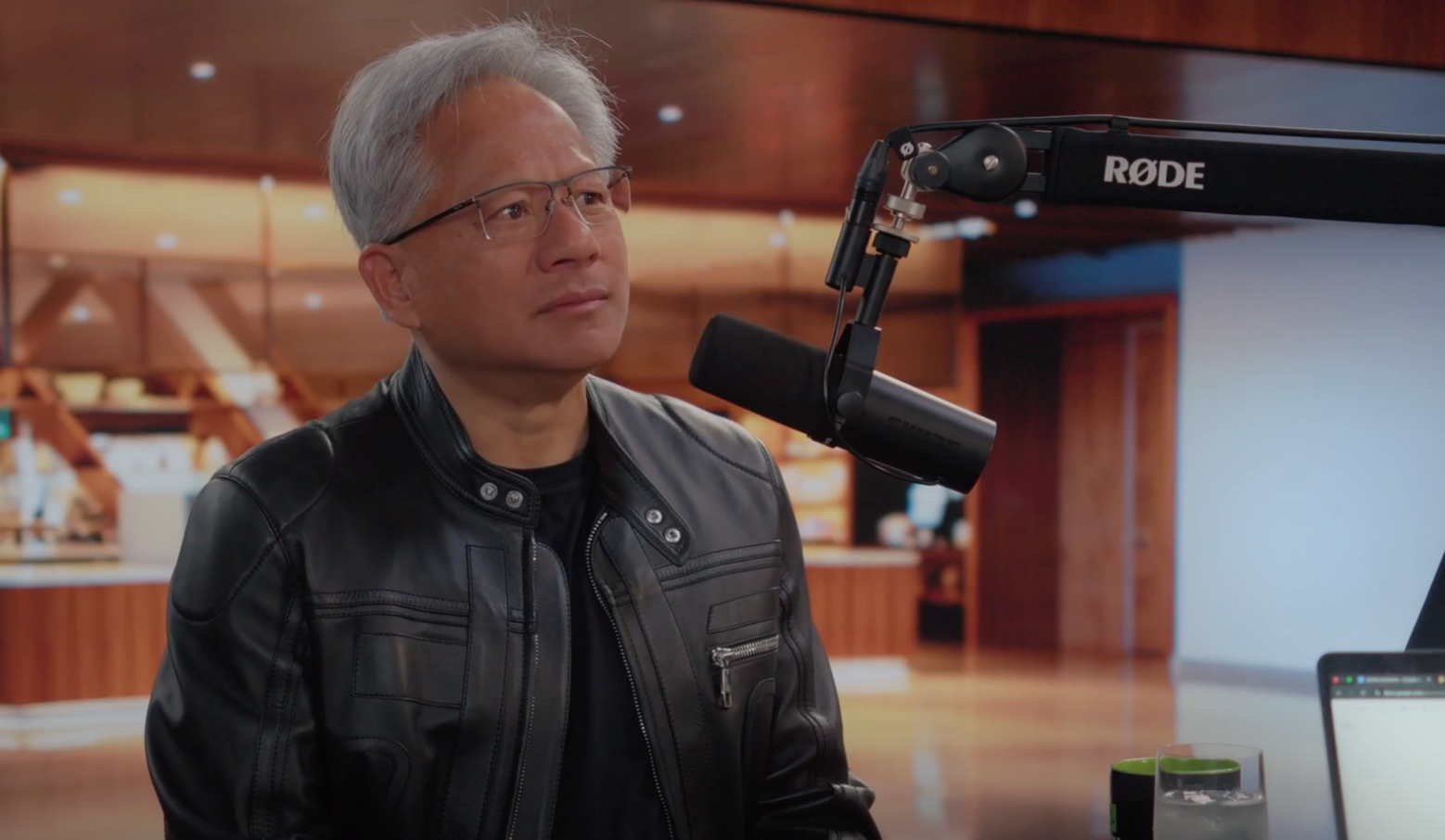
๐กJensen Huang exposes Nvidia edge over TPU โ vital for AI chip ecosystem picks.
โก 30-Second TL;DR
What Changed
Jensen Huang details Nvidia's competitive moat
Why It Matters
Affirms Nvidia's AI leadership via software ecosystem, signals intensifying chip wars; devs should deepen Nvidia integration to stay ahead.
What To Do Next
Audit your stack for CUDA compatibility to leverage Nvidia's moat against TPU alternatives.
Who should care:Founders & Product Leaders
๐ง Deep Insight
AI-generated analysis for this event.
๐ Enhanced Key Takeaways
- โขNvidia's moat is increasingly defined by the 'CUDA-to-Omniverse' software stack, which creates high switching costs by integrating hardware acceleration with simulation and digital twin capabilities.
- โขThe threat from Google's TPU is characterized by its vertical integration within Google Cloud, allowing for optimized performance-per-watt specifically for Transformer-based workloads, challenging Nvidia's general-purpose GPU dominance.
- โขHuang's strategy shifts from selling individual chips to providing 'AI Factories'โintegrated data center solutions that bundle networking (InfiniBand/Spectrum-X), compute, and software, effectively commoditizing the hardware layer.
๐ Competitor Analysisโธ Show
| Feature | Nvidia (Blackwell/Hopper) | Google TPU (v5p/v6) | AMD (Instinct MI300X) |
|---|---|---|---|
| Primary Architecture | General Purpose GPU (CUDA) | ASIC (Tensor-optimized) | GPU (ROCm/CDNA) |
| Ecosystem | Proprietary/Mature (CUDA) | Closed/Cloud-Native | Open Source (ROCm) |
| Interconnect | NVLink/InfiniBand | Custom TPU Interconnect | Infinity Fabric |
| Market Focus | Broad AI/HPC/Graphics | Internal/Cloud AI Training | High-Memory Inference/Training |
๐ ๏ธ Technical Deep Dive
- Nvidia's moat relies on the NVLink Switch System, which allows for massive multi-GPU scaling that bypasses traditional PCIe bottlenecks.
- Google TPU v5p utilizes a custom liquid-cooled architecture and a high-bandwidth 3D torus network topology to minimize latency in large-scale model training.
- The 'Ecosystem' strategy leverages the TensorRT-LLM library, which provides kernel-level optimizations that are often unavailable or less mature on non-Nvidia hardware.
๐ฎ Future ImplicationsAI analysis grounded in cited sources
Nvidia will transition to a software-defined revenue model.
The increasing complexity of AI orchestration requires Nvidia to monetize its software stack (AI Enterprise) to maintain margins as hardware becomes more commoditized.
Cloud providers will accelerate internal ASIC development.
To reduce dependency on Nvidia's supply chain and pricing power, hyperscalers are prioritizing custom silicon like TPUs to optimize their specific infrastructure costs.
โณ Timeline
2006-11
Nvidia launches CUDA, establishing the foundation for its software-hardware ecosystem.
2016-05
Google announces the first generation of its Tensor Processing Unit (TPU) at Google I/O.
2020-04
Nvidia acquires Mellanox, securing critical networking technology for data center scale.
2023-03
Nvidia announces the 'AI Foundations' service, signaling a shift toward full-stack AI platform provider.
2024-03
Nvidia unveils the Blackwell architecture, emphasizing massive scale and energy efficiency for generative AI.
๐ฐ
Weekly AI Recap
Read this week's curated digest of top AI events โ
๐Related Updates
AI-curated news aggregator. All content rights belong to original publishers.
Original source: ้ๅชไฝ โ