Hotel Robots Near Profitability
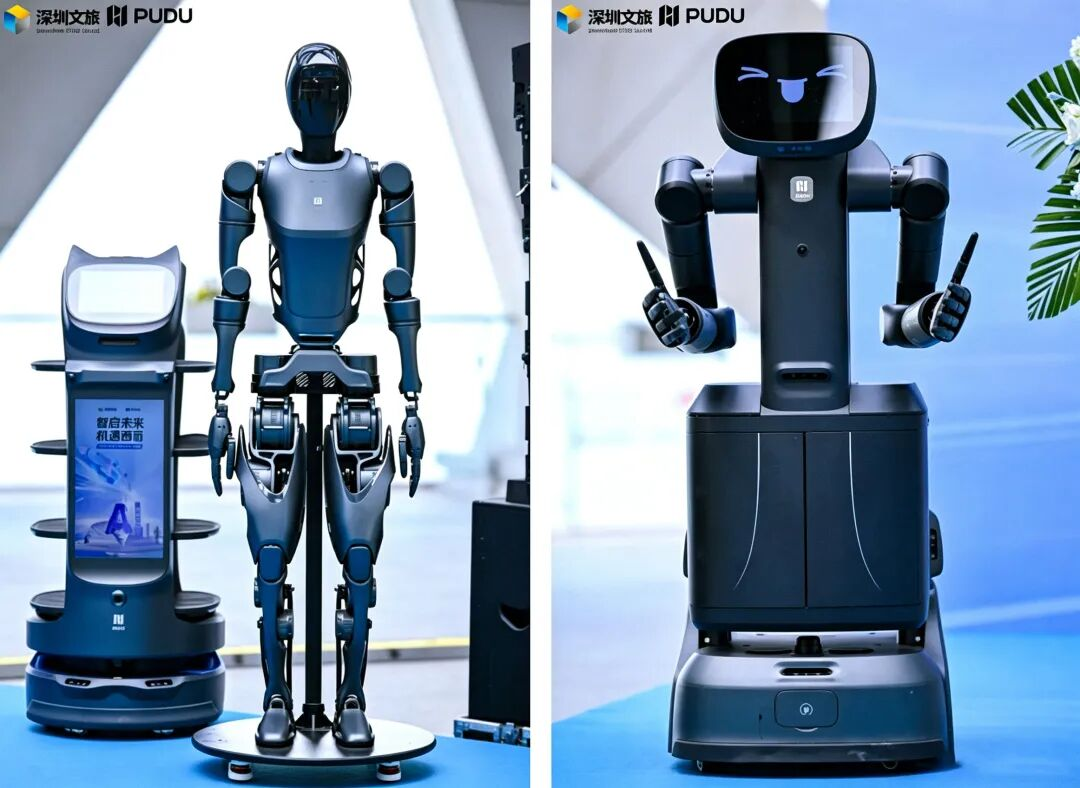
💡Hotel robots are nearing profitability, but integration costs and service design—not hardware alone—decide who wins.
⚡ 30-Second TL;DR
What Changed
Pudu announced more than 1,000 robots deployed through its partnership with Atour and reported leading global shipment and revenue metrics.
Why It Matters
The market is shifting from hardware sales toward integrated robotics services, where deployment reliability, system integration, and lifecycle support determine profitability. For enterprise AI builders, the strongest opportunities may be in constrained, repeatable workflows and back-of-house automation rather than fully replacing guest-facing staff.
What To Do Next
Prototype a back-of-house robot workflow with PMS integration and measure task completion, elevator failures, human interventions, maintenance hours, and five-year total cost of ownership.
Key Points
- •Pudu announced more than 1,000 robots deployed through its partnership with Atour and reported leading global shipment and revenue metrics.
- •Pudu said 2025 revenue grew more than 100% year over year, with EBITDA nearing positive territory; Keenon reported profitability in mature application areas.
- •Average hotel-robot prices reportedly fell from 136,000 yuan in 2016 to 13,100 yuan in 2024, intensifying price competition.
- •Robots require costly elevator integration, PMS connectivity, software and algorithm R&D, local sales, maintenance, and support.
- •Singapore’s Marina Bay Sands uses 12 large autonomous mobile robots for 300-kilogram back-of-house loads and reportedly reduced labor dependence by 30%.
🧠 Deep Insight
AI-generated analysis for this event.
🔑 Enhanced Key Takeaways
- •The surge in hotel robot adoption is being driven by the 'labor shortage' crisis in the hospitality sector, where turnover rates for housekeeping and front-desk staff have reached record highs in post-pandemic China.
- •Beyond simple delivery, new-generation hotel robots are increasingly equipped with 'multi-modal' interaction capabilities, including voice-activated AI agents that can handle check-in/check-out queries in multiple languages.
- •Government subsidies in various Chinese provinces for 'smart manufacturing' and 'digital transformation' have significantly lowered the barrier to entry for hotel chains, effectively subsidizing the initial capital expenditure for robot fleets.
- •Technical standardization efforts are underway, with industry bodies working on unified protocols for elevator and Property Management System (PMS) integration to reduce the high customization costs currently plaguing deployments.
- •The shift toward 'Robot-as-a-Service' (RaaS) business models has allowed hotels to shift robot costs from CapEx to OpEx, enabling smaller budget properties to trial robots without massive upfront investment.
📊 Competitor Analysis▸ Show
| Feature | Pudu Robotics | Keenon Robotics | OrionStar |
|---|---|---|---|
| Primary Focus | Delivery & Cleaning | Delivery & Service | AI Interaction & Service |
| Pricing Strategy | Aggressive/Volume-based | Premium/Reliability-focused | High-end/AI-integrated |
| Key Benchmark | Global shipment volume | High-traffic stability | Human-robot interaction (HRI) |
🛠️ Technical Deep Dive
- Navigation Systems: Utilization of SLAM (Simultaneous Localization and Mapping) combined with LiDAR and depth cameras for obstacle avoidance in dynamic, crowded hotel environments.
- Connectivity: Integration with hotel PMS via API gateways to enable autonomous elevator control and room-access authentication.
- Fleet Management: Cloud-based dispatch systems that manage traffic flow, battery charging cycles, and multi-robot coordination to prevent congestion in narrow corridors.
- Hardware Architecture: Modular designs allowing for interchangeable cargo compartments (e.g., laundry bins vs. food trays) and specialized suspension systems for transporting fragile items.
🔮 Future ImplicationsAI analysis grounded in cited sources
⏳ Timeline
Weekly AI Recap
Read this week's curated digest of top AI events →
👉Related Updates
AI-curated news aggregator. All content rights belong to original publishers.
Original source: 虎嗅 ↗