Hesai pivots to Physical AI with SGI technology
💡Learn how lidar hardware is evolving into a critical component for the Physical AI and robotics stack.
⚡ 30-Second TL;DR
What Changed
Hesai is pivoting its core strategy to focus on Physical AI.
Why It Matters
This shift suggests that lidar manufacturers are increasingly positioning themselves as essential infrastructure for robotics and autonomous agents.
What To Do Next
Monitor Hesai's developer documentation for new SGI-related APIs that could enhance spatial awareness in your robotics projects.
Key Points
- •Hesai is pivoting its core strategy to focus on Physical AI.
- •The SGI technology is central to their new roadmap.
- •This indicates a move from pure hardware to AI-integrated sensing solutions.
🧠 Deep Insight
Web-grounded analysis with 21 cited sources.
🔑 Enhanced Key Takeaways
- •Hesai's strategic pivot involves a shift from 'Spatial Perception' to 'Spatial Intelligence,' aiming to build foundational infrastructure for the Physical AI frontier.
- •The Strategic Growth Initiatives (SGI) segment introduces 'Kosmo,' a spatial intelligence device that integrates lidar, multi-sensor inputs, and AI algorithms to capture and reconstruct high-fidelity 3D environments, with an aim to generate recurring revenue streams.
- •Hesai has developed 'Picasso,' the world's first 6D full-color SPAD-SoC (Single-Photon Avalanche Diode System-on-Chip), which natively fuses RGB color data from a camera with XYZ depth data from lidar at the chip level to create colorized 3D point clouds.
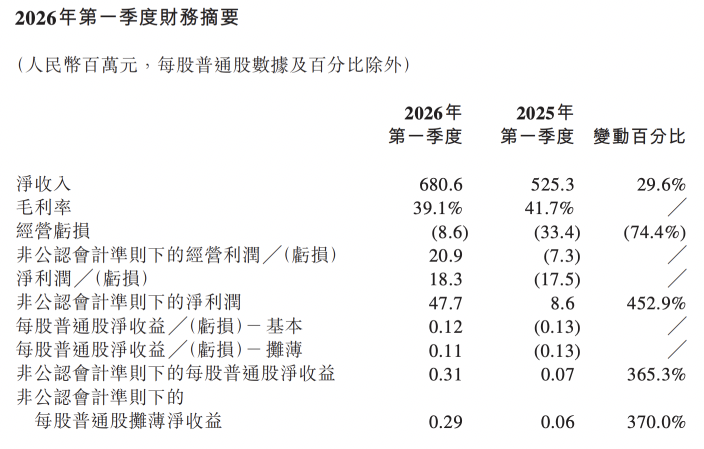
- •The company has restructured its financial reporting into two segments: the profitable 'Lidar Business' and the 'Strategic Growth Initiatives' (SGI), with SGI projected to contribute RMB 100 million in net revenues in 2026 and potentially RMB 500 million by 2027.
- •Hesai has secured a strategic partnership with Mercedes-Benz to supply lidar for L3 autonomous driving programs in Europe and China, and its technology was featured in 56 vehicle models from 24 brands at the recent Beijing Auto Show.
🛠️ Technical Deep Dive
- Physical AI Definition: Physical AI refers to AI systems that perceive, understand, and interact with the physical world by directly processing data from various sensors (e.g., cameras, microphones, temperature sensors, radar, lidar) and actuators, bridging the gap between digital intelligence and physical action.
- SGI's Kosmo Platform: This spatial intelligence device combines Hesai's custom lidar, multi-sensor inputs, and proprietary 3DGS (3D Generation System) and AIGC (AI Generated Content) algorithms. Its purpose is to seamlessly capture and reconstruct high-fidelity 3D environments, addressing the critical need for high-quality, low-cost real-world 3D data for training Physical AI systems.
- Picasso Chip: Described as the world's first 6D full-color ultra-sensitive lidar SPAD-SoC, Picasso integrates RGB color information with precise XYZ spatial data directly at the chip level. This native fusion enables the direct generation of colorized 3D point clouds, significantly enhancing the data available for AI systems and boasting over 40% photon detection efficiency (PDE).
- ETX Lidar Series: Built upon the Picasso chip, the high-end ETX lidar series is designed to support up to 4320 channels and is slated for mass production in the second half of 2026.
- Full-Stack Proprietary Capabilities: Hesai develops all seven core lidar components in-house, including the laser transmitter, receiver, driver, TIA, ADC, digital signal processor, and controller. The company has also achieved AEC-Q automotive-grade certification for 21 of its in-house designs.
🔮 Future ImplicationsAI analysis grounded in cited sources
⏳ Timeline
📎 Sources (21)
Factual claims are grounded in the sources below. Forward-looking analysis is AI-generated interpretation.
Weekly AI Recap
Read this week's curated digest of top AI events →
👉Related Updates

AI-curated news aggregator. All content rights belong to original publishers.
Original source: 钛媒体 ↗