Hesai Lidar Gains Ground in China’s Smart-Car Push
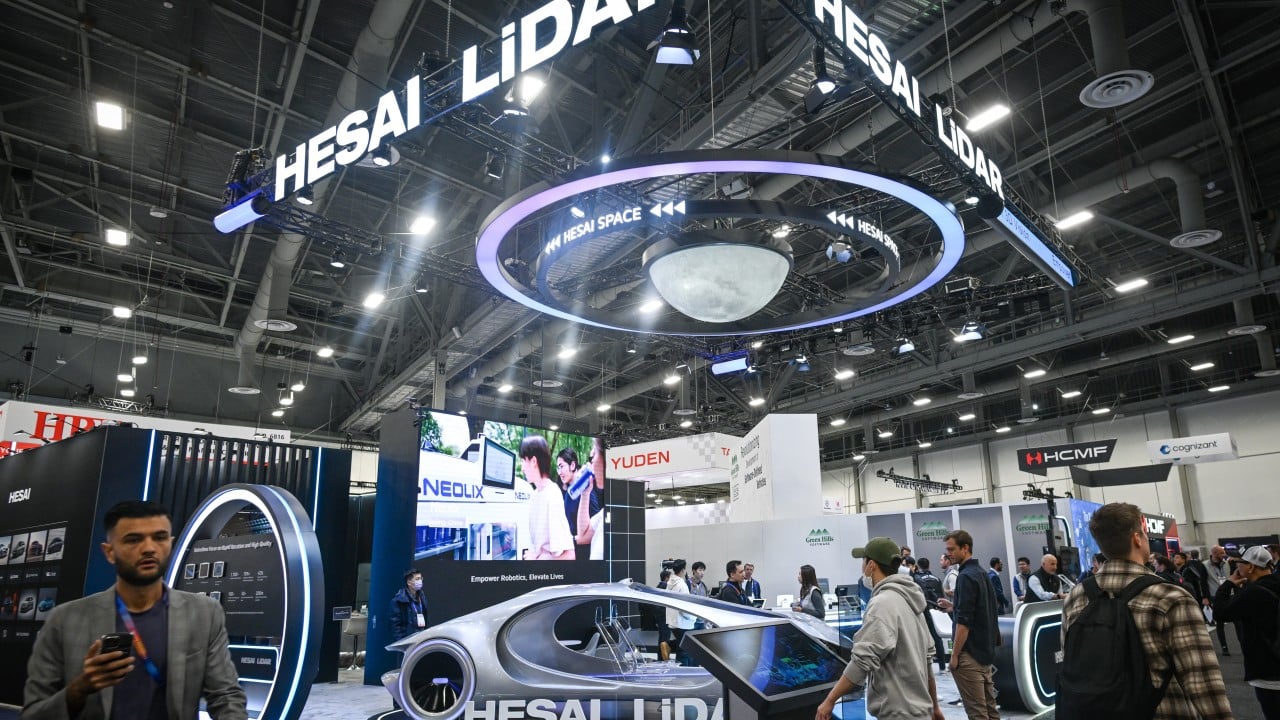
💡Lidar adoption is rising in Chinese smart cars, signaling more demand for perception and sensor-fusion AI.
⚡ 30-Second TL;DR
What Changed
Hesai reports higher lidar orders year over year.
Why It Matters
Greater lidar adoption could expand the hardware base available for autonomous-driving and advanced driver-assistance systems. For AI companies, this may increase demand for perception models, sensor-fusion software, and automotive edge-computing infrastructure.
What To Do Next
Benchmark Hesai lidar data in your perception stack, focusing on sensor-fusion latency and detection performance in urban-driving scenarios.
Key Points
- •Hesai reports higher lidar orders year over year.
- •A growing share of new Chinese vehicle models now includes lidar sensors.
- •Automakers’ push toward more intelligent vehicles may support component suppliers despite a sluggish market.
🧠 Deep Insight
AI-generated analysis for this event.
🔑 Enhanced Key Takeaways
- •Hesai has successfully navigated US regulatory challenges, including its removal from the Department of Defense's 'Chinese Military Companies' list in mid-2026 following legal challenges.
- •The company has shifted its manufacturing strategy toward 'Hesai 2.0,' focusing on highly automated, AI-driven production lines to reduce unit costs and improve sensor yield.
- •Hesai's AT128 lidar model has become a standard integration for several major Chinese EV OEMs, specifically targeting Level 2+ and Level 3 autonomous driving systems.
- •Despite geopolitical headwinds, Hesai continues to maintain a significant global market share in the automotive lidar sector, often cited as the world's largest lidar supplier by shipment volume.
- •The company is increasingly diversifying its revenue streams by expanding into robotics and industrial automation applications beyond the passenger vehicle market.
📊 Competitor Analysis▸ Show
| Feature | Hesai (AT128) | RoboSense (M1) | Innovusion (Falcon) |
|---|---|---|---|
| Technology | Hybrid Solid-State | MEMS | Fiber Laser |
| Range (10% reflectivity) | ~200m | ~150m | ~250m |
| Primary Market | Global/China | China/Global | China/Global |
| Cost Strategy | High-volume automation | Competitive pricing | Performance-focused |
🛠️ Technical Deep Dive
- AT128 Architecture: Utilizes a hybrid solid-state design with 128 independent laser channels to achieve a high point cloud density of 1.53 million points per second.
- Detection Range: Capable of detecting objects at distances up to 200 meters with 10 percent reflectivity, critical for high-speed highway autonomous driving.
- Field of View: Features a 120-degree horizontal and 25.4-degree vertical field of view, providing comprehensive coverage for urban and highway environments.
- Chipset Integration: Employs proprietary ASIC (Application-Specific Integrated Circuit) technology to integrate laser drivers and signal processing, significantly reducing the physical footprint and power consumption of the sensor.
🔮 Future ImplicationsAI analysis grounded in cited sources
⏳ Timeline
Weekly AI Recap
Read this week's curated digest of top AI events →
👉Related Updates

AI-curated news aggregator. All content rights belong to original publishers.
Original source: SCMP Technology ↗