SourcePandaily•Stalecollected in 2h
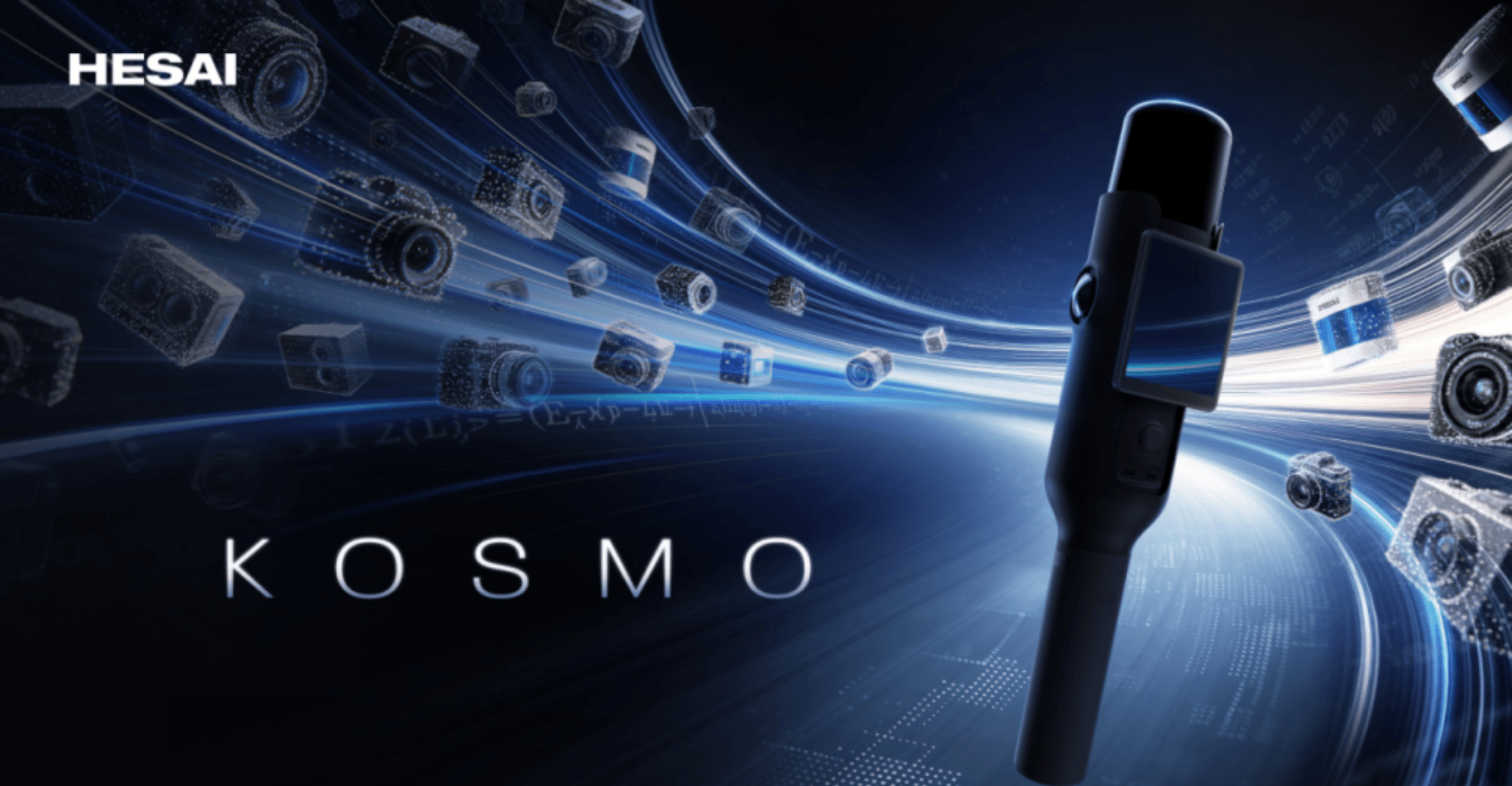
Hesai Launches World's First 6D Color LiDAR Chip
#lidar#spatial-intelligence#physical-ai6d-full-color-lidar-chiphesai6d-lidar
💡First 6D color LiDAR redefines physical AI sensing for robots & AVs
⚡ 30-Second TL;DR
What Changed
World’s first 6D full-color LiDAR chip unveiled
Why It Matters
Advances perception tech critical for robotics and AVs, accelerating physical AI deployment across industries.
What To Do Next
Benchmark Hesai's 6D LiDAR chip against existing sensors for your robotics perception pipeline.
Who should care:Developers & AI Engineers
Key Points
- •World’s first 6D full-color LiDAR chip unveiled
- •New 'spatial intelligence' strategy announced
- •Targets physical AI infrastructure for autos and robotics
🧠 Deep Insight
AI-generated analysis for this event — not the original article.
🔑 Enhanced Key Takeaways
- •The 6D LiDAR chip integrates multi-spectral sensing, enabling the capture of both spatial geometry (3D) and high-fidelity color/material information (3D+RGB+Intensity+Velocity), effectively adding semantic depth to point clouds.
- •Hesai's 'spatial intelligence' strategy leverages this chip to reduce reliance on separate camera-LiDAR sensor fusion pipelines, potentially lowering system latency and computational overhead for real-time robotic navigation.
- •The chip utilizes a proprietary photonics-integrated circuit (PIC) architecture, which Hesai claims significantly reduces the physical footprint and power consumption compared to traditional discrete LiDAR components.
📊 Competitor Analysis▸ Show
| Feature | Hesai 6D Chip | Velodyne/Ouster (Legacy) | Luminar (Iris) |
|---|---|---|---|
| Data Output | 6D (Spatial + Color) | 3D + Intensity | 3D + Reflectivity |
| Integration | SoC/PIC-based | Discrete Components | Hybrid/ASIC |
| Primary Focus | Spatial Intelligence | Mapping/ADAS | Long-range ADAS |
🛠️ Technical Deep Dive
- Architecture: Utilizes a monolithic Silicon Photonics (SiPh) platform to integrate laser emission, beam steering, and multi-spectral detection on a single die.
- Sensing Modality: Employs a multi-wavelength laser array to capture spectral signatures, allowing for material classification (e.g., distinguishing between road markings, vegetation, and vehicle paint) alongside distance.
- Processing: On-chip hardware acceleration for real-time point cloud colorization and velocity estimation, offloading tasks from the vehicle's central compute unit.
- Power Efficiency: Achieves a 40% reduction in power consumption compared to previous generation discrete LiDAR modules.
🔮 Future ImplicationsAI analysis grounded in cited sources
Hesai will capture a dominant share of the humanoid robotics sensor market by 2027.
The integration of color and spatial data in a single chip provides the semantic awareness required for complex manipulation tasks that traditional 3D LiDAR cannot support.
Automotive OEMs will begin phasing out separate camera-LiDAR fusion modules in favor of 6D-native architectures.
The reduction in system complexity and latency provided by 6D sensing offers a clear path to lower bill-of-materials (BOM) costs for autonomous driving stacks.
⏳ Timeline
2014-10
Hesai Technology founded in Silicon Valley.
2023-02
Hesai completes IPO on the Nasdaq, becoming the first Chinese LiDAR company to list in the US.
2024-05
Hesai announces the AT512, a high-performance long-range LiDAR for ADAS.
2026-04
Hesai unveils the world's first 6D full-color LiDAR chip and spatial intelligence strategy.
📰
Weekly AI Recap
Read this week's curated digest of top AI events →
👉Related Updates

AI-curated news aggregator. All content rights belong to original publishers.
Original source: Pandaily ↗
This is a summary, not the original. Read the source, or get the weekly briefing.
The weekly digest
One email a week. Unsubscribe anytime.