Henan AI Gala Draws 40% Ad Backlash
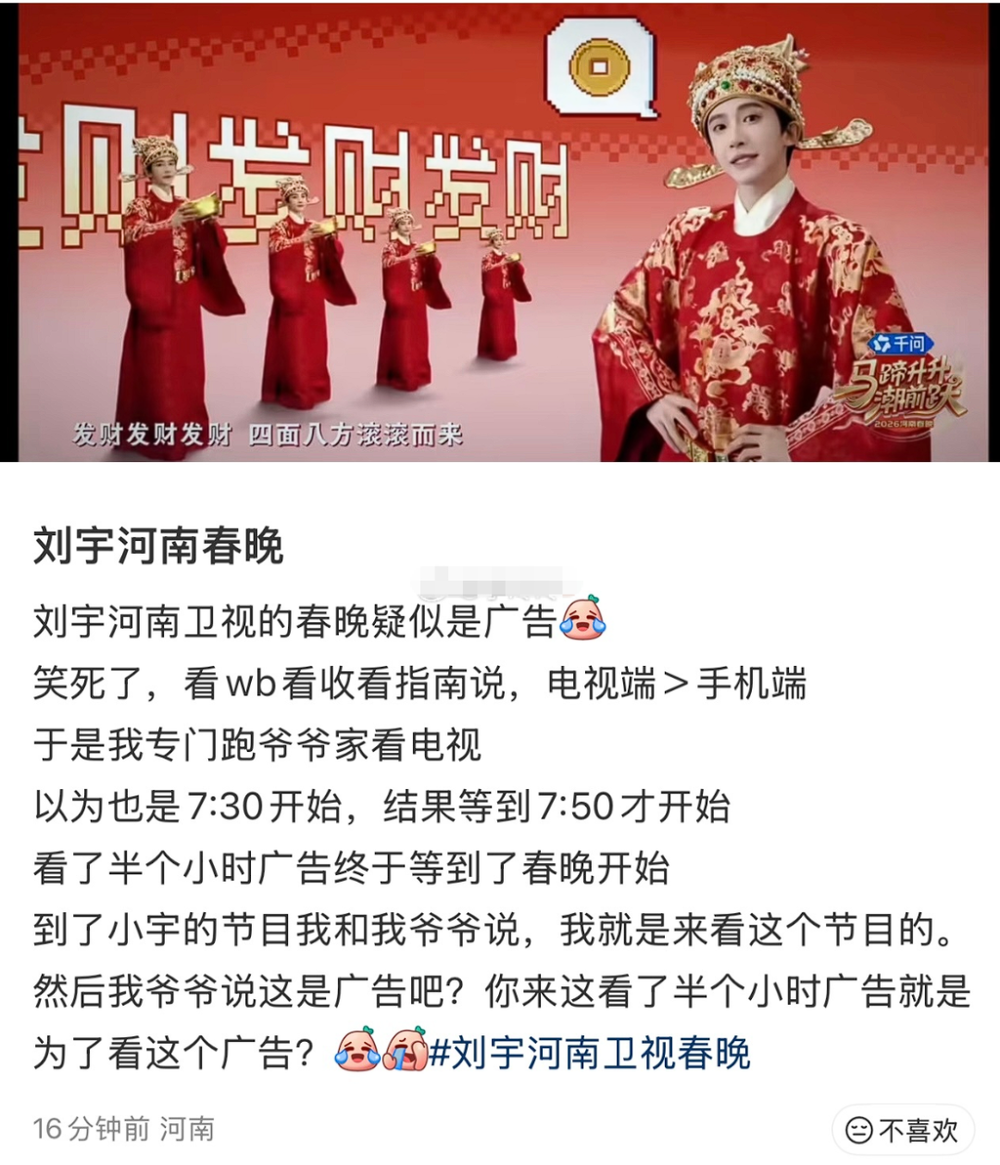
💡AI floods Chinese spring galas with 40% ads—key lessons on media integration fails
⚡ 30-Second TL;DR
What Changed
40% screen time dedicated to ads and hard placements from Qianwen, robots, games
Why It Matters
Exposes risks of rushed AI in traditional media, alienating audiences and prioritizing sponsors over art. Signals pressure on TV for AI fusion but warns of backlash without polished integration.
What To Do Next
Test AI virtual production tools like Kling or Luma for seamless media overlays avoiding Henan pitfalls.
Key Points
- •40% screen time dedicated to ads and hard placements from Qianwen, robots, games
- •No stage or live hosts; AI virtual scenes with XR murals create uncanny feel
- •Programs like dance and kung fu disrupted by AI overlays and light pollution
- •Trend: 10 provincial galas sponsored by AI firms like Baidu, Doubao
- •MV production mixes AI generation with manual synthesis for higher quality
🧠 Deep Insight
Background and context from public sources — not the original article. 4 sources cited.
🔑 Enhanced Key Takeaways
- •Henan TV's 2026 Spring Festival Gala was the first to apply AI on a large scale, using AI-generated content to replace traditional CG elements, complemented by physical sets, for pre-filmed cinematic segments without hosts or a physical stage[1].
- •The gala featured heavy AI integration in visuals and production, including AI-generated storyboards, enhancing visual richness while reducing costs and production time, but faced backlash for 40% ad saturation from sponsors like Qianwen[1].
- •Trend of AI and robotics in provincial galas: Multiple 2026 galas sponsored by AI firms like Baidu and Doubao, with Henan incorporating XR murals and AI overlays that created an uncanny feel and disrupted performances[1].
- •Robotics prominently featured in 2026 galas, including Unitree's WuBOT robots performing kung fu with Henan Tagou Martial Arts School students, demonstrating parkour, backflips, and synchronized movements[3].
- •MV production combined AI generation with manual synthesis for quality; broader context shows robotics firms like Galaxy General, Songyan Power, and Magic Atom showcasing autonomous embodied models and group performances in other galas[2].
🛠️ Technical Deep Dive
- •AI replaced CG with generated content and storyboards, integrated with physical sets for virtual scenes and XR murals[1].
- •Unitree G1/H2 robots in kung fu performance: Fully autonomous cluster control with AI-based positioning using sensor/lidar data for real-time adjustments during jumps, turns, and synchronized martial arts[3][4].
- •Galaxy General's 'Xiaogai' robot used end-to-end embodied large model for autonomous on-site actions without pre-programming[2].
- •Songyan Power robots (Bumi, N2, E1, biomimetic humanoid) performed flips, handsprings, and actor interactions[2].
- •Magic Atom's Z1/Gen1 robots executed Thomas rotations, kick moon legs, group control of 100+ biomimetic robots, and real-world tasks like noodle preparation/delivery[2].
🔮 Future ImplicationsAI analysis grounded in cited sources
Highlights accelerating AI and robotics adoption in Chinese entertainment, signaling cost efficiencies and visual innovations but risks viewer backlash from ad overload and uncanny effects; positions China as leader in embodied AI for cultural showcases, potentially influencing global robotics via high-profile demos.
⏳ Timeline
📎 Sources (4)
Factual claims are grounded in the sources below. Forward-looking analysis is AI-generated interpretation.
Weekly AI Recap
Read this week's curated digest of top AI events →
👉Related Updates

AI-curated news aggregator. All content rights belong to original publishers.
Original source: 虎嗅 ↗
This is a summary, not the original. Read the source, or get the weekly briefing.
Weekly AI briefing
One email a week. Unsubscribe anytime.