Helium-3: The Lunar Resource for Future Energy Demands
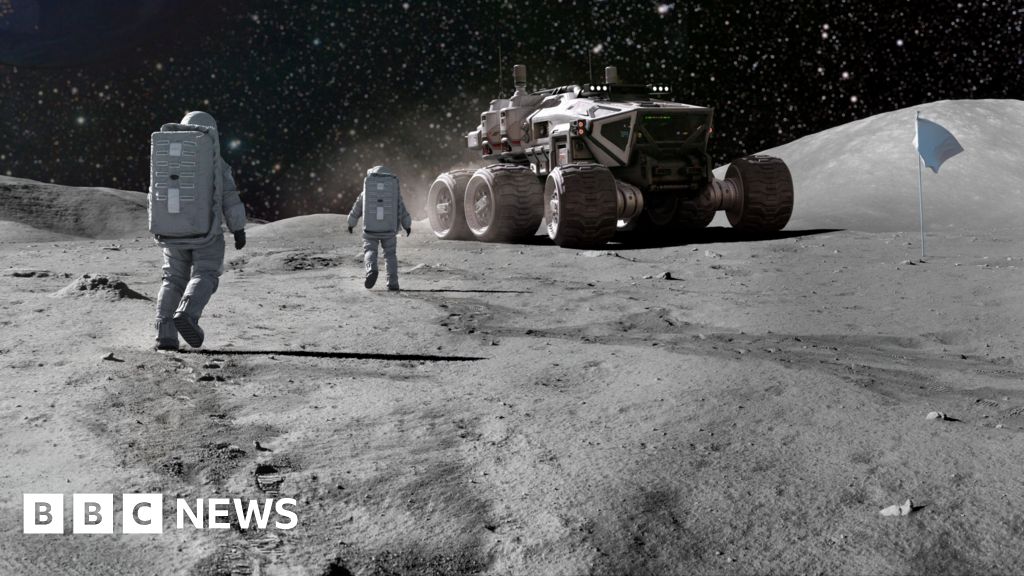
💡Understand the future of energy supply chains that could power the next generation of massive AI infrastructure.
⚡ 30-Second TL;DR
What Changed
Helium-3 is a rare isotope with significant potential for future fusion energy applications.
Why It Matters
The development of lunar mining infrastructure could drastically lower the cost of space-based resources, potentially fueling the massive energy requirements of future large-scale AI data centers.
What To Do Next
Monitor advancements in fusion energy and space logistics, as these will dictate the long-term energy availability for high-compute AI clusters.
Key Points
- •Helium-3 is a rare isotope with significant potential for future fusion energy applications.
- •Rising global demand is making lunar extraction economically viable despite high costs.
- •Technological challenges in lunar mining and transport remain the primary barriers to adoption.
🧠 Deep Insight
Background and context from public sources — not the original article. 16 sources cited.
🔑 Enhanced Key Takeaways
- •Beyond fusion energy, Helium-3 is also considered a critical resource for advanced cryogenics, particularly in dilution refrigerators for quantum computing and high-precision scientific instruments, due to its unique quantum behavior at ultra-low temperatures.
- •The concentration of Helium-3 in lunar regolith is not uniform, with higher levels, potentially exceeding 20-50 parts per billion (ppb), found in high-titanium mare basalts such as Mare Tranquillitatis and Oceanus Procellarum, and possibly in permanently shadowed regions.
- •The process of extracting Helium-3 from the Moon involves heating vast quantities of lunar regolith to approximately 700°C to release trapped gases, followed by a separation process to isolate Helium-3 from other volatiles like hydrogen, nitrogen, and carbon compounds.
- •Some scientific perspectives suggest that lunar Helium-3 mining for fusion may not be economically viable, proposing that terrestrial D-T fusion reactors could produce Helium-3 as a byproduct through tritium decay more cost-effectively.
- •The infrastructure required for lunar Helium-3 recovery, including advanced regolith handling, heating, gas separation, and particle mitigation systems, is anticipated to enable broader lunar operations and contribute to a self-sustaining lunar economy.
📊 Competitor Analysis▸ Show
| Feature | Deuterium-Helium-3 (D-He3) Fusion | Deuterium-Tritium (D-T) Fusion | Deuterium-Deuterium (D-D) Fusion |
|---|---|---|---|
| Aneutronic | Nearly aneutronic (produces high-energy protons, minimal neutrons from side reactions). | Neutronic (produces energetic neutrons). | Neutronic (produces neutrons in 50% of reactions). |
| Temperature | Requires highest temperatures (approx. 200 M°C). | Requires lower temperatures (approx. 50 M°C). | Requires high temperatures (approx. 100 M°C). |
| Fuel Source | Helium-3 rare on Earth, abundant on Moon; Deuterium abundant on Earth. | Tritium rare on Earth (radioactive, short half-life), bred from lithium; Deuterium abundant. | Deuterium abundant on Earth. |
| Waste Products | Minimal low-level radioactive waste from side reactions; no radioactive fuel. | Significant radioactive waste from neutron activation of reactor components. | Produces some radioactive waste from neutron activation. |
| Energy Output | 18.3 MeV (D-He3 reaction). | 17.6 MeV (D-T reaction). | Not high enough for commercial system (D-D reaction). |
| Challenges | High temperature requirements, lunar mining logistics. | Material degradation from neutrons, tritium handling. | Lower energy output, neutron production. |
🛠️ Technical Deep Dive
- Isotope Properties: Helium-3 (³He) is a stable, light isotope of helium with two protons and one neutron, making it fermionic. It becomes a superfluid at 2.491 mK.
- Lunar Origin: Helium-3 is deposited in the Moon's upper regolith layer over billions of years by the solar wind, which the Moon's lack of atmosphere allows to directly impact its surface.
- Concentration: Lunar regolith contains Helium-3 at concentrations typically between 1.4 and 15 ppb, but can reach up to 50 ppb in certain regions like high-Ti mare basalts (e.g., Mare Tranquillitatis, Oceanus Procellarum) and potentially permanently shadowed areas.
- Extraction Process: Proposed methods involve collecting lunar regolith and heating it to approximately 700°C using solar energy to release trapped gases. The released gases, including Helium-3, hydrogen, nitrogen, and carbon compounds, are then collected and separated.
- Mining Scale: To obtain one gram of Helium-3, over 150 tonnes of regolith may need to be processed. A 500-MW electrical power plant could require about 53 kg/year of Helium-3, necessitating the processing of roughly 63,000 to 140,000 tonnes of beneficiated regolith annually.
- Fusion Reaction: The primary aneutronic fusion reaction involves deuterium and Helium-3 (D + ³He → ⁴He + ¹p + 18.3 MeV), producing a high-energy proton and an alpha particle. This reaction minimizes neutron production, reducing radioactivity and material damage in reactors.
- Reactor Requirements: D-He3 fusion requires higher temperatures (around 200 M°C) compared to D-T fusion, posing engineering challenges for magnetic confinement and energy input.
- Byproducts: The extraction process yields other valuable volatiles like hydrogen, water, nitrogen, and carbon dioxide, which could be crucial for lunar base life support and rocket fuel.
- Mining Challenges: Significant challenges include the extremely low in-situ concentrations, the abrasive and electrostatic nature of lunar regolith, and the extreme thermal and mechanical constraints of the lunar environment, requiring specialized, high-power mobile extraction systems.
🔮 Future ImplicationsAI analysis grounded in cited sources
⏳ Timeline
📎 Sources (16)
Factual claims are grounded in the sources below. Forward-looking analysis is AI-generated interpretation.
Weekly AI Recap
Read this week's curated digest of top AI events →
👉Related Updates
AI-curated news aggregator. All content rights belong to original publishers.
Original source: BBC Technology ↗
This is a summary, not the original. Read the source, or get the weekly briefing.
Weekly AI briefing
One email a week. Unsubscribe anytime.