Harvard's Keyring: On-Device Biometric Wallet
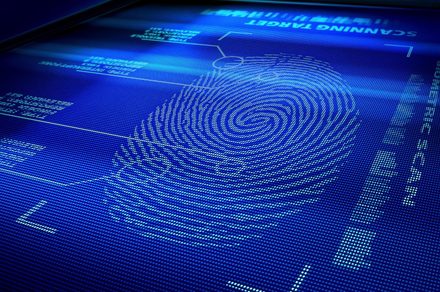
Harvard open-source wallet keeps biometrics on-phone for privacy in AI identity systems.
30-Second TL;DR
What Changed
Harvard launched open-source Keyring wallet.
Why It Matters
This promotes decentralized, privacy-preserving identity solutions suitable for AI applications needing secure user auth. It reduces data breach risks from centralized servers and encourages on-device processing.
What To Do Next
Clone the Keyring GitHub repo and prototype on-device biometric auth for your AI agent.
Key Points
- •Harvard launched open-source Keyring wallet.
- •Biometric data stored locally on user's phone.
- •Enables online identity verification without personal info exposure.
- •Avoids corporate server storage for enhanced privacy.
Deep Insight
AI-generated analysis for this event — not the original article.
Enhanced Key Takeaways
- •Keyring utilizes Zero-Knowledge Proofs (ZKPs) to allow users to prove identity attributes—such as age or citizenship—to third parties without revealing the underlying raw biometric data or PII.
- •The project is developed by the Harvard University-affiliated 'Privacy Tools Project' and leverages the W3C Verifiable Credentials standard to ensure interoperability with existing digital identity ecosystems.
- •The wallet architecture incorporates a hardware-backed 'Secure Enclave' integration, ensuring that biometric templates are cryptographically bound to the device's Trusted Execution Environment (TEE) and cannot be extracted even if the OS is compromised.
Competitor Analysis
- Keyring (Harvard)
- Local/Device-only
- Apple Wallet (Identity)
- Local/iCloud Backup
- Microsoft Entra Verified ID
- Cloud-based/Decentralized
- Keyring (Harvard)
- Yes
- Apple Wallet (Identity)
- No
- Microsoft Entra Verified ID
- Partial
- Keyring (Harvard)
- Zero-Knowledge Proofs
- Apple Wallet (Identity)
- Privacy-preserving (Secure Element)
- Microsoft Entra Verified ID
- Decentralized Identifiers (DIDs)
- Keyring (Harvard)
- Academic/Research/Privacy
- Apple Wallet (Identity)
- Consumer Convenience
- Microsoft Entra Verified ID
- Enterprise/Workplace
| Feature | Keyring (Harvard) | Apple Wallet (Identity) | Microsoft Entra Verified ID |
|---|---|---|---|
| Data Storage | Local/Device-only | Local/iCloud Backup | Cloud-based/Decentralized |
| Open Source | Yes | No | Partial |
| Privacy Model | Zero-Knowledge Proofs | Privacy-preserving (Secure Element) | Decentralized Identifiers (DIDs) |
| Primary Focus | Academic/Research/Privacy | Consumer Convenience | Enterprise/Workplace |
Technical Deep Dive
- Protocol Stack: Implements W3C Verifiable Credentials (VCs) and Decentralized Identifiers (DIDs) for cross-platform identity verification.
- Cryptographic Primitives: Uses zk-SNARKs (Zero-Knowledge Succinct Non-Interactive Argument of Knowledge) to generate proofs of identity claims.
- Hardware Security: Requires integration with device-level TEE (Trusted Execution Environment) or Secure Enclave to manage private keys for signing identity assertions.
- Data Handling: Employs a 'Local-First' architecture where the wallet acts as a personal agent, performing all cryptographic signing on-device to prevent server-side data exposure.
Future ImplicationsAI analysis grounded in cited sources
Timeline
- 2024-09Harvard Privacy Tools Project initiates development of the Keyring open-source framework.
- 2025-11Keyring releases its first public beta, focusing on integration with university student ID systems.
- 2026-04Harvard officially launches the production-ready version of Keyring for public use.
Weekly AI Recap
Read this week's curated digest of top AI events →
AI-curated news aggregator. All content rights belong to original publishers.
Original source: Digital Trends ↗
This is a summary, not the original. Read the source, or get the weekly briefing.
The weekly digest
One email a week. Unsubscribe anytime.