💰钛媒体•Stalecollected in 27m
HarmonySpace 6 Launches Cockpit Platform War
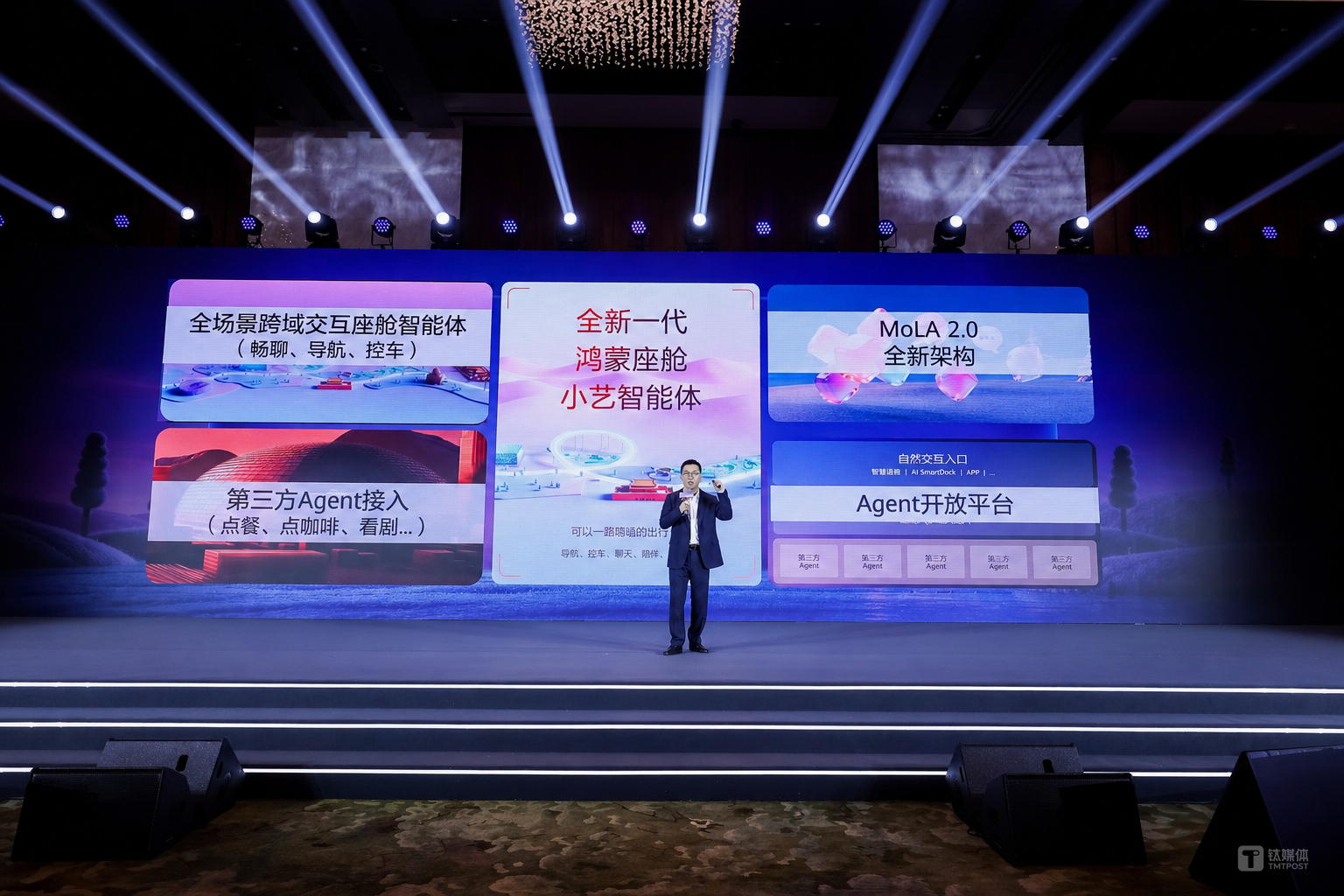
💡Huawei's cockpit launch shifts auto AI from features to ecosystems—key for embedded devs.
⚡ 30-Second TL;DR
What Changed
HarmonySpace 6 formally released by HarmonyOS Cockpit
Why It Matters
This upgrade positions Huawei strongly in automotive AI ecosystems, pressuring competitors like Android Automotive to accelerate ecosystem builds. It could standardize in-car AI experiences across vehicles.
What To Do Next
Download HarmonySpace 6 developer kit to prototype in-car AI voice interfaces.
Who should care:Enterprise & Security Teams
Key Points
- •HarmonySpace 6 formally released by HarmonyOS Cockpit
- •Competition evolving from feature accumulation to ecosystem implementation
- •In-car platform war intensifying among rivals
🧠 Deep Insight
AI-generated analysis for this event.
🔑 Enhanced Key Takeaways
- •HarmonySpace 6 introduces a proprietary 'Distributed Neural Engine' that enables seamless cross-device AI task offloading between the vehicle's cockpit and connected mobile devices.
- •The platform shifts to a microkernel-based architecture specifically optimized for low-latency multi-screen rendering, supporting up to 8 independent displays simultaneously.
- •Huawei has opened the HarmonySpace SDK to third-party automotive OEMs, aiming to standardize the cockpit interface across non-Huawei branded vehicles to accelerate ecosystem adoption.
📊 Competitor Analysis▸ Show
| Feature | HarmonySpace 6 | Qualcomm Snapdragon Ride Flex | NVIDIA DRIVE Cockpit |
|---|---|---|---|
| Core Focus | Distributed Ecosystem | High-Performance Compute | AI/Autonomous Driving Integration |
| OS Compatibility | HarmonyOS Native | Android Automotive/QNX | QNX/Linux/Custom |
| AI Integration | Deep System-Level | Hardware-Accelerated | GPU-Centric |
| Market Strategy | Full-Stack Ecosystem | Chipset-Centric | Compute-Centric |
🛠️ Technical Deep Dive
- •Architecture: Utilizes a distributed microkernel design that decouples the UI rendering layer from the underlying vehicle control bus.
- •AI Integration: Features an on-device Large Language Model (LLM) optimized for automotive context, reducing reliance on cloud-based voice processing.
- •Connectivity: Implements a proprietary low-latency protocol for 'Super Device' connectivity, achieving sub-20ms latency for cross-device screen mirroring.
- •Security: Incorporates hardware-level Trusted Execution Environment (TEE) for biometric authentication and vehicle control commands.
🔮 Future ImplicationsAI analysis grounded in cited sources
Automotive OEMs will face increased pressure to adopt HarmonyOS to remain competitive in the Chinese market.
The shift toward ecosystem-based competition makes standalone, feature-limited cockpits increasingly unattractive to consumers.
HarmonySpace 6 will trigger a wave of consolidation in the automotive software supplier market.
Smaller Tier-2 software vendors will struggle to compete with the integrated, platform-level capabilities provided by HarmonySpace 6.
⏳ Timeline
2021-04
Huawei officially launches the first generation of HarmonyOS for automotive cockpits.
2023-08
HarmonyOS 4.0 introduces enhanced multi-screen interaction capabilities for smart vehicles.
2025-02
Huawei announces the expansion of the HarmonyOS cockpit ecosystem to include third-party hardware partners.
2026-05
Official release of HarmonySpace 6, marking the transition to an ecosystem-centric cockpit platform.
📰
Weekly AI Recap
Read this week's curated digest of top AI events →
👉Related Updates


AI-curated news aggregator. All content rights belong to original publishers.
Original source: 钛媒体 ↗