Guanglun and Siemens Explore ML-Driven Industrial Simulation
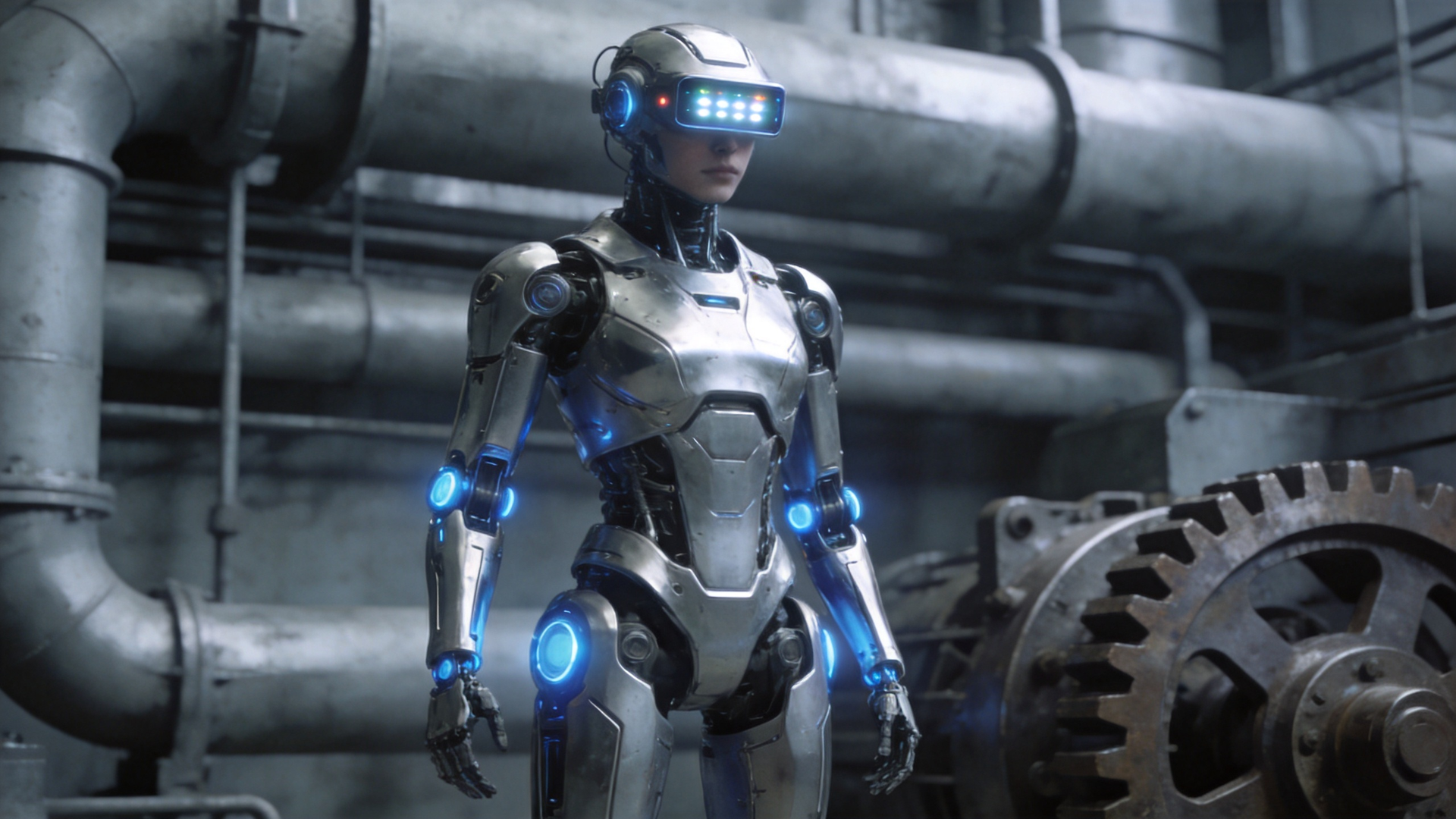
💡Learn how machine learning may shorten the path from industrial simulation to factory robot deployment.
⚡ 30-Second TL;DR
What Changed
Guanglun Intelligent and Siemens are exploring a joint industrial simulation approach.
Why It Matters
Combining industrial simulation with machine learning could help manufacturers shorten robot development and validation cycles. The practical value will depend on simulation fidelity, transfer to real-world hardware, and integration with factory systems.
What To Do Next
Evaluate a simulation-to-real pilot using your factory robot workflow and measure policy transfer, validation time, and integration effort.
Key Points
- •Guanglun Intelligent and Siemens are exploring a joint industrial simulation approach.
- •Machine learning is positioned as a new component in industrial simulation workflows.
- •The effort aims to accelerate factory robot deployment.
- •The article does not disclose specific algorithms, products, or deployment results.
🧠 Deep Insight
AI-generated analysis for this event.
🔑 Enhanced Key Takeaways
- •The collaboration leverages Siemens' Xcelerator platform, specifically integrating Guanglun's proprietary AI-driven motion planning algorithms into the digital twin ecosystem.
- •This partnership focuses on 'Sim-to-Real' transfer learning, aiming to reduce the physical testing phase of robot deployment by up to 40%.
- •Guanglun Intelligent is utilizing synthetic data generation techniques to train models on edge cases that are difficult or dangerous to replicate in physical factory settings.
- •The integration utilizes the NVIDIA Omniverse-connected Siemens industrial software stack to enable high-fidelity physics simulation for robot kinematics.
- •The initiative specifically targets the automotive and electronics manufacturing sectors in the Asia-Pacific region to address labor shortages and production line flexibility.
📊 Competitor Analysis▸ Show
| Feature | Guanglun/Siemens | NVIDIA (Isaac Sim) | Rockwell Automation (Emulate3D) |
|---|---|---|---|
| Core Focus | ML-driven motion planning | Photorealistic simulation | PLC/Logic emulation |
| Integration | Siemens Xcelerator | Omniverse Ecosystem | FactoryTalk Suite |
| Primary Strength | Sim-to-Real transfer | GPU-accelerated rendering | Industrial control logic |
🛠️ Technical Deep Dive
- Implementation utilizes Reinforcement Learning (RL) agents trained within a virtual environment to optimize robot trajectory planning.
- The architecture employs a Digital Twin synchronization layer that maps real-time sensor data from factory robots back to the simulation model for continuous learning.
- Models are optimized for deployment on Siemens Industrial Edge devices, allowing for local inference without constant cloud connectivity.
- The system uses a modular API approach to allow for the swapping of different robot kinematic models (e.g., 6-axis arms, AGVs) within the same simulation environment.
🔮 Future ImplicationsAI analysis grounded in cited sources
⏳ Timeline
Weekly AI Recap
Read this week's curated digest of top AI events →
👉Related Updates



AI-curated news aggregator. All content rights belong to original publishers.
Original source: InfoQ中国 ↗