Google's SpeciesNet Boosts Wildlife Conservation
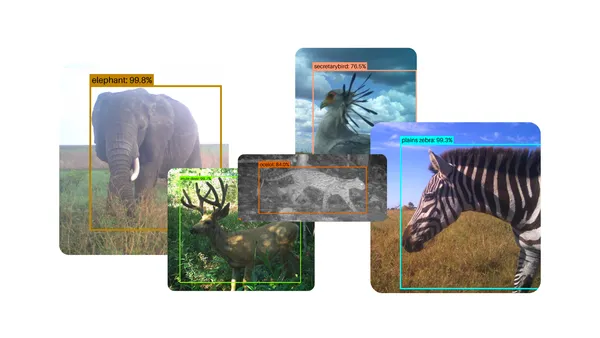
💡Google's open-source SpeciesNet applies AI to wildlife conservation—ideal for env-focused devs.
⚡ 30-Second TL;DR
What Changed
Google launches SpeciesNet as open-source AI model
Why It Matters
SpeciesNet democratizes AI access for conservationists, enabling faster species monitoring and habitat analysis to combat biodiversity loss. It positions Google as a leader in AI-for-good initiatives, inspiring similar open-source projects.
What To Do Next
Clone SpeciesNet repo from Google AI GitHub and test on wildlife image datasets.
Key Points
- •Google launches SpeciesNet as open-source AI model
- •Focuses on aiding global wildlife protection and conservation
- •Overview highlights real-world applications for users worldwide
🧠 Deep Insight
Background and context from public sources — not the original article. 7 sources cited.
🔑 Enhanced Key Takeaways
- •SpeciesNet analyzes photos from camera traps using infrared sensors to identify animal species, addressing the bottleneck of manually sifting through massive data volumes.[1]
- •The model processes up to 3.6 million images per hour and was trained on a geographically diverse dataset including images from the Smithsonian Conservation Biology Institute and Zoological Society of London.[2][5]
- •Real-world deployment in Southeast Asia's tropical forests reduced illegal hunting by 67% year-on-year through real-time poaching prevention systems.[2]
📊 Competitor Analysis▸ Show
| Feature | SpeciesNet (Google) | PyTorch Wildlife (Microsoft) |
|---|---|---|
| Primary Use | Species classification in camera traps | Animal detection & classification |
| Training Data | Over 65M images | Pre-trained models (unspecified size) |
| Labels | >2,000 species/taxa/non-animals | Fine-tuned for animal detection |
| License | Apache 2.0 (commercial use OK) | Open source (details vary) |
| Benchmarks | 3.6M images/hour processing | Not specified in sources[1] |
🛠️ Technical Deep Dive
- •SpeciesNet is an ensemble of two AI models: an object detector for finding objects of interest and a species classifier using EfficientNet V2 M architecture.[5]
- •The species classifier identifies over 2,000 labels including specific animal species, higher taxa like 'mammalia' or 'felidae', and non-animals like 'blank' or 'vehicle'.[1][5]
- •Trained on over 65 million geographically diverse camera trap images from Wildlife Insights community and public repositories.[1][5]
- •Available on GitHub at google/cameratrapai under Apache 2.0 license, with support for GPU usage and separate component execution.[5]
🔮 Future ImplicationsAI analysis grounded in cited sources
⏳ Timeline
📎 Sources (7)
Factual claims are grounded in the sources below. Forward-looking analysis is AI-generated interpretation.
- TechCrunch — Google Releases Speciesnet an AI Model Designed to Identify Wildlife
- zenn.dev — 20250425 Species Net
- wildlife.org — Google Releases AI Model for Wildlife Identification
- felidaefund.org — Eyes in the Wild the AI Revolution in Conservation Science
- GitHub — Cameratrapai
- worldwildlife.org — Using the Power of AI to Identify and Track Species
- aimagazine.com — Google How AI Can Supercharge Wildlife Conservation
Weekly AI Recap
Read this week's curated digest of top AI events →
👉Related Updates

AI-curated news aggregator. All content rights belong to original publishers.
Original source: Google AI Blog ↗
This is a summary, not the original. Read the source, or get the weekly briefing.
Weekly AI briefing
One email a week. Unsubscribe anytime.