Google Tests an AI-First Search Homepage
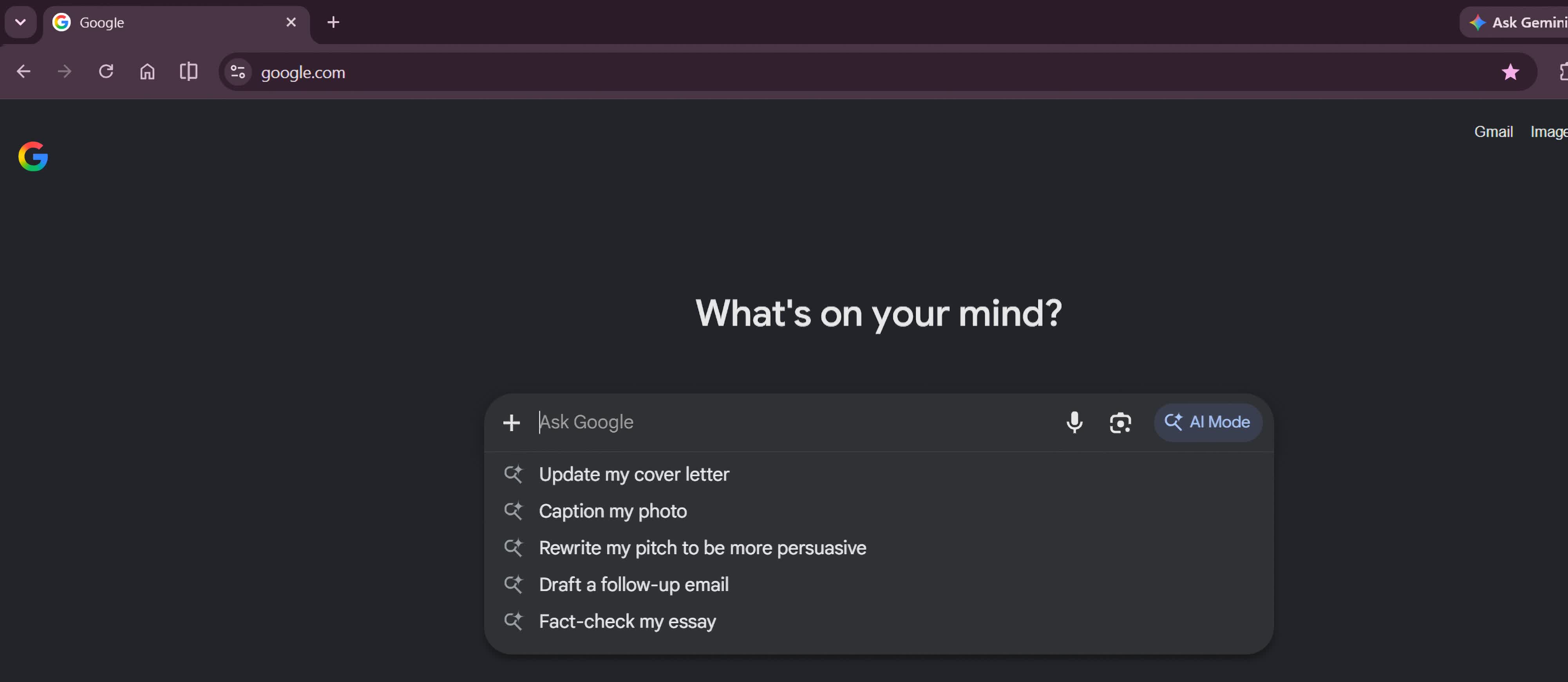
💡Google may be turning its homepage into an AI launchpad, reshaping how users discover and start AI tasks.
⚡ 30-Second TL;DR
What Changed
The test targets Google users browsing without being signed in.
Why It Matters
An AI-first homepage could redirect user attention from keyword search toward generative workflows and multimodal tasks. For AI product teams, it signals that distribution and discovery may increasingly depend on how prominently platforms expose built-in AI actions.
What To Do Next
Audit your AI product’s acquisition flow against Google’s Create images, Ask about files, and Brainstorm entry points to identify opportunities for task-first discovery.
Key Points
- •The test targets Google users browsing without being signed in.
- •The traditional Google Search button has been removed from the experimental homepage.
- •The replacement options are Create images, Ask about files, and Brainstorm.
- •Traditional web search appears to be receiving less prominence in the new layout.
🧠 Deep Insight
AI-generated analysis for this event.
🔑 Enhanced Key Takeaways
- •The experimental interface leverages Gemini-class multimodal models to process user intent directly on the landing page, bypassing the traditional keyword-based query box.
- •This shift represents a strategic pivot toward 'Generative UI,' where the interface dynamically adapts its components based on the user's interaction history or inferred context rather than a static search bar.
- •Google is utilizing A/B testing frameworks to measure the impact of this 'AI-First' layout on user retention rates for unauthenticated sessions, which historically have lower engagement than logged-in users.
- •The 'Ask about files' feature integrates directly with Google Drive and local file upload APIs, signaling a move to make the homepage a centralized hub for personal productivity rather than just an information retrieval tool.
- •Internal telemetry data from the test suggests that removing the 'I'm Feeling Lucky' and standard 'Google Search' buttons is intended to reduce cognitive load and steer users toward high-value AI interactions.
📊 Competitor Analysis▸ Show
| Feature | Google (Experimental) | Perplexity AI | OpenAI (SearchGPT) |
|---|---|---|---|
| Primary Interface | Generative UI / Task-based | Conversational Search | Conversational Search |
| Pricing | Free (Ad-supported) | Free / Pro ($20/mo) | Free / Plus ($20/mo) |
| Core Benchmark | Multimodal Task Completion | Source-cited Accuracy | Reasoning & Synthesis |
🛠️ Technical Deep Dive
- Architecture utilizes a lightweight, low-latency version of the Gemini model optimized for edge-side inference to ensure homepage load times remain under 200ms.
- Implements a new 'Intent-Router' layer that classifies user input into specific tool-use categories (Image Gen, File Analysis, Brainstorming) before invoking the relevant model.
- Uses vector embeddings to map user queries to specific functional modules, replacing traditional inverted index search retrieval for these specific UI paths.
- Employs client-side rendering for the AI-generated components to minimize server round-trips during the initial brainstorming phase.
🔮 Future ImplicationsAI analysis grounded in cited sources
⏳ Timeline
Weekly AI Recap
Read this week's curated digest of top AI events →
👉Related Updates

AI-curated news aggregator. All content rights belong to original publishers.
Original source: cnBeta (Full RSS) ↗