Google: Quantum Hack Threat to Encryption by 2029
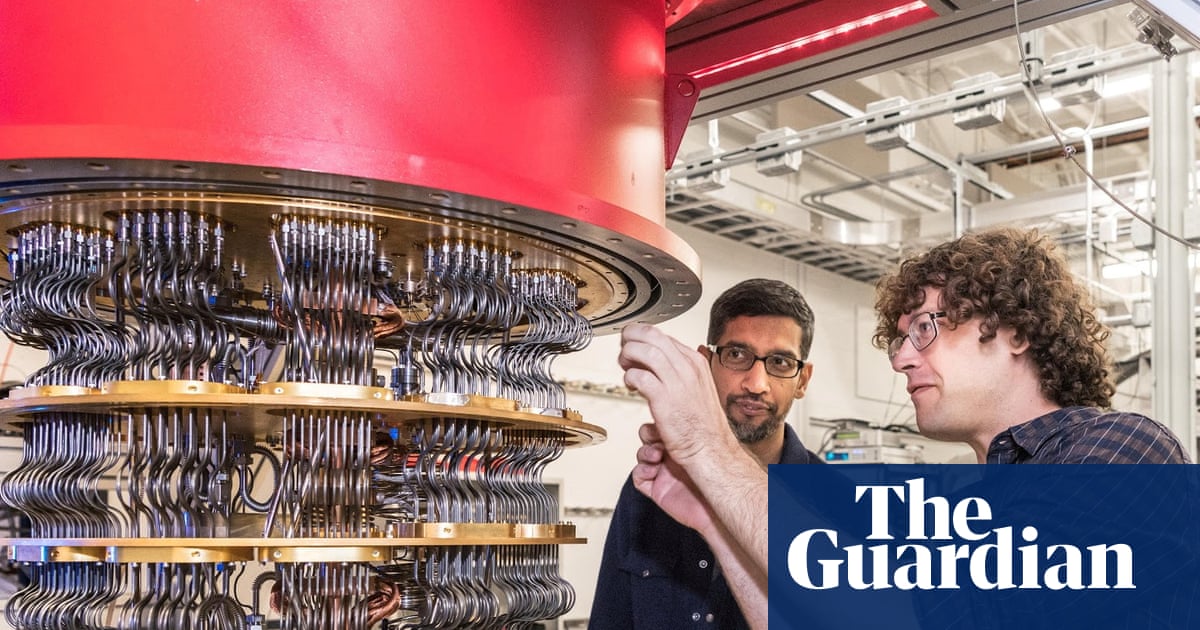
💡Quantum threat by 2029 demands AI security upgrades—Google's urgent call
⚡ 30-Second TL;DR
What Changed
Quantum computers pose threat to encryption standards by 2029
Why It Matters
AI practitioners must transition to post-quantum crypto to protect models and data. Delays could expose sensitive AI training data to future quantum attacks, forcing rushed upgrades.
What To Do Next
Test NIST post-quantum algorithms like Kyber in your AI encryption pipelines now.
Key Points
- •Quantum computers pose threat to encryption standards by 2029
- •Google urges upgrade for banks, governments, tech providers
- •Issued in Google blogpost as significant cryptographic risk
- •Follow Google's lead in post-quantum security preparations
🧠 Deep Insight
AI-generated analysis for this event — not the original article.
🔑 Enhanced Key Takeaways
- •Google's 2029 projection is specifically tied to the 'Q-Day' concept, where a fault-tolerant quantum computer reaches a scale capable of running Shor's algorithm to break RSA-2048 encryption.
- •The urgency is driven by 'harvest now, decrypt later' (HNDL) attacks, where adversaries capture encrypted data today to decrypt it once quantum hardware matures.
- •Google is actively transitioning its own internal infrastructure to Post-Quantum Cryptography (PQC) algorithms, specifically prioritizing NIST-standardized algorithms like ML-KEM (formerly Kyber).
📊 Competitor Analysis▸ Show
| Feature | Google (Quantum) | IBM (Quantum) | Microsoft (Quantum) |
|---|---|---|---|
| Primary Strategy | Error-corrected superconducting qubits | Modular superconducting processors | Topological qubit research |
| PQC Focus | Internal infrastructure migration | Qiskit-based PQC integration | Azure Quantum PQC services |
| Roadmap Focus | Fault-tolerance by 2029 | Scaling to 100k+ qubits | Scaling topological qubits |
🛠️ Technical Deep Dive
- •Google's roadmap relies on achieving logical qubits through surface code error correction, requiring a physical-to-logical qubit ratio of approximately 1,000:1.
- •The transition involves implementing hybrid cryptographic schemes that combine classical algorithms (like ECDH) with PQC algorithms (like ML-KEM) to ensure backward compatibility and security against both classical and quantum threats.
- •The 2029 timeline assumes a progression in gate fidelity and coherence times that allows for the execution of deep quantum circuits necessary for Shor's algorithm.
🔮 Future ImplicationsAI analysis grounded in cited sources
⏳ Timeline
Weekly AI Recap
Read this week's curated digest of top AI events →
👉Related Updates
AI-curated news aggregator. All content rights belong to original publishers.
Original source: The Guardian Technology ↗
This is a summary, not the original. Read the source, or get the weekly briefing.
The weekly digest
One email a week. Unsubscribe anytime.