🗾ITmedia AI+ (日本)•Stalecollected in 83m
Google Identifies 10 Cognitive Abilities for AGI
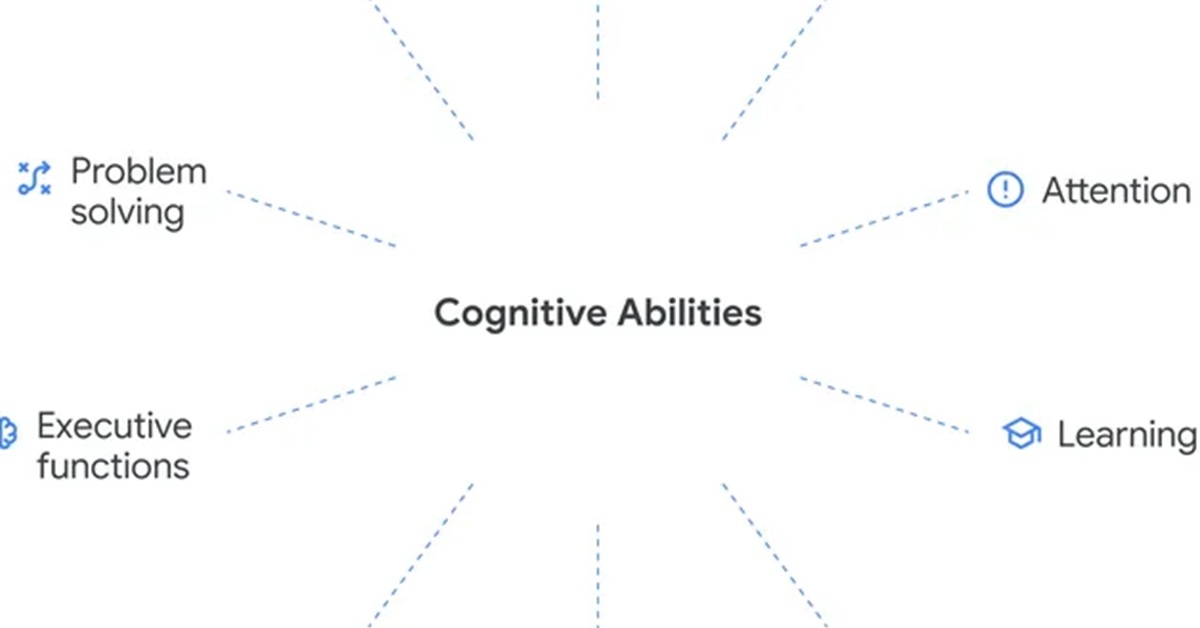
💡Google's 10 cognitive skills framework benchmarks true AGI progress
⚡ 30-Second TL;DR
What Changed
Google DeepMind released paper on AGI progress measurement framework
Why It Matters
This framework standardizes AGI benchmarking, shifting focus from narrow metrics to human-like cognition. It enables better progress tracking for researchers and companies pursuing AGI.
What To Do Next
Read the DeepMind paper and test your AI models against the 10 cognitive abilities.
Who should care:Researchers & Academics
Key Points
- •Google DeepMind released paper on AGI progress measurement framework
- •Identifies 10 cognitive abilities constituting intelligence
- •Fills gap in empirical AI intelligence evaluation tools
- •Framework based on cognitive science principles
🧠 Deep Insight
AI-generated analysis for this event.
🔑 Enhanced Key Takeaways
- •The framework, titled 'Levels of AGI,' categorizes AI systems into six tiers ranging from 'Level 0: No AI' to 'Level 5: Superhuman,' moving beyond simple performance metrics to evaluate autonomy and generalization.
- •Google DeepMind's approach explicitly shifts the focus from task-specific benchmarks (like MMLU or GSM8K) to 'generality' and 'performance,' arguing that current benchmarks fail to capture the qualitative leap required for true AGI.
- •The 10 cognitive abilities identified are mapped to human psychological constructs, including memory, reasoning, planning, and metacognition, to provide a standardized taxonomy for comparing disparate AI architectures.
📊 Competitor Analysis▸ Show
| Feature | Google DeepMind (Levels of AGI) | OpenAI (AGI Readiness) | Anthropic (Constitutional AI) |
|---|---|---|---|
| Primary Focus | Cognitive taxonomy & classification | Capability-based risk assessment | Alignment & safety-first evaluation |
| Evaluation Method | Multi-level generality scale | Task-based performance thresholds | Human-in-the-loop feedback |
| Benchmark Style | Qualitative/Cognitive | Quantitative/Task-specific | Behavioral/Safety-focused |
🛠️ Technical Deep Dive
- •The framework utilizes a two-dimensional matrix: 'Generality' (breadth of tasks) vs. 'Performance' (quality of output).
- •It introduces a 'Level 1: Emerging' classification for models that perform at the level of a skilled human but require significant prompting or lack robust autonomy.
- •The methodology emphasizes 'autonomy' as a critical variable, distinguishing between models that require human intervention and those capable of independent goal-directed behavior.
- •The cognitive abilities are evaluated through a 'dynamic task' approach, where the environment changes to test adaptability rather than static dataset memorization.
🔮 Future ImplicationsAI analysis grounded in cited sources
Standardized AGI reporting will become a regulatory requirement.
As governments seek to define 'frontier models,' frameworks like DeepMind's provide the necessary technical vocabulary for policy enforcement.
AI development will pivot away from 'leaderboard chasing'.
The shift toward cognitive-based evaluation will force labs to prioritize architectural robustness over overfitting to static benchmark datasets.
⏳ Timeline
2023-11
Google DeepMind publishes the 'Levels of AGI' paper proposing a standardized classification system.
2024-05
Google integrates cognitive evaluation metrics into internal model development pipelines.
2025-09
DeepMind releases updated empirical data applying the 10-ability framework to Gemini 2.0 models.
📰
Weekly AI Recap
Read this week's curated digest of top AI events →
👉Related Updates
AI-curated news aggregator. All content rights belong to original publishers.
Original source: ITmedia AI+ (日本) ↗