Google AI Analyzes Snowboard Aerial Tricks in 3D
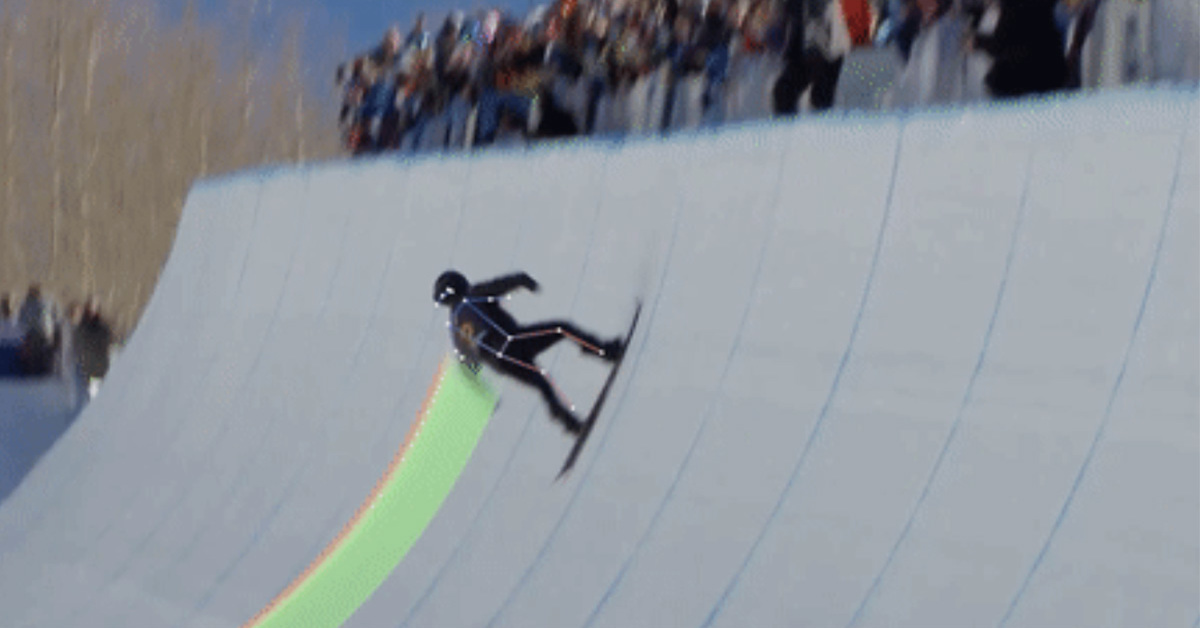
💡DeepMind's Olympic pose AI reveals sports tech breakthroughs for CV devs
⚡ 30-Second TL;DR
What Changed
AI estimates athletes' 3D postures during complex aerial tricks
Why It Matters
Showcases AI's practical value in elite sports, advancing pose estimation for real-world performance analysis. Could inspire similar tools in training and medical fields, broadening computer vision adoption.
What To Do Next
Test Google Cloud Vertex AI Vision for pose estimation APIs in sports analytics.
Key Points
- •AI estimates athletes' 3D postures during complex aerial tricks
- •Joint development by Google Cloud and Google DeepMind
- •Provided to US Winter Olympics team for Milan-Cortina Games
- •Potential applications in rehab and skill improvement
🧠 Deep Insight
AI-generated analysis for this event — not the original article.
🔑 Enhanced Key Takeaways
- •The system utilizes a specialized computer vision pipeline that integrates multi-camera synchronization to reconstruct 3D skeletal models without the need for wearable sensors or markers.
- •Data processing leverages Google Cloud's Vertex AI platform, enabling near real-time feedback loops that allow coaches to adjust training regimens immediately after a jump.
- •The project builds upon Google's previous research in 'MediaPipe' and 'PoseNet' architectures, specifically optimized for high-velocity, non-linear motion typical of extreme sports.
📊 Competitor Analysis▸ Show
| Feature | Google AI (Snowboard/Ski) | Kinovea (Open Source) | Dartfish |
|---|---|---|---|
| 3D Reconstruction | Native/Automated | Manual/Semi-automated | Manual/Semi-automated |
| Deployment | Cloud-based (Vertex AI) | Local Desktop | Local/Cloud Hybrid |
| Target User | Elite/Olympic Teams | Coaches/Researchers | Professional Sports Orgs |
| Pricing | Enterprise/Custom | Free (GPL) | Subscription/Enterprise |
🛠️ Technical Deep Dive
- •Architecture: Employs a multi-view geometry approach combined with a temporal transformer network to maintain pose consistency during rapid rotations and occlusions.
- •Input: Synchronized high-frame-rate video feeds from multiple fixed-position cameras around the training facility.
- •Output: Biomechanical metrics including joint angles, angular velocity, and center-of-mass trajectory in a 3D coordinate system.
- •Optimization: Uses custom lightweight convolutional neural networks (CNNs) for edge-processing pre-filtering before cloud-based 3D reconstruction.
🔮 Future ImplicationsAI analysis grounded in cited sources
⏳ Timeline
Weekly AI Recap
Read this week's curated digest of top AI events →
👉Related Updates
AI-curated news aggregator. All content rights belong to original publishers.
Original source: ITmedia AI+ (日本) ↗
This is a summary, not the original. Read the source, or get the weekly briefing.
The weekly digest
One email a week. Unsubscribe anytime.