🦊GitLab Blog•Stalecollected in 20h
GitLab WATCH Automates Detection Testing
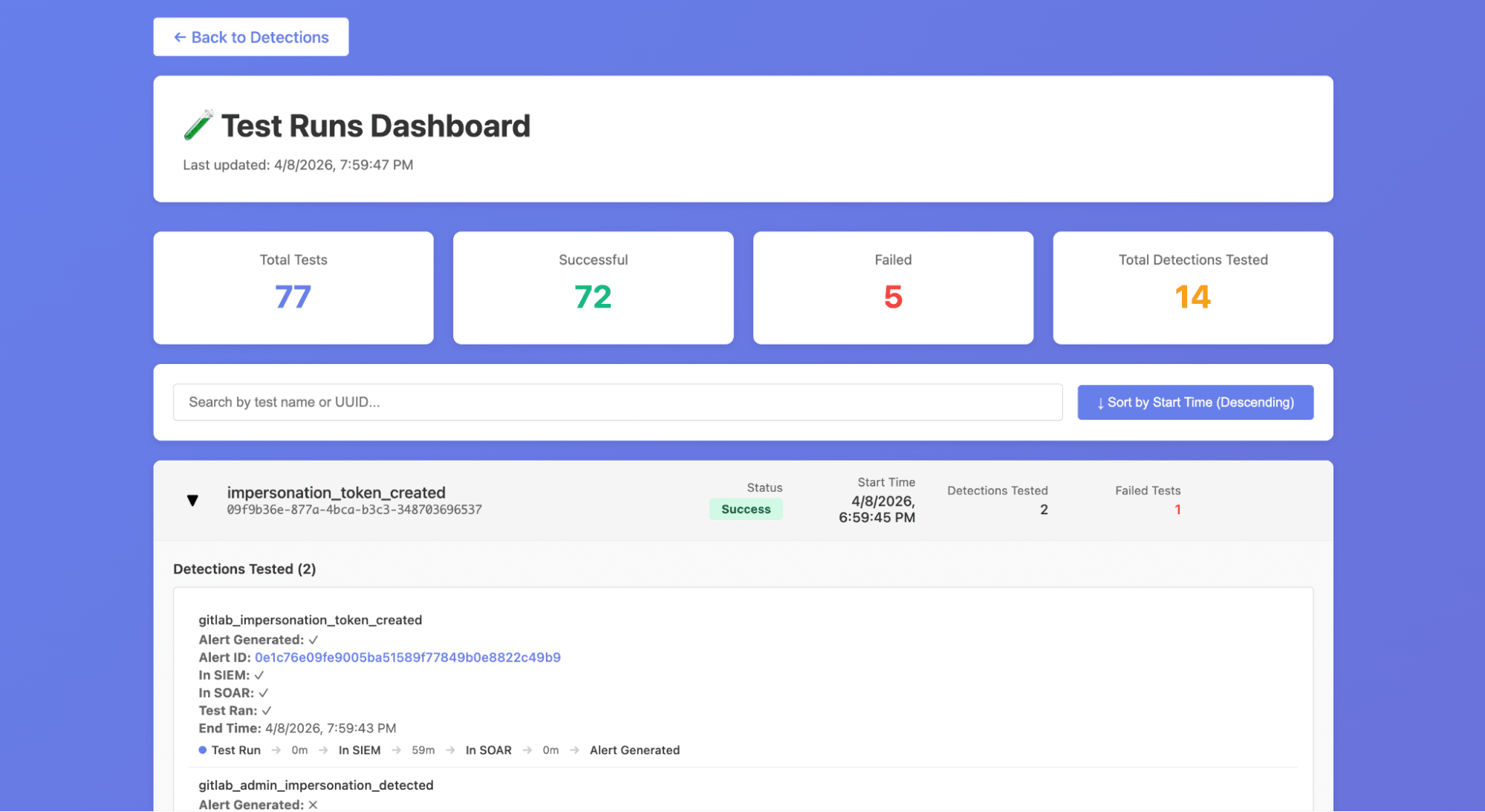
💡Automate security detection tests with GitLab CI/CD to catch silent failures in your SOC pipeline.
⚡ 30-Second TL;DR
What Changed
Simulates real malicious behavior on owned infrastructure weekly via CI/CD pipelines
Why It Matters
Improves SOC health by preventing silent detection failures from schema changes or misconfigs, boosting confidence in critical alerts. Enables tailored testing without vendor lock-in.
What To Do Next
Configure a GitLab CI/CD pipeline to run WATCH simulations for validating your security detections.
Who should care:Developers & AI Engineers
Key Points
- •Simulates real malicious behavior on owned infrastructure weekly via CI/CD pipelines
- •Validates detections across log ingestion, SIEM rules, SOAR routing, and dashboards
- •Closes gap in DaC pipelines by proving detections fire in realistic scenarios
- •Custom alternative to generic, costly Breach and Attack Simulation (BAS) tools
🧠 Deep Insight
AI-generated analysis for this event.
🔑 Enhanced Key Takeaways
- •WATCH leverages GitLab's existing 'Detection as Code' (DaC) philosophy, treating security detection rules as version-controlled software artifacts that undergo automated regression testing.
- •The framework specifically addresses 'detection drift' by continuously verifying that infrastructure changes or log format updates do not inadvertently break existing SIEM alerting logic.
- •By utilizing native GitLab CI/CD runners, the tool minimizes the attack surface and operational overhead compared to third-party BAS agents that require persistent installation on production endpoints.
📊 Competitor Analysis▸ Show
| Feature | GitLab WATCH | Commercial BAS (e.g., AttackIQ, Picus) | Open Source (e.g., Atomic Red Team) |
|---|---|---|---|
| Deployment | Native CI/CD Pipeline | Dedicated Agents/Appliances | Manual/Scripted Execution |
| Cost Model | Included in GitLab Platform | High Licensing Fees | Free (Community Support) |
| Integration | Deep CI/CD/SIEM/SOAR | API-based/Vendor Agnostic | Script-based/Manual |
| Maintenance | Low (Infrastructure as Code) | Medium (Agent Management) | High (Manual Updates) |
🛠️ Technical Deep Dive
- •Architecture: Utilizes GitLab CI/CD runners configured to execute atomic attack scripts (e.g., credential dumping, lateral movement simulation) within isolated staging environments.
- •Pipeline Integration: Triggers automated jobs that generate telemetry, which is then forwarded to the production SIEM/SOAR stack for validation.
- •Validation Logic: Employs custom assertion scripts that query the SIEM API to confirm that the specific alert associated with the simulated attack was triggered within a defined latency threshold.
- •Environment Parity: Uses Infrastructure as Code (IaC) templates to ensure staging environments mirror production configurations, preventing false negatives during detection testing.
🔮 Future ImplicationsAI analysis grounded in cited sources
Detection-as-Code will become a standard requirement for SOC maturity.
The shift toward automated validation reduces the manual burden on security engineers and ensures consistent detection efficacy in rapidly changing cloud environments.
GitLab will integrate WATCH-like capabilities into its core security product suite.
The successful internal adoption of this framework provides a clear roadmap for GitLab to productize automated detection testing for its enterprise customers.
⏳ Timeline
2023-05
GitLab Signals Engineering team begins formalizing Detection-as-Code (DaC) workflows.
2024-11
Initial prototype of WATCH framework deployed for internal security validation.
2026-04
GitLab publicly documents the WATCH framework as a mature internal security automation tool.
📰
Weekly AI Recap
Read this week's curated digest of top AI events →
👉Related Updates
AI-curated news aggregator. All content rights belong to original publishers.
Original source: GitLab Blog ↗