GitLab 19.0 launches SBOM-based dependency scanning for supply chain security
💡Nearly half of AI-generated code contains vulnerabilities; learn how to secure your dependencies with reachability analy
⚡ 30-Second TL;DR
What Changed
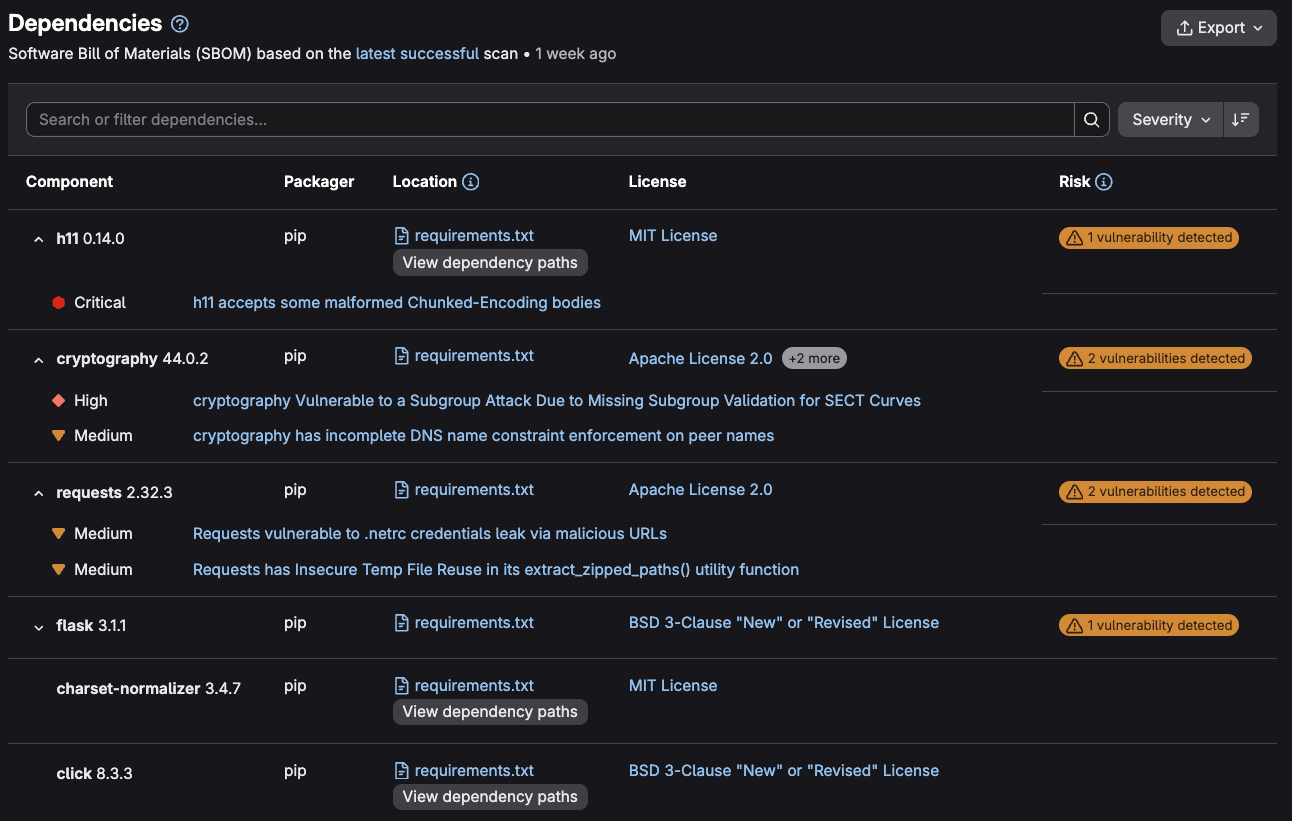
Generates machine-readable SBOMs in CycloneDX format for compliance and supply chain transparency.
Why It Matters
This feature significantly reduces noise in vulnerability reporting by focusing on reachable code, allowing security teams to prioritize high-risk issues. It is particularly relevant for AI-driven projects where developers often pull in numerous third-party libraries.
What To Do Next
Enable SBOM-based dependency scanning in your GitLab project settings to identify reachable vulnerabilities in your AI-generated codebases.
Key Points
- •Generates machine-readable SBOMs in CycloneDX format for compliance and supply chain transparency.
- •Provides transitive dependency tracing to identify the exact source of vulnerable packages.
- •Features reachability analysis to filter out vulnerabilities in code that is never actually imported or executed.
🧠 Deep Insight
Web-grounded analysis with 14 cited sources.
🔑 Enhanced Key Takeaways
- •GitLab's SBOM-based dependency scanning, now generally available for Maven, Gradle, and Python projects, includes automatic dependency resolution to construct a complete transitive dependency graph even when lockfiles are absent.
- •The CycloneDX format, which GitLab utilizes, was established by the OWASP Foundation in 2017 as a security-focused SBOM standard and gained significant industry momentum after its approval in the U.S. federal government's 2021 cybersecurity executive order.
- •This advanced dependency scanning feature, including reachability analysis, is exclusively available to GitLab Ultimate tier users, aligning with the platform's strategy to offer comprehensive security capabilities in its higher-tier offerings.
- •Reachability analysis is crucial for mitigating 'alert fatigue' by precisely identifying whether vulnerable functions in dependencies are actually invoked by the application's execution path, thereby allowing development and security teams to prioritize genuine risks over theoretical ones.
🛠️ Technical Deep Dive
- GitLab's SBOM-based dependency scanner is generally available for Maven, Gradle, and Python projects, providing comprehensive visibility into transitive dependencies.
- It features automatic dependency resolution, which, in the absence of lockfiles or resolved dependency graphs, automatically invokes tooling to build the full transitive dependency graph before scanning.
- For projects where automatic dependency resolution is not feasible, the scanner defaults to manifest scanning, parsing files like
pom.xml,requirements.txt,build.gradle, andbuild.gradle.ktsto identify direct dependencies. - The analyzer generates CycloneDX SBOM artifacts for each supported lockfile or dependency graph export, which are then scanned against the GitLab Advisory Database.
- For NuGet packages, the generated SBOMs include package hash information, enhancing the ability to verify package integrity and authenticity.
- The underlying analyzer and dependency resolution images are built on Red Hat UBI, incorporating a FIPS 140-validated cryptographic module for use in FIPS-enabled environments.
- Reachability analysis functions by determining if vulnerable functions within referenced packages are actively used within the project's codebase, specifically checking if an application's execution path can reach the vulnerability at runtime.
- Some advanced implementations, like Semgrep's 'dataflow reachability,' further analyze how data flows to a vulnerable function to ascertain its actual exploitability, leading to a significant reduction in false positives.
🔮 Future ImplicationsAI analysis grounded in cited sources
⏳ Timeline
📎 Sources (14)
Factual claims are grounded in the sources below. Forward-looking analysis is AI-generated interpretation.
Weekly AI Recap
Read this week's curated digest of top AI events →
👉Related Updates
AI-curated news aggregator. All content rights belong to original publishers.
Original source: GitLab Blog ↗