General Fusion becomes first public fusion energy company
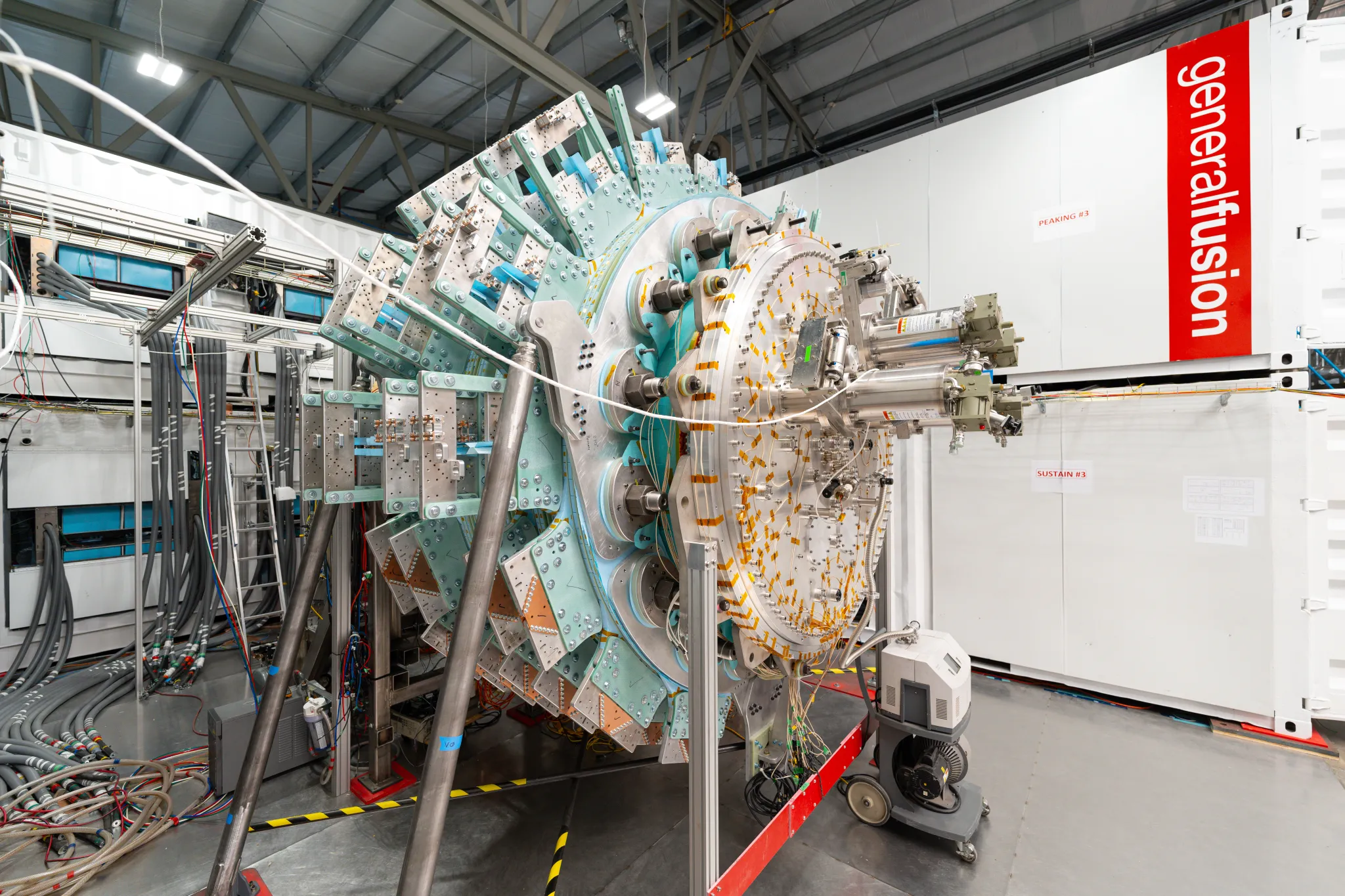
💡The first fusion energy company goes public—a major milestone for the future of high-energy infrastructure.
⚡ 30-Second TL;DR
What Changed
General Fusion listed on Nasdaq with ticker symbol GFUZ
Why It Matters
The IPO provides significant capital for fusion research, potentially accelerating the timeline for commercial fusion energy. It sets a precedent for other deep-tech energy startups to seek public funding.
What To Do Next
Monitor the financial performance of GFUZ to gauge investor sentiment toward long-term deep-tech and energy infrastructure projects.
Key Points
- •General Fusion listed on Nasdaq with ticker symbol GFUZ
- •First fusion energy company to achieve a public listing
- •Surpassed competitors like TAE Technologies in market accessibility
🧠 Deep Insight
AI-generated analysis for this event — not the original article.
🔑 Enhanced Key Takeaways
- •General Fusion's IPO follows the successful commissioning of its Lawson Machine 26 (LM26) demonstration reactor, which achieved plasma temperatures exceeding 100 million degrees Celsius in early 2026.
- •The company secured a strategic partnership with the U.S. Department of Energy's Fusion Energy Sciences program, providing non-dilutive funding to support the commercialization of its Magnetized Target Fusion (MTF) technology.
- •General Fusion transitioned from a private equity-backed model to public markets to accelerate the construction of its first commercial-scale pilot plant, projected to be operational by 2029.
- •The listing includes a unique 'fusion-specific' governance structure that mandates transparency regarding net energy gain milestones, satisfying institutional investor requirements for ESG-compliant energy assets.
- •The IPO was oversubscribed by 3.5x, driven largely by sovereign wealth funds and institutional clean-tech infrastructure investors seeking long-term exposure to baseload carbon-free power.
📊 Competitor Analysis▸ Show
| Feature | General Fusion (GFUZ) | TAE Technologies | Commonwealth Fusion Systems |
|---|---|---|---|
| Technology | Magnetized Target Fusion (MTF) | Field-Reversed Configuration | High-Temperature Superconducting Tokamak |
| Public Status | Public (Nasdaq: GFUZ) | Private | Private |
| Primary Milestone | LM26 Plasma Stability | Copernicus Reactor Testing | SPARC Construction |
| Funding Model | Public Equity / Gov Grants | Private VC / Strategic Partners | Private VC / Institutional |
🛠️ Technical Deep Dive
- Technology: Magnetized Target Fusion (MTF) utilizes a liquid metal wall (lead-lithium) to compress plasma, which simultaneously absorbs heat and breeds tritium.
- Compression Mechanism: Employs a synchronized array of pneumatic pistons to collapse the liquid metal liner, achieving the high-pressure conditions necessary for fusion.
- Plasma Confinement: Uses magnetic fields to stabilize the plasma before the mechanical compression phase, reducing energy loss during the pulse.
- Energy Conversion: The liquid metal wall acts as both the first wall and the heat transfer fluid, which is then pumped through a heat exchanger to drive a steam turbine.
- Pulse Frequency: Designed for a pulsed operation cycle, targeting a repetition rate of 1 Hz to provide continuous power output.
🔮 Future ImplicationsAI analysis grounded in cited sources
⏳ Timeline
Weekly AI Recap
Read this week's curated digest of top AI events →
👉Related Updates
AI-curated news aggregator. All content rights belong to original publishers.
Original source: cnBeta (Full RSS) ↗
This is a summary, not the original. Read the source, or get the weekly briefing.
The weekly digest
One email a week. Unsubscribe anytime.