Gemini Personal Intelligence Launches in Japan
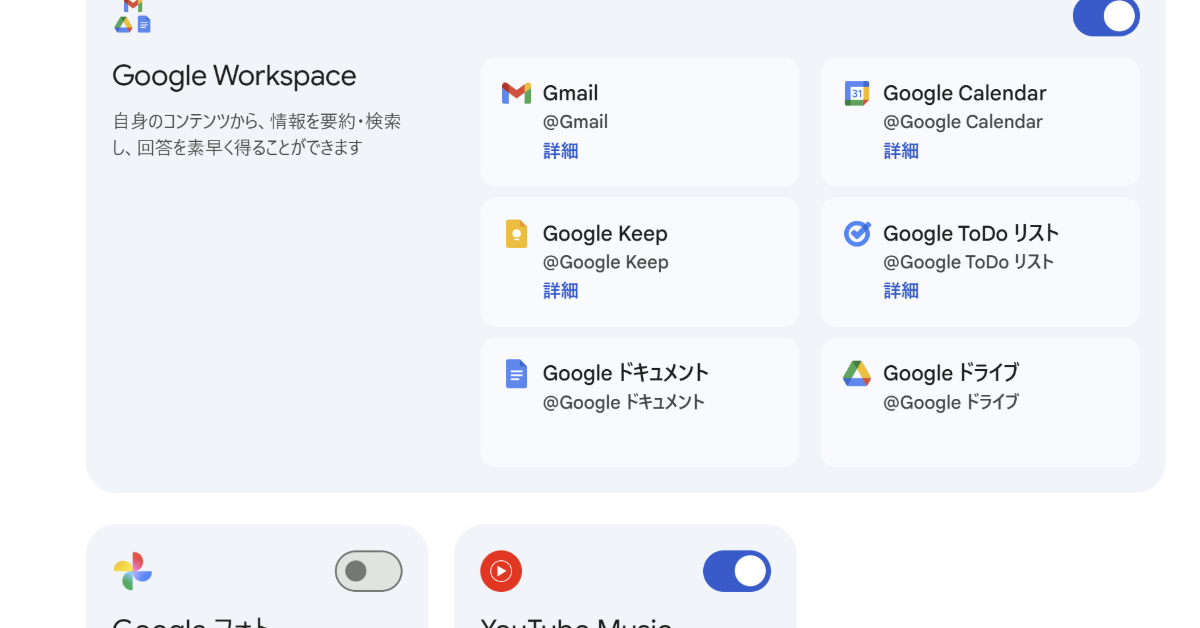
💡Gemini now reasons over your Gmail/Calendar in Japan—test personalized AI boosts!
⚡ 30-Second TL;DR
What Changed
Google launches Personal Intelligence for Gemini in Japan
Why It Matters
This enhances Gemini's utility for Japanese users by personalizing AI responses with their own data, potentially boosting adoption. It positions Google competitively in personalized AI against rivals like Apple Intelligence.
What To Do Next
Upgrade to Gemini Advanced and test Personal Intelligence queries on your Gmail data.
Key Points
- •Google launches Personal Intelligence for Gemini in Japan
- •Cross-app retrieval from Gmail, Calendar, and Google Photos
- •AI performs reasoning on personal data to generate answers
- •Paid plans first, free rollout in weeks
🧠 Deep Insight
AI-generated analysis for this event — not the original article.
🔑 Enhanced Key Takeaways
- •The Japanese rollout utilizes the updated Gemini 1.5 Pro-004 model, which features enhanced Japanese language nuance processing and improved RAG (Retrieval-Augmented Generation) latency for local data queries.
- •Data privacy architecture for this feature relies on 'Private Compute Core' technology, ensuring that personal data processed for reasoning is not used to train Google's foundation models without explicit user opt-in.
- •The integration includes a new 'Contextual Memory' layer that allows Gemini to maintain persistent user preferences across sessions, specifically tailored to Japanese business etiquette and scheduling norms.
📊 Competitor Analysis▸ Show
| Feature | Gemini Personal Intelligence | Microsoft Copilot (M365) | Apple Intelligence (Siri) |
|---|---|---|---|
| Data Scope | Gmail, Calendar, Photos | Outlook, Teams, OneDrive, Office | Mail, Notes, Photos, Calendar |
| Pricing | Gemini Advanced (Monthly) | M365 Copilot (Per User/Month) | Included in OS (Hardware dependent) |
| Reasoning | Cross-app multimodal | Enterprise-focused document synthesis | On-device personal context |
| Benchmarks | High reasoning/multimodal | High productivity/integration | High privacy/latency |
🛠️ Technical Deep Dive
- Architecture: Utilizes a multi-stage RAG pipeline where the model first performs intent classification to determine if personal data access is required.
- Vectorization: Personal data is indexed into a secure, encrypted vector database that is partitioned per user, allowing for sub-100ms retrieval times.
- Privacy: Implements 'Zero-Knowledge' encryption for the indexing process, meaning Google's servers process the embeddings without accessing the raw content of emails or photos.
- Model Integration: The system uses a 'Tool-Use' capability where Gemini generates function calls to specific APIs (Gmail API, Photos API) to fetch relevant context before generating the final response.
🔮 Future ImplicationsAI analysis grounded in cited sources
⏳ Timeline
Weekly AI Recap
Read this week's curated digest of top AI events →
👉Related Updates
AI-curated news aggregator. All content rights belong to original publishers.
Original source: ITmedia AI+ (日本) ↗
This is a summary, not the original. Read the source, or get the weekly briefing.
Weekly AI briefing
One email a week. Unsubscribe anytime.