📱Engadget•Stalecollected in 24m
Gemini in Chrome Launches on Android in June
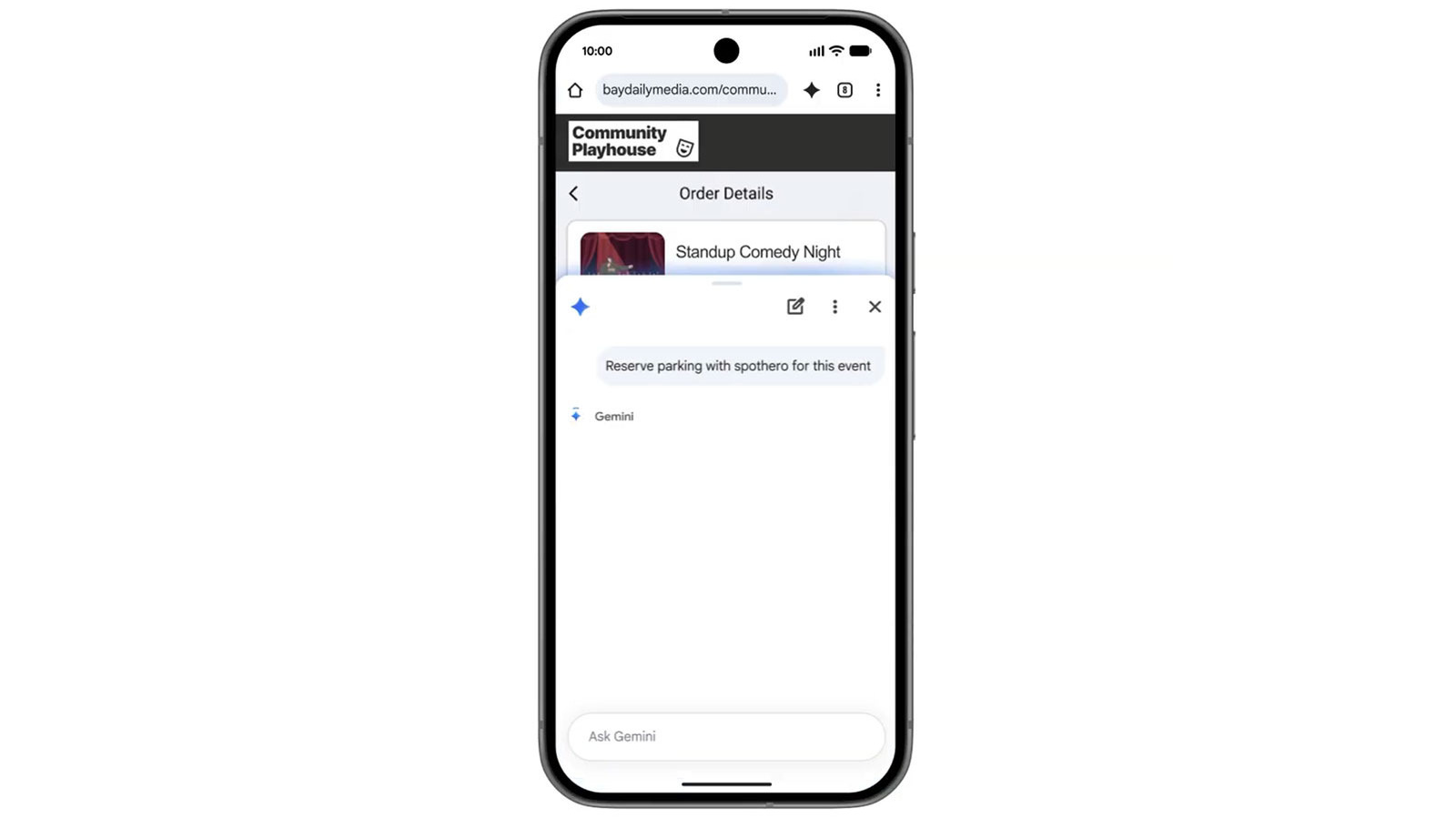
💡Gemini LLM hits Chrome on Android—test browser-native AI on mobile now
⚡ 30-Second TL;DR
What Changed
Gemini AI embeds directly in Chrome browser
Why It Matters
Brings on-browser AI assistance to millions of Android users. Lowers barrier for Gemini experimentation on mobile.
What To Do Next
Check Chrome Canary on Android (4GB+ RAM) for early Gemini integration flags.
Who should care:Developers & AI Engineers
Key Points
- •Gemini AI embeds directly in Chrome browser
- •Android rollout starts in June
- •Minimum 4GB RAM requirement for compatibility
🧠 Deep Insight
AI-generated analysis for this event.
🔑 Enhanced Key Takeaways
- •The integration utilizes on-device Gemini Nano models to ensure privacy and reduce latency for common browser tasks, rather than relying solely on cloud-based processing.
- •Users will trigger the AI assistant via a new 'Gemini' icon in the Chrome address bar, which provides context-aware suggestions based on the currently active webpage.
- •The rollout is part of a broader strategy to unify Google's AI ecosystem, allowing the browser to interface directly with Google Workspace data if the user grants specific permissions.
📊 Competitor Analysis▸ Show
| Feature | Gemini in Chrome (Android) | Microsoft Copilot (Edge) | Arc Search (Mobile) |
|---|---|---|---|
| Primary Integration | Native browser core | Sidebar/Overlay | Integrated search/browse |
| On-Device Capability | Gemini Nano (High) | Cloud-dependent | Cloud-dependent |
| Context Awareness | Page-level content | Page/System-level | Search-intent focused |
| Pricing | Free (Standard) | Free/Pro tiers | Free |
🛠️ Technical Deep Dive
- •Architecture: Utilizes a hybrid model approach where Gemini Nano handles local, low-latency tasks (summarization, text completion) while offloading complex queries to Gemini Pro via API.
- •Memory Management: The 4GB RAM requirement is strictly enforced to accommodate the model's KV cache and the browser's existing memory footprint without causing frequent background process kills.
- •Privacy: Implements a 'Privacy Sandbox' approach where sensitive user data processed by the on-device model does not leave the local environment unless explicitly authorized by the user for cloud-based tasks.
- •API Hook: The feature leverages the Chrome 'WebAI' API, allowing developers to eventually build web apps that can tap into the same local model resources.
🔮 Future ImplicationsAI analysis grounded in cited sources
Chrome will transition to an AI-first operating system interface.
Deep integration of LLMs into the browser core suggests Google intends to replace traditional search bars with generative conversational interfaces.
Hardware requirements for entry-level Android devices will rise.
The 4GB RAM floor for this feature sets a new baseline for 'AI-ready' mobile devices, likely forcing OEMs to increase base memory configurations.
⏳ Timeline
2023-12
Google announces Gemini 1.0, including the Nano model for on-device tasks.
2024-05
Google I/O showcases early prototypes of AI-assisted browsing features.
2025-02
Chrome begins testing 'Help me write' and AI-powered tab organization features.
2026-03
Google releases the Gemini Nano 2.0 update, optimizing performance for mobile browsers.
📰
Weekly AI Recap
Read this week's curated digest of top AI events →
👉Related Updates

AI-curated news aggregator. All content rights belong to original publishers.
Original source: Engadget ↗