Gemini Flash's Agentic Vision Ups Image Accuracy 10%
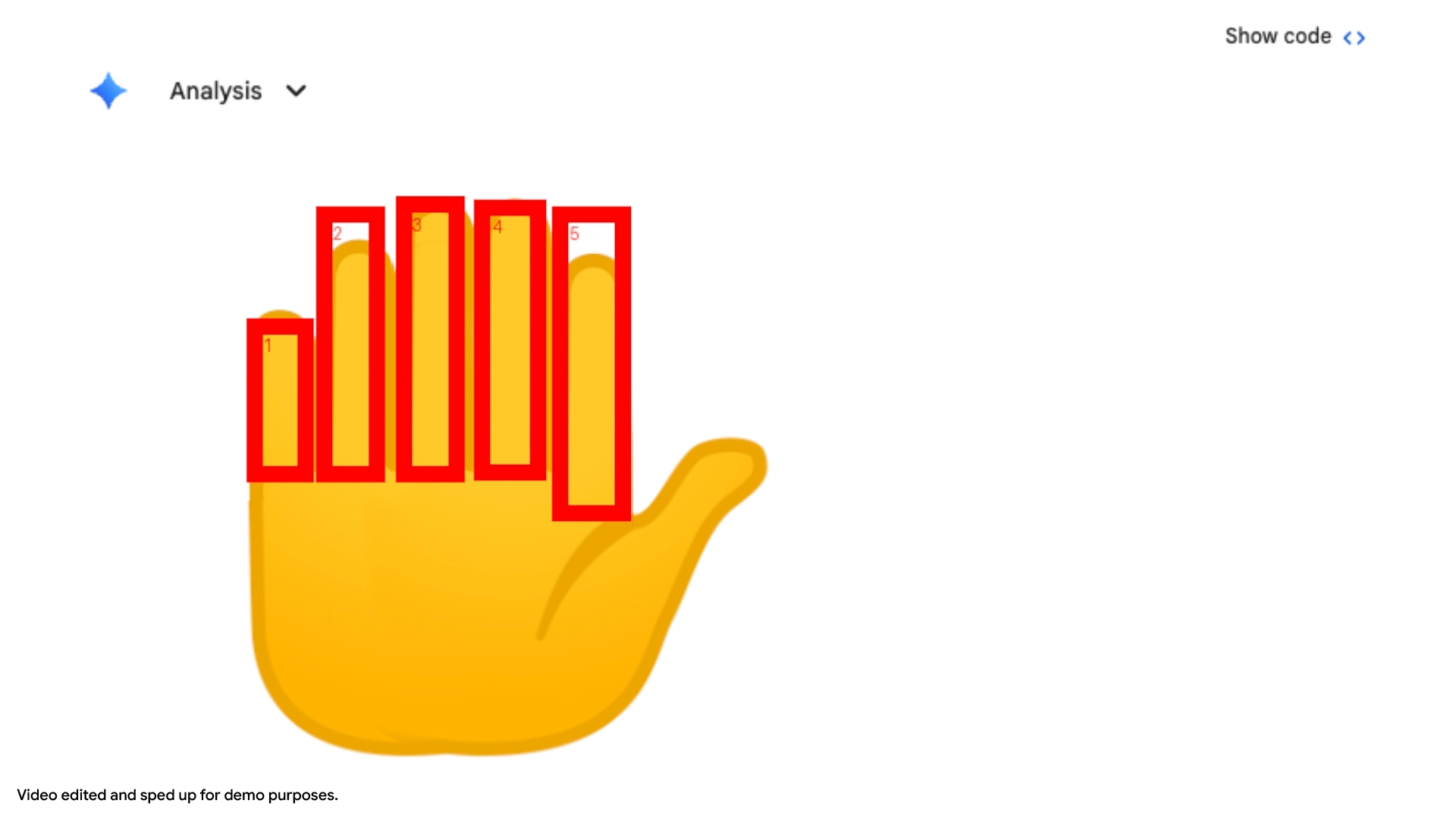
💡Gemini auto-generates Python code for 10% better image understanding—game-changer for vision devs!
⚡ 30-Second TL;DR
What Changed
Agentic Vision launched for Gemini 3 Flash
Why It Matters
This enhances multimodal AI capabilities, enabling more precise vision tasks for developers building image analysis apps. It sets a new standard for agentic workflows in vision models.
What To Do Next
Experiment with Agentic Vision in Gemini 3 Flash via Google AI Studio for image reasoning tasks.
Key Points
- •Agentic Vision launched for Gemini 3 Flash
- •Autonomously generates Python code for image probing
- •Combines visual reasoning with code execution
- •Improves image understanding accuracy by 10%
🧠 Deep Insight
Background and context from public sources — not the original article. 7 sources cited.
🔑 Enhanced Key Takeaways
- •Agentic Vision implements a 'Think, Act, Observe' loop where Gemini 3 Flash formulates multi-step plans, executes Python code to transform images, and appends results back to its context window for grounded reasoning[3].
- •The capability enables deterministic visual arithmetic through Python/Matplotlib, offloading complex image-based math calculations to reduce hallucinations compared to probabilistic reasoning alone[1][3].
- •Early adoption by PlanCheckSolver.com demonstrates real-world impact: a building plan validation platform achieved 5% accuracy improvement by using code execution to iteratively crop and analyze high-resolution architectural details[2].
- •Agentic Vision solves the previously 'hard problem' of counting digits on hands and other fine-grained object enumeration through image annotation with bounding boxes and labels[1].
- •Google plans to expand implicit code-driven behaviors (currently zooming is implicit; rotation and visual math require explicit prompts), add tools like web and reverse image search, and deploy the capability across additional model sizes beyond Flash[2].
🛠️ Technical Deep Dive
- •Core mechanism: Combines visual reasoning with code execution (Python); model generates code to crop, zoom, annotate, and manipulate images iteratively[1][3].
- •Media resolution control: Gemini 3 Flash supports configurable media resolution levels (low, medium, high, ultra high) via the
media_resolutionparameter to balance token usage and latency[5]. - •Implicit vs. explicit behaviors: Zooming into fine-grained details is implicitly triggered; other behaviors (image rotation, visual math) currently require explicit prompt nudges but are planned to become fully implicit[2].
- •Context window integration: Transformed image outputs (crops, annotations) are appended back into the model's context window to ground subsequent reasoning steps[2][3].
- •Performance gains: Consistent 5–10% quality improvement across most vision benchmarks when code execution is enabled[1][3].
- •Supported tools: Code execution (Python) is the first tool; future tools under exploration include web search, reverse image search, and additional capabilities[2].
🔮 Future ImplicationsAI analysis grounded in cited sources
⏳ Timeline
📎 Sources (7)
Factual claims are grounded in the sources below. Forward-looking analysis is AI-generated interpretation.
Weekly AI Recap
Read this week's curated digest of top AI events →
👉Related Updates


AI-curated news aggregator. All content rights belong to original publishers.
Original source: ITmedia AI+ (日本) ↗
This is a summary, not the original. Read the source, or get the weekly briefing.
Weekly AI briefing
One email a week. Unsubscribe anytime.