GaN Takes Off for Power-Hungry AI
💡GaN solves AI's power crisis—essential for scaling data centers efficiently
⚡ 30-Second TL;DR
What Changed
AI models consume excessive power, straining energy infrastructure
Why It Matters
GaN's rise could lower operational costs for AI data centers by improving power efficiency, enabling scalable AI deployments without proportional energy hikes.
What To Do Next
Benchmark GaN power supplies from suppliers like Navitas for your next AI server prototype to cut energy use by up to 40%.
Key Points
- •AI models consume excessive power, straining energy infrastructure
- •GaN technology emerges as the primary solution to mitigate AI's power hunger
- •GaN adoption is accelerating across the board for comprehensive takeoff
🧠 Deep Insight
Background and context from public sources — not the original article. 9 sources cited.
🔑 Enhanced Key Takeaways
- •GaN power devices are projected to grow at a 44% CAGR from 2025 to 2030, with the broader GaN/SiC semiconductor market expanding from $4.52 billion in 2025 to $16.04 billion by 2034, indicating rapid market acceleration beyond AI alone[3][8].
- •GaN-based power supplies in AI data centers achieve peak efficiencies of 97.5% and reduce power losses by up to 30% compared to silicon, while enabling 50% reduction in physical footprint of power supply units—critical for meeting EU-mandated 96% EcoDesign efficiency standards[2][4][6].
- •Beyond data centers, GaN is enabling new form factors in robotics (40% smaller motor drives with improved fine movement control) and automotive (800V architectures with 7% range improvements in EVs), demonstrating technology applicability across multiple high-power industries[1][4][6].
📊 Competitor Analysis▸ Show
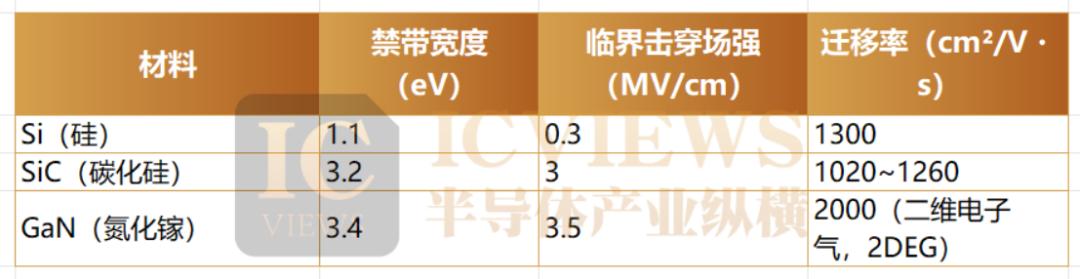
| Feature | GaN | Silicon Carbide (SiC) | Silicon |
|---|---|---|---|
| Switching Frequency | Higher | Moderate | Lower |
| Power Loss Reduction | Up to 30% vs Silicon | Comparable to GaN | Baseline |
| Efficiency (AI PSUs) | 97.5% peak | Not specified | <97% |
| Cost per Watt | Declining (double-digit reduction ongoing) | Higher initial cost | Lowest |
| Voltage Range Strength | 650V-800V optimal | 1000V+ preferred | Limited |
| Market Adoption Phase | Rapid expansion (2025-2030) | Growing parallel | Declining in high-performance |
| Thermal Management | Superior | Comparable | Inferior |
🛠️ Technical Deep Dive
• Switching Frequency & Efficiency: GaN enables higher switching frequencies than silicon, reducing conversion losses and thermal dissipation requirements; this is fundamental to achieving 97.5% peak efficiency in AI data center PSUs[2][4] • Power Density Architecture: GaN devices support planar transformers and higher-density CRPS (Common Redundant Power Supply) form factors, allowing more GPUs per rack without exceeding thermal limits[2][4] • Voltage Optimization: GaN on silicon substrate is optimal for 650V-800V range (standard in 2026 EV architectures); vertical GaN technology remains under assessment due to smaller wafer sizes and cost disadvantages[3] • Manufacturing Scaling: Infineon's transition to 300mm wafers achieves 2.3x higher chip yield versus 200mm competitors; 100V devices sampled late 2025 with production expected end-2026 or early 2027[3][4] • Thermal Management Integration: Compact GaN-based designs reduce cooling requirements and free board space in AI servers, enabling more efficient power conversion at the PSU and IT (low-voltage switch) stages[5]
🔮 Future ImplicationsAI analysis grounded in cited sources
⏳ Timeline
📎 Sources (9)
Factual claims are grounded in the sources below. Forward-looking analysis is AI-generated interpretation.
- all-about-industries.com — Gallium Nitride As a Pillar of Energy and Ki Strategy a 30842d0171fef3616af7bbfd9ca3b7c8
- navitassemi.com — Datacenter
- eenewseurope.com — AI Robotics Drive Gan Power Boom
- markets.financialcontent.com — Tokenring 2026 1 12 the Power Paradox How Gan and Sic Semiconductors Are Fueling the 2026 AI and Ev Revolution
- apec2026.eventscribe.net — Presentationinfo
- infineon.com — Infpss202602 047
- gdwecent.com — The End of the Silicon Age How Gan and Sic Are Electrifying the 2026 Green Energy Revolution
- intelmarketresearch.com — Gansic Power Semiconductor Market 24271
- futuremarketsinc.com — The Global Rf Gan Market 2026 2036
Weekly AI Recap
Read this week's curated digest of top AI events →
👉Related Updates


AI-curated news aggregator. All content rights belong to original publishers.
Original source: 钛媒体 ↗
This is a summary, not the original. Read the source, or get the weekly briefing.
Weekly AI briefing
One email a week. Unsubscribe anytime.