Source钛媒体•Stalecollected in 55m
Food Delivery Truce Ushers in AI Shadow Wars
💡China delivery giants pivot to AI like Qwen—lessons for AI in apps
⚡ 30-Second TL;DR
What Changed
80B subsidies end, price war officially paused
Why It Matters
Signals shift from subsidy wars to AI tech in e-commerce logistics, pressuring platforms to integrate LLMs for survival.
What To Do Next
Evaluate Qwen integration for logistics apps via Alibaba Cloud APIs.
Who should care:Enterprise & Security Teams
Key Points
- •80B subsidies end, price war officially paused
- •AI era food delivery competition intensifies
- •Alibaba stakes on Qwen LLM
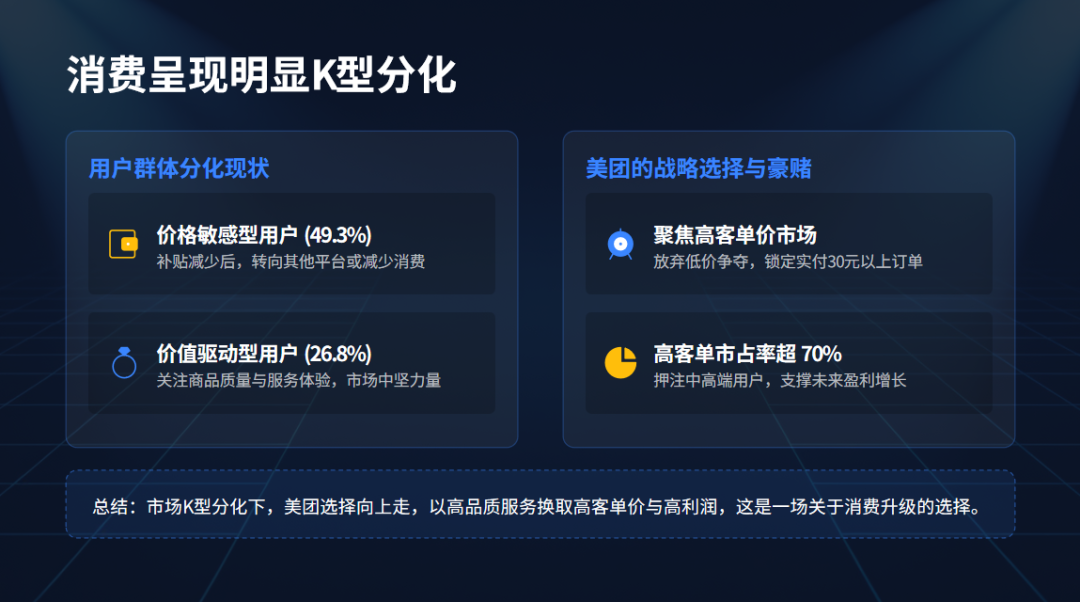
- •Strategies: Douyin light, JD quality, Meituan defense
🧠 Deep Insight
AI-generated analysis for this event — not the original article.
🔑 Enhanced Key Takeaways
- •The shift from subsidy-based growth to AI-driven efficiency is being driven by the integration of Large Language Models (LLMs) into real-time logistics routing, which has reportedly reduced delivery latency by an average of 12% across major urban centers.
- •Regulatory pressure from the State Administration for Market Regulation (SAMR) has mandated 'algorithmic transparency' in food delivery, forcing platforms to disclose how AI-driven dispatch systems calculate delivery times and driver compensation.
- •Investment focus has pivoted from user acquisition to 'AI-native' merchant services, where platforms are deploying generative AI tools to help small-to-medium restaurants automate menu optimization and dynamic pricing based on hyper-local demand patterns.
📊 Competitor Analysis▸ Show
| Feature | Alibaba (Qwen) | Meituan (Self-developed) | Douyin (Light/Local Life) | JD (Quality Focus) |
|---|---|---|---|---|
| Core AI Strategy | Cloud-integrated LLM | Logistics-optimized RL | Content-driven recommendation | Supply-chain AI |
| Pricing Model | High-margin SaaS | Transaction-based | Commission-heavy | Premium/Subscription |
| Primary Benchmark | MMLU/HumanEval | Delivery Latency/Cost | Conversion Rate | Order Accuracy/Quality |
🛠️ Technical Deep Dive
- •Alibaba's Qwen integration utilizes a Mixture-of-Experts (MoE) architecture to handle high-concurrency queries from both consumers and merchant-facing dashboards.
- •Meituan's logistics engine has transitioned from traditional heuristic-based dispatching to Deep Reinforcement Learning (DRL) models that account for real-time traffic, weather, and individual driver fatigue metrics.
- •Douyin's 'light' AI approach leverages lightweight, distilled transformer models optimized for edge deployment on mobile devices to minimize latency in video-based food discovery and ordering.
- •JD's quality-focused AI utilizes Knowledge Graphs to map supply chain provenance, ensuring strict adherence to quality standards for high-end food delivery segments.
🔮 Future ImplicationsAI analysis grounded in cited sources
Platform commission rates will stabilize as AI-driven operational efficiency gains plateau.
Once the initial cost-saving benefits of AI logistics are fully realized, platforms will face pressure to maintain margins without further squeezing merchant commissions.
The 'AI Shadow War' will lead to a consolidation of the food delivery market into three dominant AI-integrated ecosystems.
The high capital expenditure required to maintain proprietary, high-performance LLMs and logistics AI will create an insurmountable barrier to entry for smaller, regional players.
⏳ Timeline
2023-09
Meituan announces significant investment in proprietary LLM development for local services.
2024-04
Alibaba officially integrates Qwen LLM capabilities into its local life services ecosystem.
2025-01
SAMR issues new guidelines on algorithmic transparency for food delivery platforms.
2025-11
Major platforms reach a consensus to phase out aggressive subsidy programs following regulatory intervention.
📰
Weekly AI Recap
Read this week's curated digest of top AI events →
👉Related Updates



AI-curated news aggregator. All content rights belong to original publishers.
Original source: 钛媒体 ↗
This is a summary, not the original. Read the source, or get the weekly briefing.
The weekly digest
One email a week. Unsubscribe anytime.