Fei-Fei Li’s Vision Beyond Chatbots
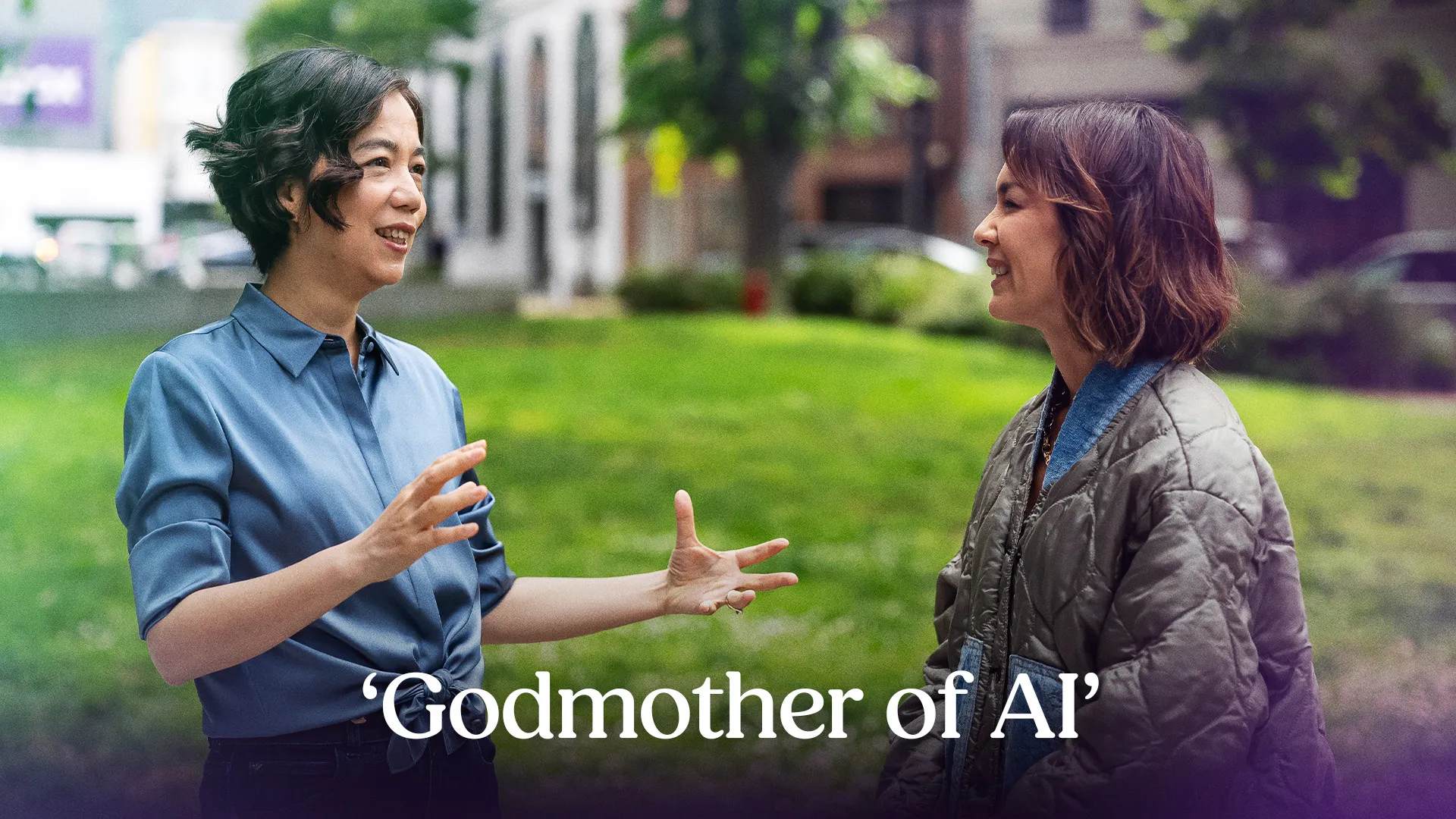
💡See why Fei-Fei Li believes AI’s next breakthrough will move beyond chatbots.
⚡ 30-Second TL;DR
What Changed
Fei-Fei Li discusses innovations that shaped her career in artificial intelligence.
Why It Matters
For AI founders and researchers, Li’s position signals continued interest in AI applications and interfaces beyond text-based assistants. World Labs could become an important company to watch as the industry explores broader forms of machine intelligence.
What To Do Next
Review World Labs’ future demos and announcements, then identify one product workflow that could benefit from AI beyond text-based chat.
Key Points
- •Fei-Fei Li discusses innovations that shaped her career in artificial intelligence.
- •Her $1 billion startup World Labs is positioned as a major vehicle for her future AI work.
- •Li argues that the future of AI lies beyond chatbot-centered interaction models.
🧠 Deep Insight
AI-generated analysis for this event.
🔑 Enhanced Key Takeaways
- •World Labs focuses on 'Spatial Intelligence,' aiming to build AI models that can understand, reason about, and interact with 3D physical environments rather than just processing text or 2D images.
- •The startup achieved a valuation of approximately $1 billion shortly after its founding, driven by Fei-Fei Li's reputation and the high-profile nature of its seed and Series A funding rounds.
- •World Labs' core research objective is to develop 'Large World Models' (LWMs) that simulate the physics and geometry of the real world, enabling AI to perform tasks in virtual or physical spaces.
- •Fei-Fei Li co-founded World Labs alongside Justin Johnson, Christoph Lassner, and Ben Mildenhall, leveraging their collective expertise in computer vision and neural rendering.
- •The company's approach emphasizes the importance of 'embodied AI,' suggesting that true intelligence requires an understanding of 3D space and causal relationships, which current Large Language Models lack.
📊 Competitor Analysis▸ Show
| Feature | World Labs (Spatial Intelligence) | OpenAI (Sora/GPT-4o) | Wayve (Embodied AI) |
|---|---|---|---|
| Primary Focus | 3D World Modeling/Physics | Generative Media/Text Reasoning | Autonomous Driving/Embodied AI |
| Core Tech | Large World Models (LWMs) | Diffusion/Transformer Models | End-to-End Deep Learning |
| Market Stage | Early Research/Development | Commercial/Enterprise | Commercial/Deployment |
🛠️ Technical Deep Dive
- Large World Models (LWMs): Architecture designed to ingest multi-modal data to construct coherent 3D representations of environments.
- Neural Rendering: Utilization of techniques similar to NeRF (Neural Radiance Fields) to synthesize novel views and simulate lighting and geometry.
- Physics Simulation: Integration of learned physical priors to predict how objects move, collide, and interact within a generated 3D space.
- Spatial Reasoning: Implementation of graph-based or volumetric memory structures to maintain object permanence and spatial relationships across time.
🔮 Future ImplicationsAI analysis grounded in cited sources
⏳ Timeline
Weekly AI Recap
Read this week's curated digest of top AI events →
👉Related Updates
AI-curated news aggregator. All content rights belong to original publishers.
Original source: Bloomberg Technology ↗