Expanding tools for AI content provenance and transparency
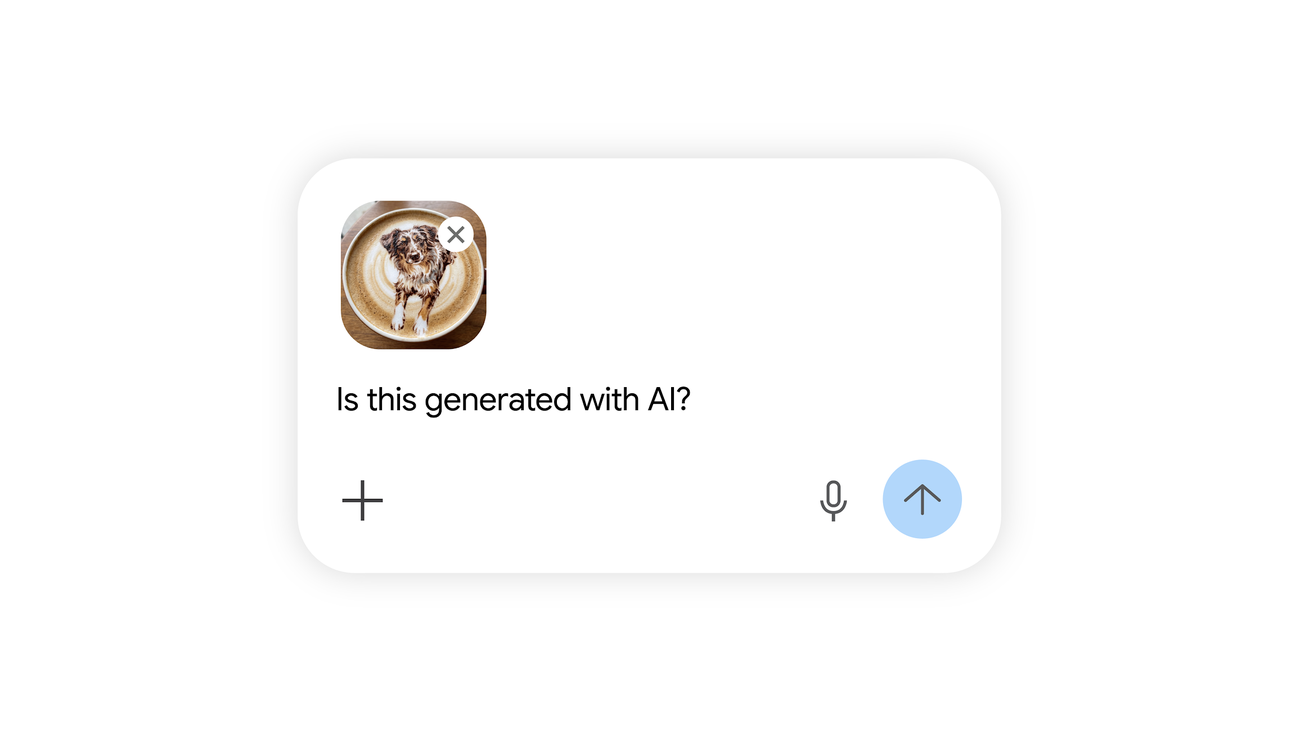
💡Learn how DeepMind is standardizing AI content provenance to combat misinformation and improve digital transparency.
⚡ 30-Second TL;DR
What Changed
Deployment of enhanced provenance tracking for digital media
Why It Matters
These tools will likely become industry standards for content verification, forcing developers to integrate metadata standards like C2PA more aggressively.
What To Do Next
Review your content pipeline to ensure compatibility with emerging C2PA metadata standards for AI-generated assets.
Key Points
- •Deployment of enhanced provenance tracking for digital media
- •Focus on identifying AI-generated or AI-edited content
- •Commitment to improving web-wide content transparency
🧠 Deep Insight
Web-grounded analysis with 27 cited sources.
🔑 Enhanced Key Takeaways
- •DeepMind's primary tool, SynthID, embeds imperceptible digital watermarks directly into AI-generated images, audio, text, and video, designed to survive common modifications like cropping, compression, and filters.
- •SynthID's verification capabilities are being integrated across Google products, including Search (via Lens, AI Mode, Circle to Search), Chrome, and the Gemini app, allowing users to directly query if content is AI-generated by Google's models.
- •Google is actively collaborating with the Coalition for Content Provenance and Authenticity (C2PA), incorporating its Content Credentials standard, which uses cryptographically signed metadata to record content origin and editing history, complementing SynthID's watermarking.
- •DeepMind open-sourced SynthID for text watermarking in October 2024, enabling developers to integrate this technology into their own models and promoting broader adoption across the AI ecosystem.
- •Beyond watermarking, Google DeepMind also developed "Backstory," an experimental AI tool launched in July 2025, which provides a holistic assessment of an image's context, origin, and usage history online, including whether it was AI-generated or altered.
📊 Competitor Analysis▸ Show
| Feature/Aspect | Google DeepMind (SynthID + C2PA) | Adobe (Content Credentials / CAI) | Microsoft (C2PA / Azure OpenAI) | OpenAI (C2PA / SynthID) | Digimarc |
|---|---|---|---|---|---|
| Primary Approach | Invisible Watermarking (SynthID) + Cryptographic Metadata (C2PA) | Cryptographic Metadata (C2PA) | Cryptographic Metadata (C2PA) + Watermarking (Azure OpenAI) | Cryptographic Metadata (C2PA) + Invisible Watermarking (SynthID) | Invisible Watermarking |
| Content Types | Images, Video, Audio, Text | Images, expanding to broader media types | Images (DALL-E outputs on Azure) | Images (DALL-E 3, ImageGen, Sora), expanding to other types | Images, potentially other media |
| Robustness | High (SynthID designed to survive compression, cropping, filters; C2PA is tamper-evident) | Strong (C2PA: cryptographic proof, invalidates signature on modification) | Strong (C2PA) + Moderate (watermarking) | High (SynthID) + Strong (C2PA) | High (persists through some resizing/recompression) |
| Information Detail | Minimal (watermark) + Rich (C2PA metadata) | Rich (full edit history, creator identity, tool chain, timestamps) | Rich (C2PA) + Minimal (watermark) | Rich (C2PA) + Minimal (watermark) | Minimal (identification and tracking) |
| Retroactive Detection | No (watermark/C2PA applied at creation) | No (C2PA applied at creation/editing) | No (C2PA/watermark applied at creation) | No (C2PA/watermark applied at creation) | No (applied at creation) |
| Open Standard/Collaboration | C2PA Steering Committee member, open-sourced SynthID for text | Leads Content Authenticity Initiative (CAI), C2PA Steering Committee member | C2PA Steering Committee member | C2PA Steering Committee member, integrates SynthID | Proprietary, but complements standards |
🛠️ Technical Deep Dive
- SynthID for Images/Video: Embeds imperceptible digital watermarks directly into the pixels of an image or every frame of a video.
- Utilizes two co-trained neural networks: an embedder that injects the watermark and a detector that identifies it.
- Watermarks are designed to be robust against common manipulations like cropping, adding filters, changing frame rates, and lossy compression.
- Robustness training involves repeatedly attacking both networks with transformations (JPEG compression, filters, rotation, noise, resizing) and penalizing the embedder when the watermark weakens.
- The watermark is holographically distributed, meaning even cropped fragments can retain detectable information.
- SynthID for Text: Modifies the token sampling loop during text generation.
- It adjusts the probability scores of tokens generated by a large language model (LLM) to encode watermarking information.
- This is achieved through "tournament sampling," wrapped around the model's logits, without noticeably affecting text quality, accuracy, creativity, or speed.
- The watermark is encoded in how tokens were selected, not by adding visible markers.
- Implemented as a logits processor in the generation pipeline.
- SynthID for Audio: Embeds a watermark into audio generated by models like Lyria.
- Integrates watermarking into the latent space of music generation models for persistent traceability.
- Must preserve musical integrity while being resilient against transformations such as tempo changes, remixes, and dynamic equalization.
- Detection: The SynthID Detector is a verification portal/feature that scans content for these digital watermarks and assesses the likelihood of it being AI-generated by Google's tools, providing confidence levels.
- C2PA Integration: Content Credentials use cryptographically signed metadata to record provenance (who created, what tools, edits, AI involvement) and are designed to be tamper-resistant.
- These two systems (SynthID and C2PA) reinforce each other: C2PA provides rich context, while SynthID preserves a signal even if metadata is stripped (e.g., by screenshots).
🔮 Future ImplicationsAI analysis grounded in cited sources
⏳ Timeline
📎 Sources (27)
Factual claims are grounded in the sources below. Forward-looking analysis is AI-generated interpretation.
- deepmind.google
- dev.to
- ai.google
- deepmind.google
- deepmind.google
- wikipedia.org
- searchenginejournal.com
- blog.google
- mashable.com
- mashable.com
- publicpolicy.google
- marketingaiinstitute.com
- c2pa.ai
- c2pa.org
- blog.google
- google.dev
- towardsai.net
- deepmind.google
- saiwa.ai
- rajeshkumar.xyz
- medium.com
- investing.com
- contentauthenticity.org
- defense.gov
- arxiv.org
- devoteam.com
- imatag.com
Weekly AI Recap
Read this week's curated digest of top AI events →
👉Related Updates
AI-curated news aggregator. All content rights belong to original publishers.
Original source: DeepMind Blog ↗