Ex-SpaceX Engineers Build Robotic Steel Factory
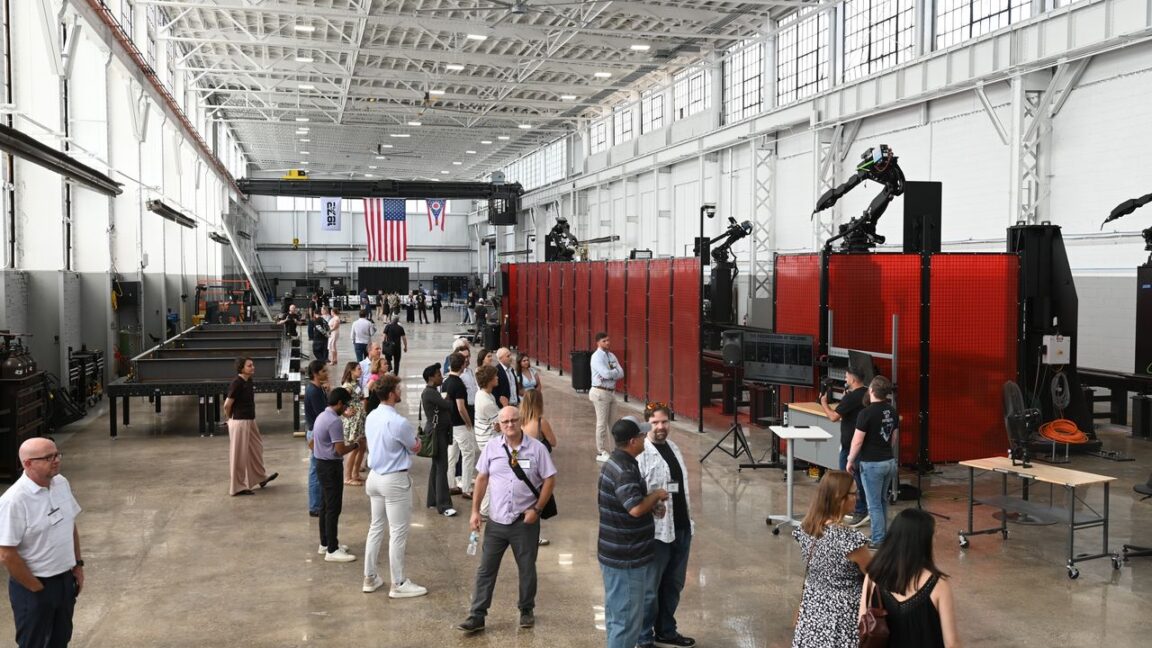
💡See how former SpaceX engineers are taking a pragmatic path to robotic manufacturing.
⚡ 30-Second TL;DR
What Changed
Former SpaceX engineers are building a factory focused on steel-part production.
Why It Matters
A practical robotics strategy that combines automation with human intervention could lower deployment risk in industrial settings. If successful, the factory may offer a model for applying embodied AI to specialized manufacturing tasks.
What To Do Next
Map one steel-part production workflow in your operation and identify which steps could be automated while retaining a human approval checkpoint.
Key Points
- •Former SpaceX engineers are building a factory focused on steel-part production.
- •The facility is centered on robotic manufacturing rather than conventional manual workflows.
- •The team is deliberately avoiding a dogmatic push toward full autonomy.
🧠 Deep Insight
AI-generated analysis for this event.
🔑 Enhanced Key Takeaways
- •The company, known as Hadrian, has secured significant venture capital funding, including a $90 million Series A round led by Lux Capital and Andreessen Horowitz.
- •Hadrian utilizes a 'software-defined manufacturing' approach, integrating proprietary software that automates the quoting, programming, and machining processes for aerospace and defense components.
- •The factory is specifically designed to address the 'bottleneck' in the aerospace supply chain by reducing lead times for precision-machined metal parts from months to weeks.
- •The founders, including CEO Jullian Mann, emphasize that their robotic systems are designed to augment human machinists rather than replace them, focusing on high-mix, low-volume production.
- •Hadrian has established its primary manufacturing hub in Los Angeles, California, strategically positioning itself near major aerospace contractors and SpaceX facilities.
📊 Competitor Analysis▸ Show
| Feature | Hadrian | Traditional CNC Job Shops | Additive Manufacturing Firms |
|---|---|---|---|
| Lead Times | Weeks | Months | Days to Weeks |
| Automation Level | High (Software-Defined) | Low (Manual/Legacy) | High |
| Primary Focus | Precision Metal Parts | General Machining | Prototyping/Complex Geometry |
| Pricing Model | Automated/Dynamic | Quote-based/Variable | Volume-based |
🛠️ Technical Deep Dive
- Utilizes a proprietary software stack that automatically converts CAD files into machine code (G-code) for CNC milling machines.
- Implements a modular robotic cell architecture where robotic arms handle material loading, unloading, and tool changing to enable 24/7 operation.
- Employs advanced sensor fusion and real-time monitoring to detect tool wear and adjust machining parameters dynamically, minimizing scrap rates.
- Focuses on high-precision CNC milling and turning capabilities capable of handling aerospace-grade alloys like titanium, aluminum, and stainless steel.
🔮 Future ImplicationsAI analysis grounded in cited sources
⏳ Timeline
Weekly AI Recap
Read this week's curated digest of top AI events →
👉Related Updates
AI-curated news aggregator. All content rights belong to original publishers.
Original source: Ars Technica AI ↗