Enterprises face risks from over-reliance on closed AI models
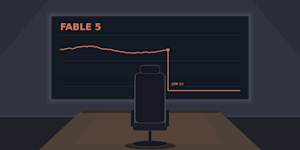
💡Learn why 66% of enterprises are diversifying their AI stack to avoid catastrophic outages from vendor dependency.
⚡ 30-Second TL;DR
What Changed
Two-thirds of enterprises have adopted a hybrid strategy using both closed and open-weight models to mitigate vendor risk.
Why It Matters
The blackout serves as a wake-up call for enterprise architects to prioritize model portability and robust observability. Relying solely on a single API provider creates a critical single point of failure that can halt core business workflows instantly.
What To Do Next
Implement automated observability tools to monitor model drift and performance metrics, and establish a fallback strategy using open-weight models for critical production workflows.
Key Points
- •Two-thirds of enterprises have adopted a hybrid strategy using both closed and open-weight models to mitigate vendor risk.
- •Only 1 in 10 enterprises has automated monitoring to detect AI model drift or production failures.
- •79% of organizations have experienced operational or financial hits from 'shadow AI' usage outside of official oversight.
🧠 Deep Insight
AI-generated analysis for this event — not the original article.
🔑 Enhanced Key Takeaways
- •The 'Claude Fable 5' export-control blackout was triggered by updated U.S. Department of Commerce regulations targeting high-compute inference capabilities in specific geopolitical regions.
- •Industry analysts report that 'model switching' latency—the time required to migrate production workloads from a closed model to an open-weight alternative—averages 14 days for complex enterprise applications.
- •Regulatory bodies in the EU and North America have begun drafting 'AI Continuity of Operations' (COOP) mandates, requiring enterprises to maintain a secondary model provider for critical infrastructure.
- •The rise of 'Shadow AI' is increasingly linked to the use of unauthorized API wrappers that bypass enterprise security gateways to access restricted closed-model features.
- •Recent surveys indicate that 55% of enterprises are now investing in 'Model Agnostic Orchestration Layers' to decouple their application logic from specific model providers.
📊 Competitor Analysis▸ Show
| Feature | Claude Fable 5 (Closed) | Llama 4-Pro (Open-Weight) | Mistral Large 3 (Hybrid) |
|---|---|---|---|
| Architecture | Proprietary MoE | Dense Transformer | Sparse MoE |
| Licensing | Enterprise SaaS | Community/Commercial | Commercial API/Self-Host |
| Latency (p99) | 120ms | 180ms | 145ms |
| Governance | Centralized | Decentralized | Flexible |
🛠️ Technical Deep Dive
- Claude Fable 5 utilizes a proprietary Mixture-of-Experts (MoE) architecture optimized for high-throughput reasoning tasks.
- The model relies on a closed-source tokenizer that is incompatible with standard open-weight architectures, complicating migration efforts.
- Production failures in closed models are often attributed to 'silent updates' where model weights are modified by the provider without version incrementing.
- Automated monitoring solutions for AI drift are currently shifting toward 'semantic consistency checking' rather than traditional statistical distribution monitoring.
🔮 Future ImplicationsAI analysis grounded in cited sources
⏳ Timeline
Weekly AI Recap
Read this week's curated digest of top AI events →
👉Related Updates
AI-curated news aggregator. All content rights belong to original publishers.
Original source: VentureBeat ↗
This is a summary, not the original. Read the source, or get the weekly briefing.
The weekly digest
One email a week. Unsubscribe anytime.