Source钛媒体•Stalecollected in 38m
Embodied AI Hits Deployment Era at 30% GPT-3 Progress
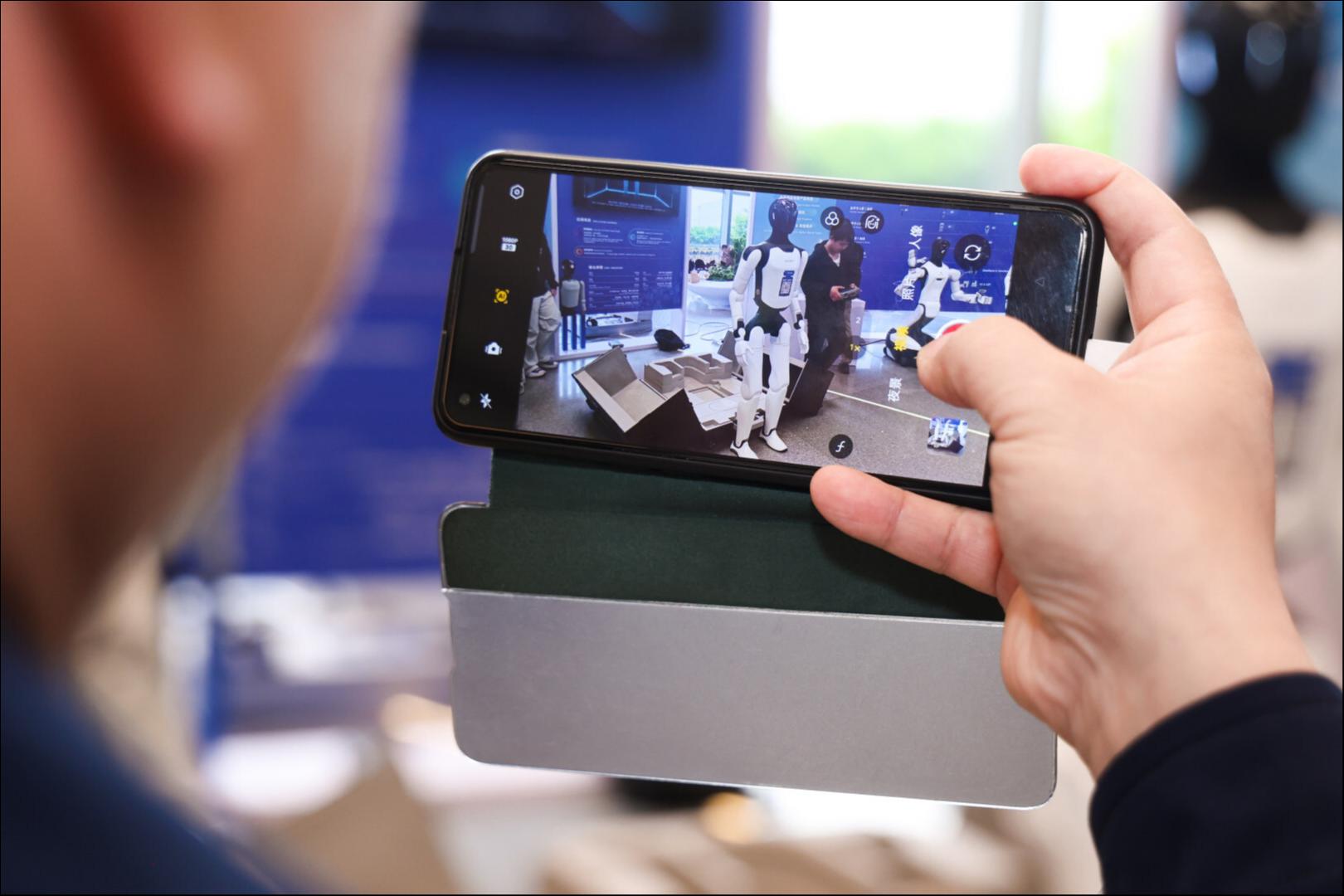
💡Zhiyuan's 30% to embodied GPT-3 amid deployment shift—key for robotics devs.
⚡ 30-Second TL;DR
What Changed
Embodied AI deployment era officially begins
Why It Matters
Signals maturation of embodied AI, pushing commercialization. Practitioners can expect more deployable robotics solutions soon.
What To Do Next
Track Zhiyuan Robotics benchmarks to benchmark your embodied AI models.
Who should care:Researchers & Academics
Key Points
- •Embodied AI deployment era officially begins
- •Zhiyuan reports 30% progress to GPT-3 equivalent
- •Shift from robot sales to outcome delivery
- •Internal industry benchmark update
🧠 Deep Insight
AI-generated analysis for this event — not the original article.
🔑 Enhanced Key Takeaways
- •The '30% GPT-3 progress' metric refers to the Beijing Academy of Artificial Intelligence (BAAI/Zhiyuan) benchmarking their embodied foundation models against the scaling laws and generalization capabilities observed in early LLM development.
- •The shift toward 'outcome delivery' is driven by the integration of Large Behavior Models (LBMs) that allow robots to perform zero-shot task planning in unstructured environments, reducing the need for hard-coded programming.
- •Industry analysts note that this 'deployment year one' is characterized by a transition from academic simulation-to-reality (Sim2Real) research to pilot programs in controlled industrial and logistics settings.
📊 Competitor Analysis▸ Show
| Feature | Zhiyuan (BAAI) | Tesla (Optimus) | Figure AI |
|---|---|---|---|
| Primary Focus | Open-source foundation models | End-to-end neural motor control | Commercial humanoid deployment |
| Model Architecture | Embodied Foundation Model (EFM) | End-to-end Transformer (FSD-derived) | Multimodal VLM-based planning |
| Deployment Status | Pilot/Research | Internal factory testing | Commercial pilot (BMW/others) |
🛠️ Technical Deep Dive
- •Architecture utilizes a multimodal transformer backbone capable of processing proprioceptive data, visual inputs, and natural language instructions simultaneously.
- •Employs a 'World Model' approach to predict future states of the environment, enabling robots to anticipate physical consequences of actions before execution.
- •Training pipeline relies heavily on synthetic data generation from high-fidelity physics engines (e.g., Isaac Gym) to bridge the reality gap, currently estimated at 30% efficiency compared to text-based LLM scaling.
- •Focuses on 'General Purpose Manipulation' (GPM) rather than specialized motion primitives, allowing for cross-embodiment transfer of learned skills.
🔮 Future ImplicationsAI analysis grounded in cited sources
Hardware commoditization will accelerate by 2027.
As software becomes the primary differentiator through foundation models, robot manufacturers will increasingly compete on cost and durability rather than proprietary control software.
Standardized embodied benchmarks will emerge within 18 months.
The industry's shift to 'outcome delivery' necessitates universal metrics for task success rates to satisfy enterprise-level procurement requirements.
⏳ Timeline
2023-06
BAAI announces strategic pivot toward embodied intelligence research.
2024-05
Release of initial embodied foundation model prototypes for academic testing.
2025-11
BAAI achieves internal milestone for cross-platform task generalization.
📰
Weekly AI Recap
Read this week's curated digest of top AI events →
👉Related Updates

AI-curated news aggregator. All content rights belong to original publishers.
Original source: 钛媒体 ↗
This is a summary, not the original. Read the source, or get the weekly briefing.
The weekly digest
One email a week. Unsubscribe anytime.