Eli Lilly Licenses Insilico AI GLP-1 for $2.75B
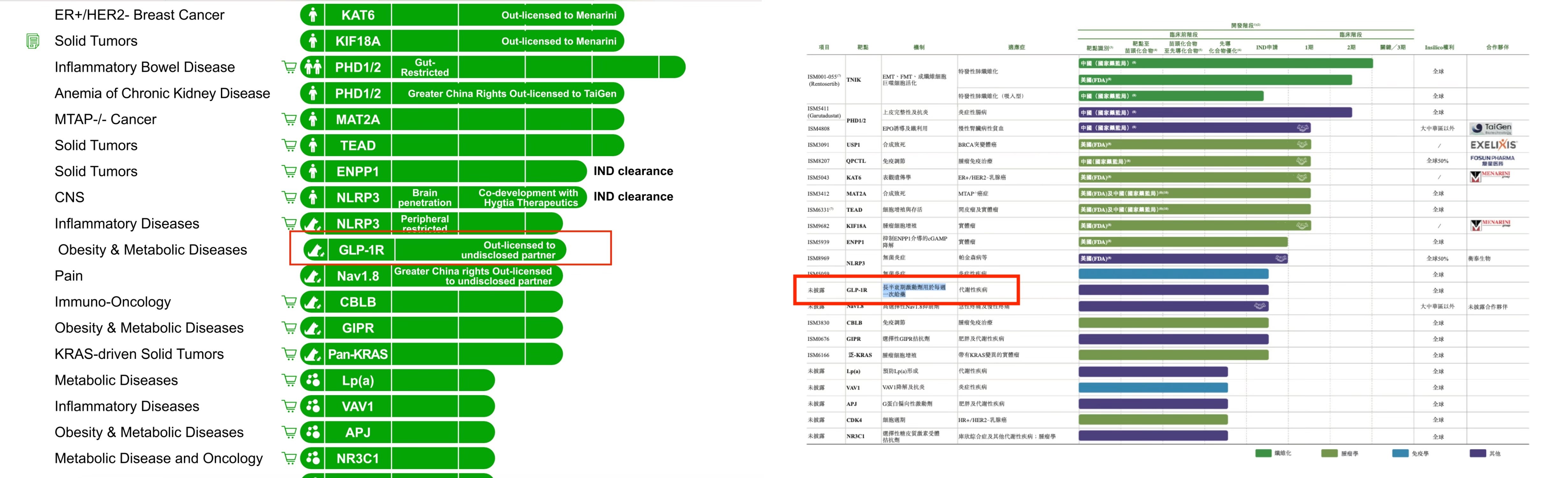
💡AI pharma hits $2.75B deal milestone—key for drug discovery practitioners eyeing biotech BD.
⚡ 30-Second TL;DR
What Changed
Deal totals $2.75B with $115M upfront for preclinical oral GLP-1 weekly agonist
Why It Matters
This landmark deal validates AI-driven drug discovery, boosting Insilico's valuation and attracting more big pharma interest. It signals a shift to joint-development BD models where Chinese AI biotechs act as outsourced R&D hubs.
What To Do Next
Explore Insilico's Pharma AI platform demos for accelerating your drug target validation pipelines.
Key Points
- •Deal totals $2.75B with $115M upfront for preclinical oral GLP-1 weekly agonist
- •Pharma AI platform has generated $2.17B in prior BD deals
- •Eli Lilly's aggressive AI investments include NVIDIA partnerships for drug discovery
- •Insilico expects 60-70% chance of hitting milestones
🧠 Deep Insight
AI-generated analysis for this event — not the original article.
🔑 Enhanced Key Takeaways
- •The deal marks a strategic shift for Eli Lilly, moving beyond internal R&D to integrate Insilico's 'PandaOmics' and 'Chemistry42' generative AI engines specifically for the optimization of small-molecule GLP-1 receptor agonists.
- •Insilico's proprietary AI platform utilized a novel 'target-to-hit' discovery process that reportedly reduced the preclinical development timeline for this specific GLP-1 candidate by approximately 18 months compared to traditional high-throughput screening methods.
- •The agreement includes a unique 'co-development' clause that allows Lilly to utilize Insilico's AI-driven digital twin technology to simulate patient response profiles before initiating Phase I clinical trials.
📊 Competitor Analysis▸ Show
| Feature | Insilico/Lilly (AI-GLP-1) | Schrodinger/Various | Exscientia/Various |
|---|---|---|---|
| Primary Focus | Generative AI for Small Molecule GLP-1 | Physics-based computational platform | AI-driven precision drug design |
| Development Stage | Preclinical (Weekly Oral) | Varies (Platform-as-a-Service) | Varies (Clinical/Preclinical) |
| Key Differentiator | Integrated 'PandaOmics' target discovery | High-fidelity molecular simulation | Automated iterative design loops |
🛠️ Technical Deep Dive
- PandaOmics Integration: Utilizes a proprietary knowledge graph containing over 10 million biological entities to identify novel binding sites on the GLP-1 receptor.
- Chemistry42 Architecture: Employs a generative adversarial network (GAN) and reinforcement learning (RL) to design molecules with optimized pharmacokinetic (PK) properties, specifically targeting oral bioavailability and half-life extension.
- Digital Twin Simulation: Implements multi-omics data integration to create in-silico patient models, allowing for the prediction of potential off-target effects and metabolic stability prior to synthesis.
🔮 Future ImplicationsAI analysis grounded in cited sources
⏳ Timeline
Weekly AI Recap
Read this week's curated digest of top AI events →
👉Related Updates
AI-curated news aggregator. All content rights belong to original publishers.
Original source: 36氪 ↗
This is a summary, not the original. Read the source, or get the weekly briefing.
The weekly digest
One email a week. Unsubscribe anytime.