DTU Nano Laser Reshapes Future Chips
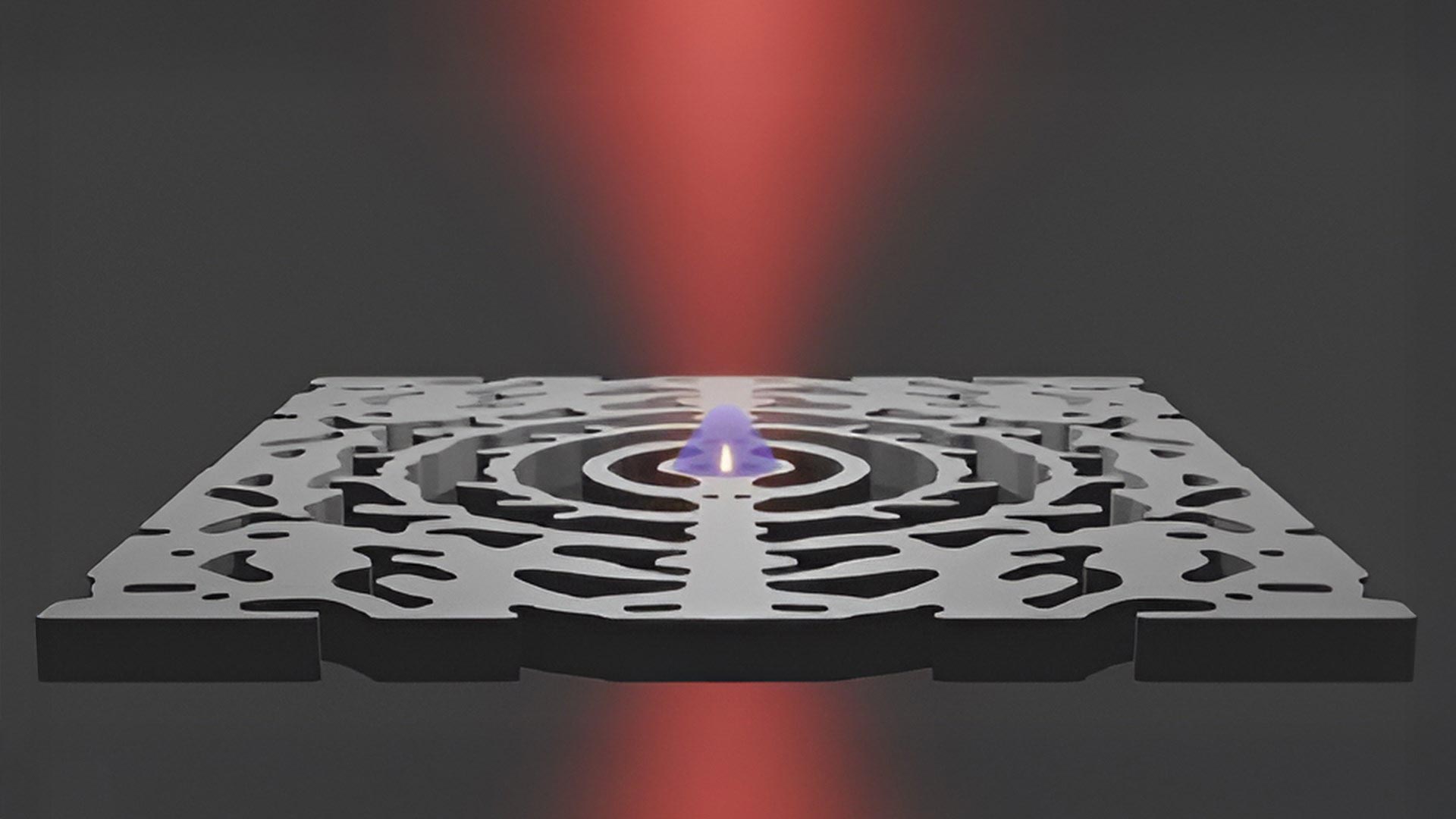
💡Thousands of nano lasers per chip could slash AI hardware power needs dramatically.
⚡ 30-Second TL;DR
What Changed
Nano laser constructed in semiconductor thin films by DTU team
Why It Matters
This advances photonic computing, potentially enabling denser AI accelerators with lower power for data centers. It could accelerate scaling of AI training and inference workloads.
What To Do Next
Review DTU's nano laser paper to prototype photonic interconnects for AI chip designs.
Key Points
- •Nano laser constructed in semiconductor thin films by DTU team
- •Enables photonic over electronic data transfer inside chips
- •Supports thousands of units per microchip integration
- •Improves speed while reducing power consumption significantly
🧠 Deep Insight
AI-generated analysis for this event — not the original article.
🔑 Enhanced Key Takeaways
- •The DTU nano laser utilizes a photonic crystal cavity design, which allows for extreme light confinement within a sub-wavelength volume, overcoming the traditional diffraction limit.
- •The research team successfully demonstrated room-temperature continuous-wave operation, a critical hurdle for practical integration into commercial CMOS manufacturing processes.
- •The integration approach leverages a heterogeneous integration technique, bonding III-V semiconductor materials onto silicon-on-insulator (SOI) wafers to combine light-emitting efficiency with silicon's scalability.
🛠️ Technical Deep Dive
- Cavity Type: Photonic crystal nanobeam cavity.
- Material Platform: Indium Phosphide (InP) membrane bonded to Silicon-on-Insulator (SOI).
- Footprint: Sub-micron scale, enabling high-density integration.
- Operating Mode: Continuous-wave (CW) operation at room temperature.
- Coupling: Efficient evanescent coupling to silicon waveguides for on-chip signal routing.
🔮 Future ImplicationsAI analysis grounded in cited sources
⏳ Timeline
Weekly AI Recap
Read this week's curated digest of top AI events →
👉Related Updates
AI-curated news aggregator. All content rights belong to original publishers.
Original source: cnBeta (Full RSS) ↗
This is a summary, not the original. Read the source, or get the weekly briefing.
The weekly digest
One email a week. Unsubscribe anytime.