Doubao Evolves into a Codex-Style Agent
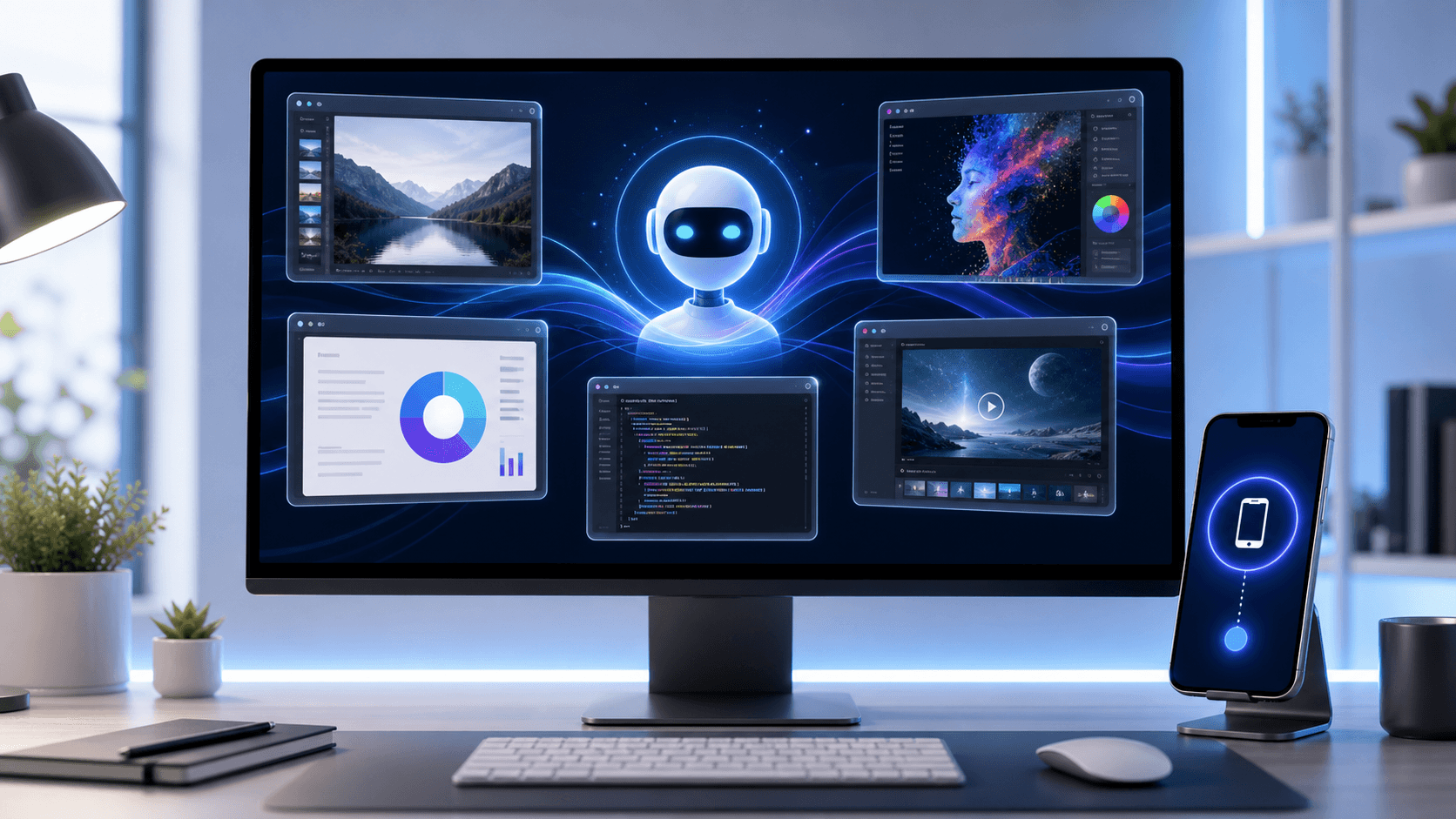
💡Doubao is bringing browser control, remote tasks, and cloud computers to a massive user base.
⚡ 30-Second TL;DR
What Changed
Doubao now supports browser-based tasks that require user login.
Why It Matters
Doubao’s expansion could accelerate mainstream adoption of computer-use agents in China by embedding them in a widely used desktop client. For developers, it highlights the growing importance of GUI control, remote execution, connectors, and reusable agent skills.
What To Do Next
Test Doubao’s browser login and GUI-control features on a low-risk internal task, then assess its remote execution, connectors, and Skills for automation potential.
Key Points
- •Doubao now supports browser-based tasks that require user login.
- •The client can operate graphical user interfaces like a computer-use agent.
- •Users can initiate or control PC tasks remotely from a phone.
- •Cloud computers, connectors, and Skills extend the agent beyond the local desktop.
- •ByteDance is combining a large consumer user base with Codex-style agent capabilities.
🧠 Deep Insight
AI-generated analysis for this event.
🔑 Enhanced Key Takeaways
- •Doubao's integration utilizes a proprietary 'Computer Use' framework that leverages multimodal perception to interpret UI elements, similar to Anthropic's Claude Computer Use capabilities.
- •The 'Connectors' feature allows Doubao to interface directly with enterprise SaaS APIs, enabling automated data synchronization between the PC client and third-party business applications.
- •ByteDance has implemented a 'Human-in-the-loop' security protocol for GUI control, requiring explicit user authorization for high-stakes actions like financial transactions or system setting changes.
- •The remote phone-to-PC functionality is powered by a low-latency relay protocol designed to maintain synchronization even under unstable network conditions, facilitating cross-device workflow continuity.
- •Doubao's 'Skills' ecosystem allows third-party developers to package specific automation sequences as modular agents, which can be triggered via natural language commands within the PC client.
📊 Competitor Analysis▸ Show
| Feature | Doubao (ByteDance) | Claude (Anthropic) | ChatGPT (OpenAI) |
|---|---|---|---|
| GUI Control | Native PC Client | API/Browser-based | Limited (via Desktop App) |
| Cross-Device | Phone-to-PC Remote | Limited | Sync-based |
| Ecosystem | 'Skills' Marketplace | Projects/Tools | GPTs |
| Pricing | Freemium/Subscription | Subscription/Usage | Freemium/Subscription |
🛠️ Technical Deep Dive
- Architecture: Employs a hybrid model approach where a lightweight vision-language model (VLM) handles UI parsing while a larger reasoning model manages task planning.
- GUI Interaction: Uses coordinate-based mapping to translate natural language instructions into mouse clicks, keyboard inputs, and scroll events.
- Security: Implements sandboxed execution environments for cloud-based tasks to prevent unauthorized system access.
- Latency Optimization: Utilizes edge-computing nodes to process visual UI streams locally, reducing the round-trip time for remote control commands.
🔮 Future ImplicationsAI analysis grounded in cited sources
⏳ Timeline
Weekly AI Recap
Read this week's curated digest of top AI events →
👉Related Updates
AI-curated news aggregator. All content rights belong to original publishers.
Original source: Pandaily ↗