Digital Twins: Superworker Boost or Legal Risk?
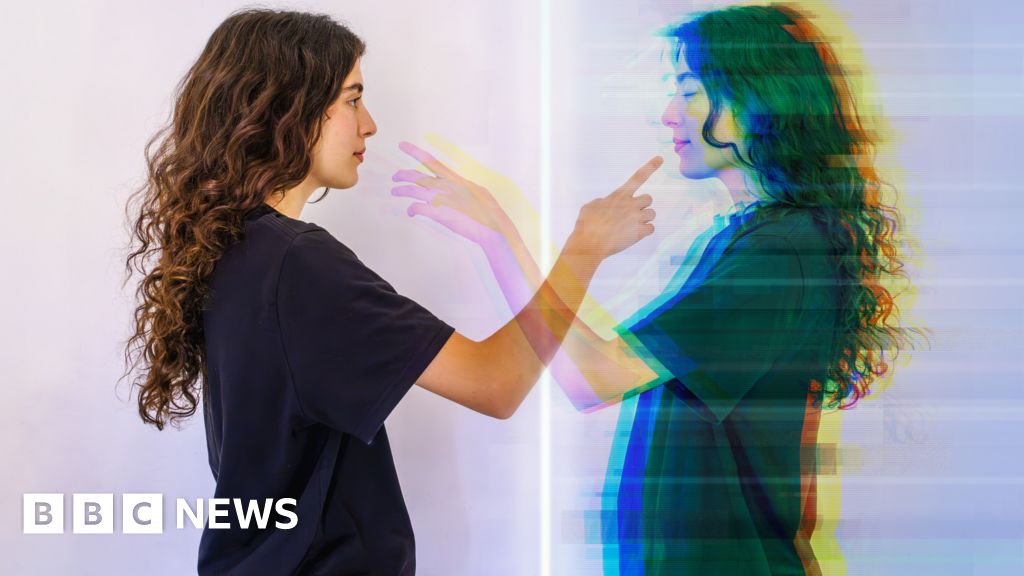
💡Digital twins promise worker superpowers but flag legal risks—vital for enterprise AI rollout.
⚡ 30-Second TL;DR
What Changed
Firms promote digital twins for higher staff productivity
Why It Matters
This could accelerate AI-driven workplace tools but slow adoption due to legal uncertainties, affecting enterprise AI strategies.
What To Do Next
Pilot a digital twin prototype using NVIDIA Omniverse to simulate team productivity gains.
Key Points
- •Firms promote digital twins for higher staff productivity
- •Digital twins create virtual worker replicas
- •Potential legal minefield highlighted
- •Questions if they enable 'superworker' status
🧠 Deep Insight
AI-generated analysis for this event — not the original article.
🔑 Enhanced Key Takeaways
- •Digital twin implementation for human workers often relies on 'Human Digital Twin' (HDT) frameworks, which integrate real-time biometric data from wearables with behavioral modeling to simulate physiological and cognitive responses.
- •Legal experts are increasingly concerned about 'algorithmic management' and data privacy, specifically regarding whether workers can legally own the rights to their digital likeness and the predictive behavioral models generated from their data.
- •Beyond productivity, firms are utilizing these models for 'what-if' safety simulations, allowing companies to test hazardous workplace scenarios on the digital replica to mitigate physical risk to the actual employee.
🛠️ Technical Deep Dive
- •Architecture typically involves a multi-layered stack: a data acquisition layer (IoT sensors/wearables), a processing layer (edge computing for low-latency synchronization), and a simulation engine (often based on physics-based modeling or neural digital twins).
- •Data integration utilizes 'Digital Thread' technology to maintain a continuous, bidirectional flow of information between the physical worker and the virtual entity.
- •Models frequently employ Generative Adversarial Networks (GANs) to synthesize realistic movement patterns and Reinforcement Learning (RL) to predict decision-making processes based on historical performance data.
🔮 Future ImplicationsAI analysis grounded in cited sources
⏳ Timeline
Weekly AI Recap
Read this week's curated digest of top AI events →
👉Related Updates


AI-curated news aggregator. All content rights belong to original publishers.
Original source: BBC Technology ↗
This is a summary, not the original. Read the source, or get the weekly briefing.
The weekly digest
One email a week. Unsubscribe anytime.