Differential Robotics Secures Funding for Autonomous Flying Robots
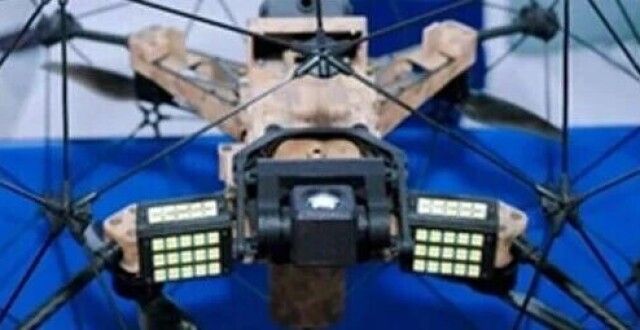
💡See how autonomous robotics startups are solving navigation challenges in GPS-denied environments.
⚡ 30-Second TL;DR
What Changed
Raised hundreds of millions of RMB in Series A1 funding
Why It Matters
This funding highlights the growing investor interest in embodied AI and autonomous robotics capable of operating in challenging, infrastructure-poor environments.
What To Do Next
Research SLAM (Simultaneous Localization and Mapping) techniques for edge-based navigation to improve your own robotics projects.
Key Points
- •Raised hundreds of millions of RMB in Series A1 funding
- •Total funding exceeds 500 million RMB in under two years
- •Focusing on P300 robots for GPS-denied and network-free environments
🧠 Deep Insight
Web-grounded analysis with 8 cited sources.
🔑 Enhanced Key Takeaways
- •Differential Robotics was founded in 2024.
- •In addition to the P300, the company also offers another industrial drone model, the P150.
- •Their core technology stack is built upon four pillars: Autonomous Navigation, Embodied Decision-making, End-to-End Control, and Swarm Intelligence.
- •The P300 autonomous flying robots have already been deployed across various regions in China, including Beijing, Zhejiang, Jiangsu, Tianjin, Jiangxi, Sichuan, and Yunnan, for industrial applications such as mining, forestry, chemical industries, construction, urban management, and emergency response.
- •The Series A1 funding round, completed in March 2026, was led by T-Capital, with participation from investors including Lenovo Capital and Incubator Group, Haitong Leading Private Equity Fund Management, and returning investors like Luminous Ventures, 5Y Capital, Oriental Fortune Capital, Meridian Capital, Shang Qi Capital, Shenzhen Capital Real Estate Fund, Long Capital, and Baidu Ventures.
🛠️ Technical Deep Dive
- The P300 and P150 drones utilize autonomous navigation systems powered by multi-sensor fusion and AI-based algorithms.
- Key capabilities include precise localization, real-time obstacle detection and avoidance, efficient exploration of unknown areas, and three-dimensional reconstruction.
- The P300 features a 50-megapixel wide-angle sensor, offering 4K full-color night vision and starlight night vision with up to 1.6 million ISO sensitivity for clear imaging in low-light conditions.
- It supports 11x continuous optical zoom and up to 176x hybrid zoom, enabling operators to maintain safe distances while capturing detailed visual data.
- The drone incorporates optical, electronic, and AI-based fog penetration technologies, which can boost clarity by up to 50% in rain or fog.
- It is equipped with 2 km laser rangefinding technology for precise measurement and target position marking.
- The P300 has an IP55 rating, providing protection against dust and water.
- The system is designed for all-weather active obstacle avoidance, utilizing forward-looking LiDAR and AI to detect and avoid obstacles beyond visible range.
- It offers ultra-long-range HD image transmission with a maximum communication range of 26 km.
- The core technology relies on a fully autonomous exploration algorithm, allowing independent flight without reliance on GPS signals or human intervention.
- Integrated AI algorithms provide an "intelligent brain" for autonomous decision-making with millisecond response times, facilitating effortless obstacle avoidance.
🔮 Future ImplicationsAI analysis grounded in cited sources
⏳ Timeline
📎 Sources (8)
Factual claims are grounded in the sources below. Forward-looking analysis is AI-generated interpretation.
Weekly AI Recap
Read this week's curated digest of top AI events →
👉Related Updates
AI-curated news aggregator. All content rights belong to original publishers.
Original source: Pandaily ↗