Didi AV Deepens AI, Hardware, Scenario Capabilities
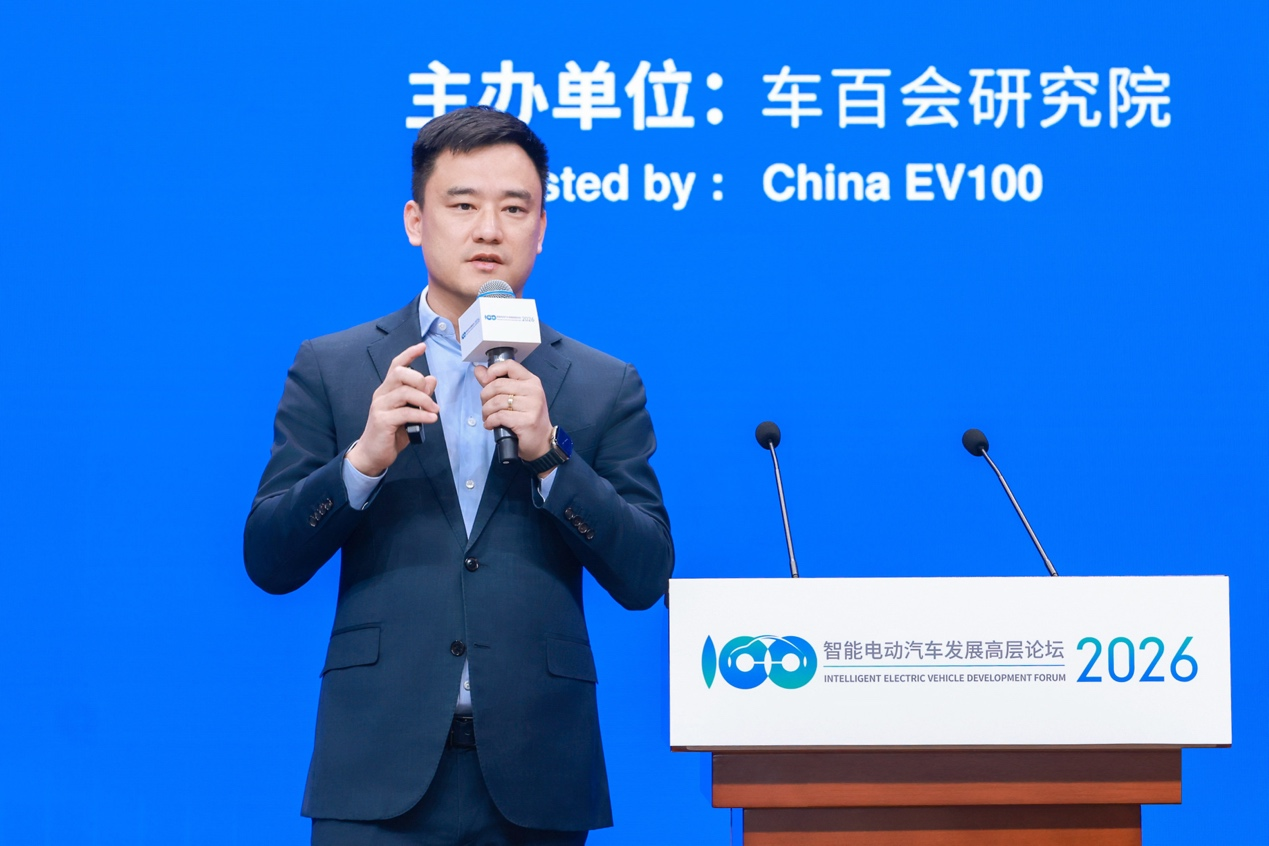
Didi's AV strategy triad (AI+hardware+scenarios) for sustained breakthroughs
30-Second TL;DR
What Changed
Focuses on three core capabilities: AI algorithms, hardware systems, and real-world scenarios
Why It Matters
Didi's strategy strengthens its position in China's competitive AV market, potentially accelerating safer L4 deployments and influencing global AV AI integration.
What To Do Next
Benchmark your AV AI models against Didi's scenario-optimized approaches for better real-world performance.
Key Points
- •Focuses on three core capabilities: AI algorithms, hardware systems, and real-world scenarios
- •Pursues continuous reinforcement of innovation breakthroughs
- •Upholds responsible approach to autonomous driving technology
Deep Insight
AI-generated analysis for this event — not the original article.
Enhanced Key Takeaways
- •Didi Autonomous Driving is leveraging its massive ride-hailing data pool to train 'World Models' that simulate complex urban traffic scenarios, significantly reducing the need for physical road testing.
- •The company has shifted toward a 'hardware-software integration' strategy, specifically developing custom computing platforms and sensor suites to optimize cost-efficiency for mass-market robotaxi deployment.
- •Didi is actively expanding its 'KargoBot' logistics business alongside passenger robotaxis, utilizing a unified autonomous driving stack to achieve economies of scale across different vehicle types.
Competitor Analysis
- Didi Autonomous Driving
- China (Urban Robotaxi/Logistics)
- Waymo
- USA (Urban Robotaxi)
- Pony.ai
- China/USA (Robotaxi/Trucking)
- Didi Autonomous Driving
- Massive ride-hailing fleet data
- Waymo
- High-fidelity mapping/simulation
- Pony.ai
- Specialized perception algorithms
- Didi Autonomous Driving
- Cost-optimized/In-house integration
- Waymo
- Premium/High-performance sensors
- Pony.ai
- Modular/OEM partnerships
| Feature | Didi Autonomous Driving | Waymo | Pony.ai |
|---|---|---|---|
| Primary Market | China (Urban Robotaxi/Logistics) | USA (Urban Robotaxi) | China/USA (Robotaxi/Trucking) |
| Data Advantage | Massive ride-hailing fleet data | High-fidelity mapping/simulation | Specialized perception algorithms |
| Hardware Strategy | Cost-optimized/In-house integration | Premium/High-performance sensors | Modular/OEM partnerships |
Technical Deep Dive
- •Architecture: Employs a transformer-based perception model that fuses LiDAR, high-resolution cameras, and millimeter-wave radar for 360-degree environmental awareness.
- •Compute: Utilizes high-performance automotive-grade SoCs (System-on-Chips) capable of handling multi-modal sensor fusion in real-time with low latency.
- •Simulation: Uses a proprietary cloud-based simulation platform that reconstructs real-world traffic scenarios from Didi's ride-hailing fleet data to perform millions of virtual miles daily.
- •Localization: Implements a multi-source fusion localization system combining GNSS, IMU, and HD map matching to maintain centimeter-level accuracy in dense urban environments.
Future ImplicationsAI analysis grounded in cited sources
Timeline
- 2016-01Didi Chuxing officially establishes its autonomous driving research team.
- 2019-08Autonomous driving division is upgraded to an independent company.
- 2020-06Didi launches its first public robotaxi pilot program in Shanghai.
- 2023-04Didi officially launches KargoBot, its autonomous freight business.
- 2025-01Didi announces the mass production of its next-generation autonomous vehicle platform.
Weekly AI Recap
Read this week's curated digest of top AI events →
AI-curated news aggregator. All content rights belong to original publishers.
Original source: 钛媒体 ↗
This is a summary, not the original. Read the source, or get the weekly briefing.
The weekly digest
One email a week. Unsubscribe anytime.