🐯虎嗅•Stalecollected in 27m
Desay SV HK IPO Fuels Robot Pivot
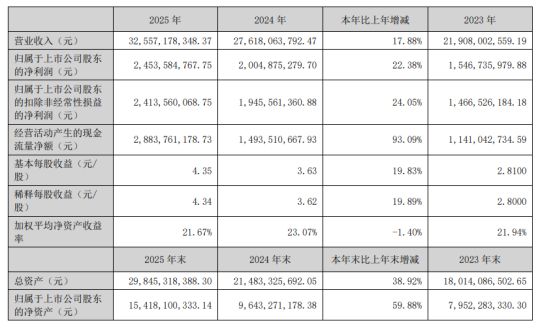
💡Car AI giant launches robot 'brain' hardware – embodied AI infra shift.
⚡ 30-Second TL;DR
What Changed
Auto smart cockpit/driving revenue grows slower (17.9%), margins slip to 19.1%; driving ASP drops 24%.
Why It Matters
Pivots car AI expertise to robotics, creating new embodied AI hardware options. HK listing boosts global reach, potentially accelerating robot ecosystem growth for practitioners.
What To Do Next
Contact Desay SV for AI Cube eval kits to prototype robot domain control.
Who should care:Developers & AI Engineers
🧠 Deep Insight
AI-generated analysis for this event.
🔑 Enhanced Key Takeaways
- •Desay SV's pivot to robotics leverages its existing supply chain dominance in automotive Tier-1 electronics, specifically utilizing its high-volume production capacity for domain controllers to achieve economies of scale in the robotics sector.
- •The HK IPO strategy is driven by a need to bypass domestic A-share regulatory constraints on capital allocation for international expansion, specifically targeting the establishment of R&D centers in Europe and North America to localize robot software stacks.
- •Market analysts note that the 24% drop in ASP for driving solutions is largely attributed to the aggressive price war among Chinese EV OEMs, forcing Desay SV to seek higher-margin applications in industrial automation and service robotics to stabilize overall corporate profitability.
📊 Competitor Analysis▸ Show
| Competitor | Feature Focus | Market Positioning | Key Benchmark |
|---|---|---|---|
| NVIDIA (Jetson) | High-performance AI compute | Global standard for robotics | TOPS/Watt efficiency |
| Horizon Robotics | Integrated SoC/Software | Automotive-to-robotics pivot | Cost-per-TOPS |
| DJI (Livox/RoboMaster) | Integrated hardware/sensors | Consumer/Industrial robotics | Vertical integration cost |
🛠️ Technical Deep Dive
- AI Cube Architecture: Utilizes a modular design based on the company's proprietary 'Aurora' domain controller platform, supporting heterogeneous computing (CPU+GPU+NPU).
- Safety Standards: Achieves ASIL-D certification by implementing redundant hardware paths and real-time OS (RTOS) partitioning, allowing safety-critical tasks to run alongside general-purpose AI workloads.
- S6 Platform: Features a multi-sensor fusion stack incorporating solid-state LiDAR, ultrasonic sensors, and monocular cameras, optimized for low-speed, unstructured environments (e.g., factory floors, warehouses).
- Software Stack: Leverages a middleware layer compatible with ROS 2 (Robot Operating System), facilitating rapid deployment for third-party developers.
🔮 Future ImplicationsAI analysis grounded in cited sources
Desay SV will achieve a 15% revenue contribution from non-automotive robotics by Q4 2027.
The company's aggressive capital deployment from the HK IPO into industrial robotics R&D suggests a strategic shift to diversify away from the saturated and price-sensitive automotive electronics market.
The S6 platform will face significant regulatory hurdles in the EU market.
As a Chinese-developed autonomous platform, the S6 will likely be subject to stringent data privacy and cybersecurity audits under the EU AI Act before widespread commercial deployment.
⏳ Timeline
2017-12
Desay SV completes its IPO on the Shenzhen Stock Exchange.
2021-06
Launch of the first-generation high-performance domain controller for L3 autonomous driving.
2023-09
Strategic announcement to expand into smart robotics and industrial automation sectors.
2025-03
Completion of a 44 billion CNY A-share private placement to fund smart cockpit and driving R&D.
📰
Weekly AI Recap
Read this week's curated digest of top AI events →
👉Related Updates
AI-curated news aggregator. All content rights belong to original publishers.
Original source: 虎嗅 ↗