๐Ÿ“ŠRecentcollected in 5m

DeepMind Alums Launch Visual AI Startup
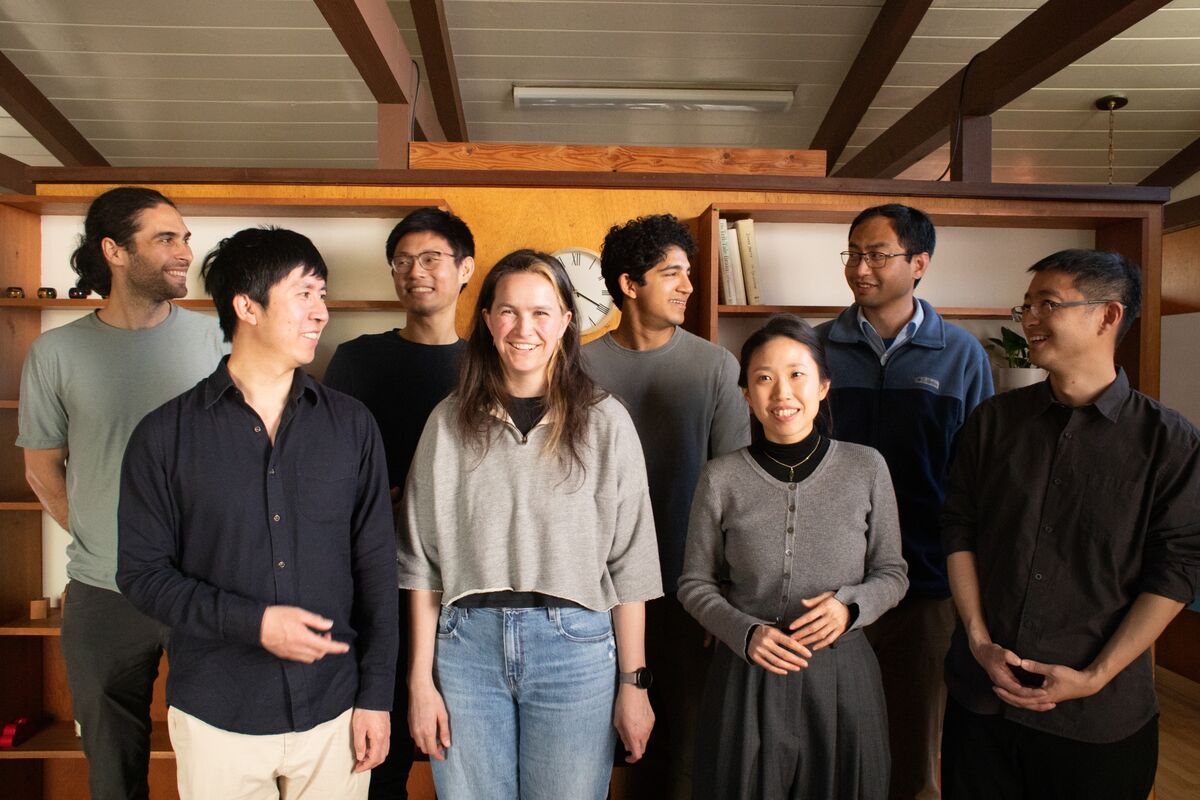
DeepMind Alums Launch Visual AI Startup
PostLinkedIn
๐Ÿ“ŠRead original on Bloomberg Technology
#startup#visual-reasoning#multimodalandrew-dai's-visual-ai-startup

๐Ÿ’กEx-DeepMind researcher launches visual AI startup, calls big models toddler-smart on visuals.

โšก 30-Second TL;DR

What Changed

Andrew Dai, former DeepMind researcher, starts visual AI startup.

Why It Matters

This startup signals investor interest in visual AI gaps, potentially accelerating competition beyond big labs. It may inspire practitioners to prioritize multimodal improvements.

What To Do Next

Benchmark your visual AI models against DeepMind alumni critiques on prompt understanding.

Who should care:Researchers & Academics

๐Ÿง  Deep Insight

AI-generated analysis for this event.

๐Ÿ”‘ Enhanced Key Takeaways

  • โ€ขThe startup, named 'VividSense AI', has secured $15 million in seed funding led by venture capital firm Andreessen Horowitz to focus on high-fidelity visual reasoning.
  • โ€ขAndrew Dai's approach diverges from standard transformer-based vision models by implementing a 'neuro-symbolic' architecture designed to reduce hallucination rates in spatial reasoning tasks.
  • โ€ขThe company is specifically targeting the industrial automation and robotics sectors, aiming to replace current vision systems that struggle with non-standardized, real-world environmental changes.
๐Ÿ“Š Competitor Analysisโ–ธ Show
FeatureVividSense AIOpenAI (GPT-4o)Google (Gemini 1.5 Pro)
Primary FocusIndustrial/Robotic Spatial ReasoningGeneral Purpose MultimodalGeneral Purpose Multimodal
ArchitectureNeuro-symbolicTransformer-basedTransformer-based
PricingEnterprise/API (Custom)Usage-based APIUsage-based API
Benchmark FocusReal-world spatial accuracyGeneral visual QAGeneral visual QA

๐Ÿ› ๏ธ Technical Deep Dive

  • โ€ขUtilizes a hybrid neuro-symbolic architecture that separates visual feature extraction from logical reasoning modules.
  • โ€ขImplements a proprietary 'Spatial-Temporal Graph' layer to maintain object permanence and relationship tracking across video frames.
  • โ€ขFocuses on 'low-latency inference' by optimizing the reasoning engine for edge deployment on NVIDIA Jetson hardware.
  • โ€ขTraining data pipeline emphasizes synthetic-to-real transfer learning to overcome the scarcity of annotated real-world industrial video datasets.

๐Ÿ”ฎ Future ImplicationsAI analysis grounded in cited sources

VividSense AI will achieve higher accuracy in industrial bin-picking tasks than current foundation models.
The neuro-symbolic architecture is specifically designed to handle spatial constraints that typically cause transformer-based models to hallucinate.
The startup will face significant challenges in scaling its model to general-purpose visual tasks.
Specialized architectures often lack the broad generalization capabilities found in large-scale, general-purpose foundation models.

โณ Timeline

2024-06
Andrew Dai departs Google DeepMind to begin independent research on visual reasoning.
2025-03
VividSense AI is incorporated in San Francisco.
2026-02
Company closes $15 million seed funding round led by Andreessen Horowitz.
๐Ÿ“ฐ

Weekly AI Recap

Read this week's curated digest of top AI events โ†’

๐Ÿ‘‰Related Updates

AI-curated news aggregator. All content rights belong to original publishers.
Original source: Bloomberg Technology โ†—