🕸️LangChain Blog•Freshcollected in 14h
Debug AI Agents with Better Observability
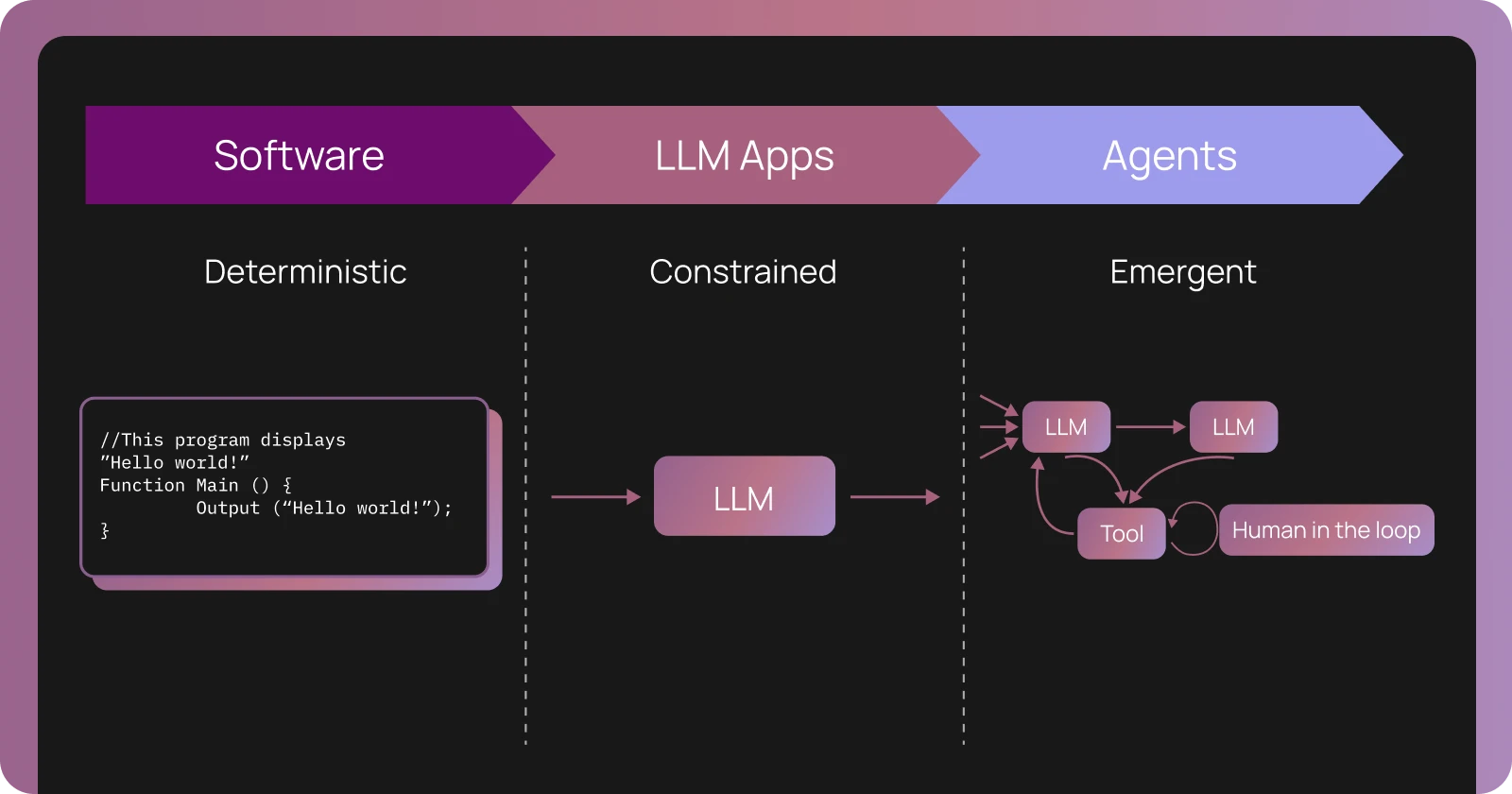
💡See how tracing agent reasoning turns opaque failures into actionable debugging data.
⚡ 30-Second TL;DR
What Changed
Tracing provides visibility into how an agent reaches an outcome.
Why It Matters
Better debugging practices can help developers distinguish model issues from tool, prompt, or workflow failures. This makes agent development more measurable and reduces guesswork during iteration.
What To Do Next
Create a LangSmith trace review checklist that records the agent's reasoning path, tool calls, failure cause, and final outcome for each failed run.
Who should care:Developers & AI Engineers
Key Points
- •Tracing provides visibility into how an agent reaches an outcome.
- •Debugging agent reasoning helps teams investigate unexpected behavior.
- •Performance insights enable faster iteration on agent quality and reliability.
🧠 Deep Insight
AI-generated analysis for this event.
🔑 Enhanced Key Takeaways
- •Observability platforms now integrate automated 'evals' (evaluations) that run alongside traces to score agentic outputs against ground-truth datasets in real-time.
- •Modern tracing frameworks utilize OpenTelemetry standards to ensure interoperability between LLM-based agents and traditional microservices infrastructure.
- •Cost-per-trace analysis has become a critical observability metric, allowing developers to identify specific reasoning loops or redundant tool calls that inflate token consumption.
- •Advanced observability tools now support 'human-in-the-loop' intervention, allowing developers to pause, inspect, and modify agent state mid-execution during debugging sessions.
- •Context window visualization has emerged as a key feature, enabling developers to see exactly which retrieved documents or previous turns are contributing to hallucinations.
📊 Competitor Analysis▸ Show
| Feature | LangSmith (LangChain) | Arize Phoenix | Weights & Biases Prompts |
|---|---|---|---|
| Tracing | Deep integration with LangChain | Framework agnostic | Model-centric focus |
| Pricing | Usage-based (Free tier available) | Enterprise/Usage-based | Tiered/Enterprise |
| Benchmarks | Built-in evaluation datasets | Advanced drift detection | Experiment tracking focus |
🛠️ Technical Deep Dive
- Tracing implementation typically relies on capturing span data for every LLM call, tool invocation, and retrieval step.
- Data is often serialized into JSON formats compatible with OTLP (OpenTelemetry Protocol) for ingestion into backend analytics engines.
- Asynchronous logging is preferred to prevent observability overhead from increasing agent latency.
- State management involves capturing the full 'memory' object or conversation history at each step to allow for deterministic replay of agent failures.
- Vector database query logging is used to correlate retrieval accuracy with final agent output quality.
🔮 Future ImplicationsAI analysis grounded in cited sources
Observability will shift from reactive debugging to proactive self-healing agents.
Real-time performance insights will allow agents to automatically adjust their own system prompts or tool selection strategies when error rates exceed defined thresholds.
Standardized observability protocols will replace proprietary vendor formats.
The industry is trending toward OpenTelemetry-based standards to avoid vendor lock-in as agentic workflows become more complex and multi-modal.
⏳ Timeline
2023-09
LangChain launches LangSmith in private beta to provide observability for LLM applications.
2024-01
LangSmith moves to general availability, introducing features for testing and evaluation.
2024-06
LangChain introduces 'LangGraph' to support complex, cyclic agentic workflows, necessitating deeper observability.
2025-03
LangSmith integrates advanced automated evaluation pipelines for production monitoring.
📰
Weekly AI Recap
Read this week's curated digest of top AI events →
👉Related Updates
AI-curated news aggregator. All content rights belong to original publishers.
Original source: LangChain Blog ↗