Daina Tech Raises $14M for AI Labs
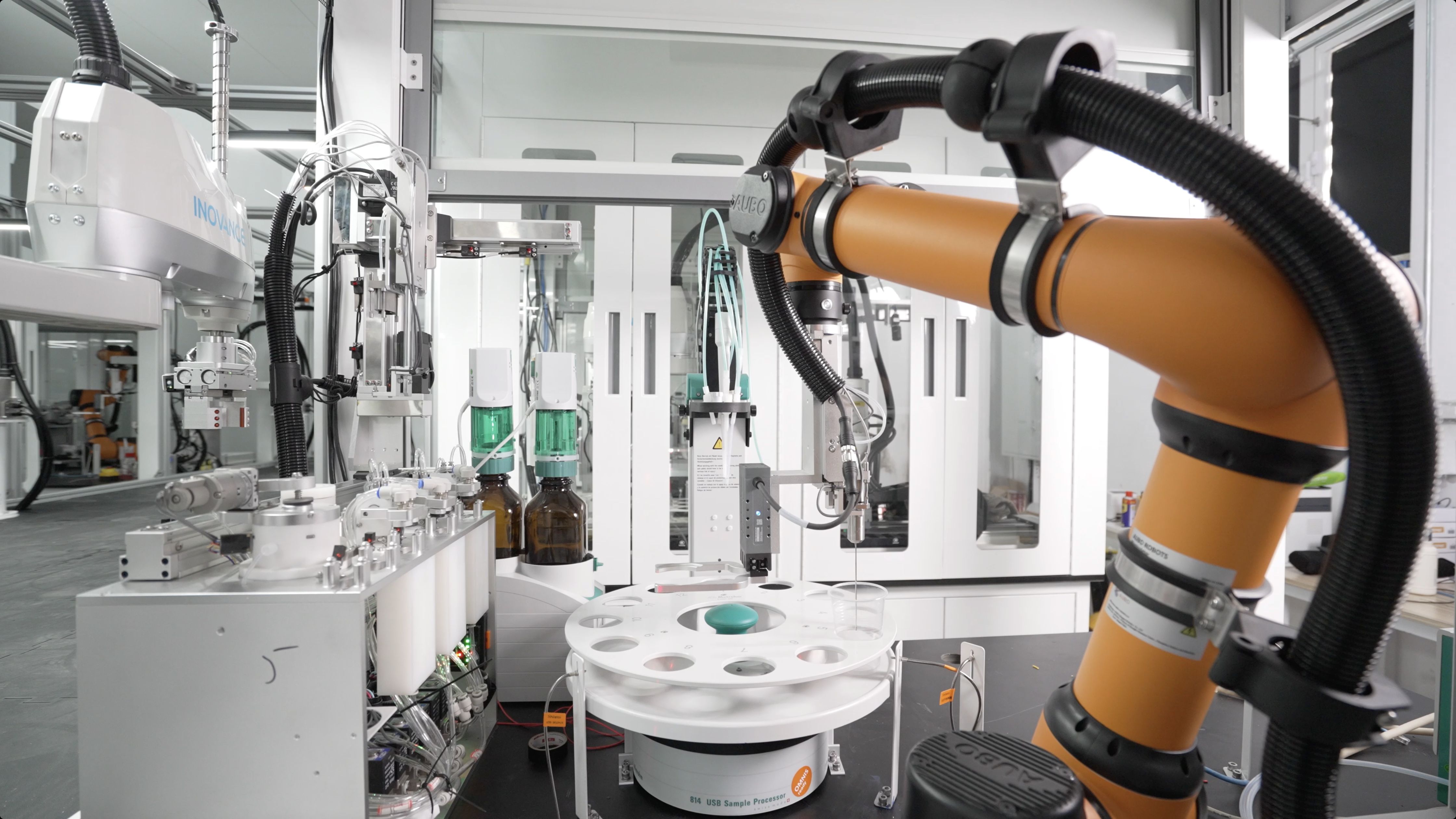
China's 100% AI unmanned labs raise $14M: game-changer for AI4S infra
30-Second TL;DR
What Changed
Near 100M RMB B+ round led by Beijing New Materials Fund
Why It Matters
Boosts China's AI4S infrastructure, enabling scalable wet lab data for model training and breaking research silos. Positions Daina as global leader in lab automation.
What To Do Next
Contact Daina Tech to demo Black Lamp Lab for your AI4S wet experiments.
Key Points
- •Near 100M RMB B+ round led by Beijing New Materials Fund
- •100% delivery of fully unmanned Black Lamp Labs in China
- •Self-evolving AI via visual recognition and error correction
- •Clients include CNPC, Sinopec, Unilever, and SABIC
- •Plans for new materials CRO platform with Beijing Chem Univ
Deep Insight
AI-generated analysis for this event — not the original article.
Enhanced Key Takeaways
- •Daina Tech's 'Black Lamp' labs utilize a proprietary 'AI-driven closed-loop' system that integrates automated synthesis, characterization, and data analysis to reduce new material R&D cycles by approximately 70% compared to traditional manual methods.
- •The company has transitioned from a pure software provider to an integrated hardware-software solution, specifically focusing on the 'AI for Science' (AI4S) vertical to address bottlenecks in chemical formulation and material discovery.
- •The partnership with Beijing University of Chemical Technology (BUCT) aims to establish a standardized, high-throughput screening platform that bridges the gap between academic research and industrial-scale commercialization.
Competitor Analysis
- Daina Tech (Black Lamp)
- Fully Unmanned (Closed-loop)
- Traditional CROs
- Manual/Semi-automated
- AI-Native Material Startups
- Variable (Hybrid)
- Daina Tech (Black Lamp)
- Native (Self-evolving)
- Traditional CROs
- Limited/External
- AI-Native Material Startups
- High (Model-centric)
- Daina Tech (Black Lamp)
- New Materials/Chemicals
- Traditional CROs
- Broad Pharma/Chem
- AI-Native Material Startups
- Specific Material Classes
- Daina Tech (Black Lamp)
- Project-based/Subscription
- Traditional CROs
- Fee-for-service
- AI-Native Material Startups
- Licensing/Equity/Project
| Feature | Daina Tech (Black Lamp) | Traditional CROs | AI-Native Material Startups |
|---|---|---|---|
| Lab Automation | Fully Unmanned (Closed-loop) | Manual/Semi-automated | Variable (Hybrid) |
| AI Integration | Native (Self-evolving) | Limited/External | High (Model-centric) |
| Focus | New Materials/Chemicals | Broad Pharma/Chem | Specific Material Classes |
| Pricing Model | Project-based/Subscription | Fee-for-service | Licensing/Equity/Project |
Technical Deep Dive
• System Architecture: Employs a modular 'Black Lamp' unit design, allowing for scalable, parallelized experimentation. • Visual Recognition: Utilizes computer vision algorithms for real-time monitoring of chemical reactions, enabling automated error detection and process adjustment without human intervention. • Data Pipeline: Implements a proprietary data-cleaning and standardization layer that converts raw sensor data from lab equipment into structured datasets for model training. • AI Model: Leverages deep learning frameworks optimized for small-data scenarios, common in material science, to predict material properties and optimize experimental parameters.
Future ImplicationsAI analysis grounded in cited sources
Timeline
- 2021-05Daina Tech founded with a focus on AI for material science.
- 2023-02Launch of the first generation of 'Black Lamp' unmanned lab prototypes.
- 2024-08Secured strategic partnerships with major chemical conglomerates including CNPC and Sinopec.
- 2026-04Closed B+ funding round led by Beijing New Materials Fund.
Weekly AI Recap
Read this week's curated digest of top AI events →
AI-curated news aggregator. All content rights belong to original publishers.
Original source: 36氪 ↗
This is a summary, not the original. Read the source, or get the weekly briefing.
The weekly digest
One email a week. Unsubscribe anytime.