Cuban Predicts Humanoid Robots Fail in 10 Years
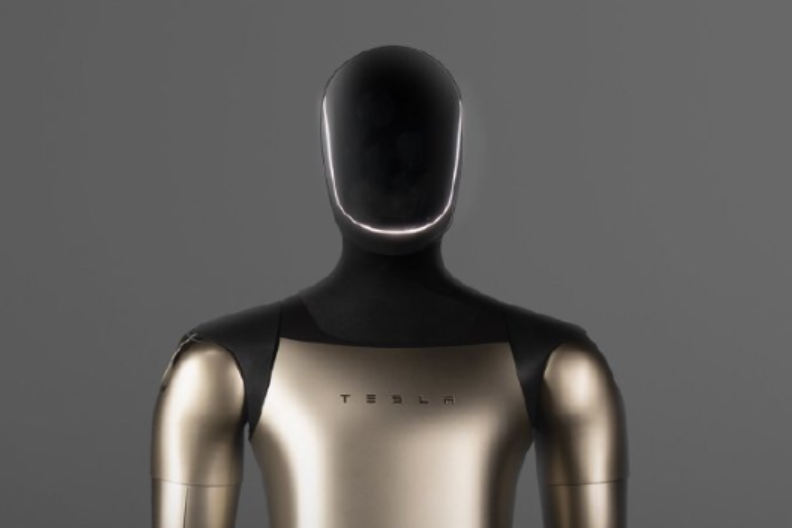
💡Cuban's investor bear case challenges humanoid robot hype (Tesla Optimus, Figure AI)
⚡ 30-Second TL;DR
What Changed
Mark Cuban skeptical of humanoid robot hype sustainability
Why It Matters
Cuban's view may dampen investor enthusiasm for humanoid robot startups like Figure or Tesla Optimus, redirecting capital to alternative AI embodiments.
What To Do Next
Assess humanoid robot demos from Tesla Optimus and Figure for viability flaws Cuban highlights.
Key Points
- •Mark Cuban skeptical of humanoid robot hype sustainability
- •Predicts 5-10 year maximum lifecycle for products
- •Expects humanoid robots to ultimately fail
- •Optimistic on broader human-machine coexistence
🧠 Deep Insight
Background and context from public sources — not the original article. 13 sources cited.
🔑 Enhanced Key Takeaways
- •Cuban's skepticism is rooted in the 'Milli Vanilli Effect,' a theory he proposed in mid-2025 suggesting that as AI and robotics become indistinguishable from reality, economic value will paradoxically shift back to 'face-to-face' (f2f) human experiences.
- •He identifies a 'Reliability Wall' in current humanoid deployments, noting that while 2025 pilots at firms like BMW and Amazon were successful in controlled demos, the robots still require human intervention every 30 to 90 minutes, failing the 99% uptime requirement for industrial scaling.
- •Cuban argues that 'Hardware Debt'—the compounding cost of maintaining complex bipedal joints and high-torque actuators—will make humanoid robots financially inferior to 'polyfunctional' wheeled robots that offer 8+ hours of continuous operation.
📊 Competitor Analysis▸ Show
| Feature | Tesla Optimus (Gen 2/3) | Figure AI (Figure 02) | Agility Robotics (Digit) |
|---|---|---|---|
| Est. Runtime | 4-5 Hours | 2-3 Hours | 90 Minutes |
| Primary Pilot | Tesla Internal Plants | BMW (Spartanburg) | Amazon / GXO |
| Form Factor | Bipedal (Human-like) | Bipedal (Human-like) | Bipedal (Digitigrade) |
| Key Tech Focus | High-nickel battery | Neural vision / OpenAI | Fast-swap battery systems |
🛠️ Technical Deep Dive
- •Energy Density Constraint: Humanoid robots are limited to approximately 1/8th of their total mass for battery storage to maintain center-of-gravity stability, restricting dynamic runtime to a 2-4 hour window.
- •Thermal Management: High-power discharges required for bipedal balancing cause battery temperatures to spike near 100°C during peak activity, necessitating aggressive thermal throttling that reduces task efficiency.
- •Actuator Durability: Current humanoid hands attempting 22+ Degrees of Freedom (DoF) exhibit a mean time between failure (MTBF) of less than 500 hours, leading to the '5-year failure' prediction for complex consumer models.
- •Cycle Life Gap: Industrial humanoids currently achieve ~200 battery cycles under heavy load, significantly below the 600+ cycles required for a positive Return on Investment (ROI).
🔮 Future ImplicationsAI analysis grounded in cited sources
⏳ Timeline
📎 Sources (13)
Factual claims are grounded in the sources below. Forward-looking analysis is AI-generated interpretation.
Weekly AI Recap
Read this week's curated digest of top AI events →
👉Related Updates
AI-curated news aggregator. All content rights belong to original publishers.
Original source: cnBeta (Full RSS) ↗
This is a summary, not the original. Read the source, or get the weekly briefing.
The weekly digest
One email a week. Unsubscribe anytime.