Creality IPO Amid Bambu Lab Competition
💡GenAI transforms 3D printing market: Creality IPO reveals Bambu disruption
⚡ 30-Second TL;DR
What Changed
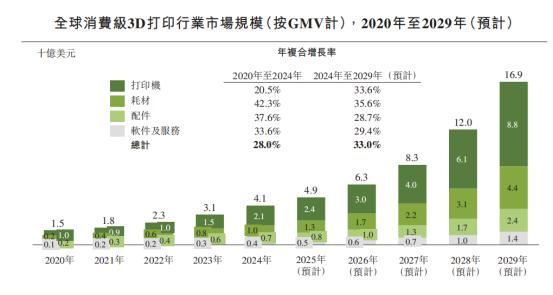
Third HK IPO filing, revenue CAGR 32.4% to 31.3B RMB in 2025
Why It Matters
Highlights genAI's role in democratizing 3D printing, pressuring incumbents like Creality to innovate beyond price wars. Overseas expansion and consumables offer resilience amid competition.
What To Do Next
Integrate genAI text-to-3D modeling APIs into your design tools for consumer apps.
Key Points
- •Third HK IPO filing, revenue CAGR 32.4% to 31.3B RMB in 2025
- •3D printer sales drop 12% despite ASP rise, market share to 16.9%
- •Bambu Lab surges with X1, capturing 29% shipment share in 2024
- •GenAI and ecosystems drive shift from hardware to software/consumables profits
🧠 Deep Insight
AI-generated analysis for this event — not the original article.
🔑 Enhanced Key Takeaways
- •Creality's IPO strategy is heavily focused on diversifying revenue streams through 'Creality Cloud,' an integrated ecosystem that aims to monetize user-generated content and AI-assisted model generation to combat hardware commoditization.
- •The company has faced significant supply chain restructuring costs in 2025, as it attempts to move manufacturing capacity to Southeast Asia to mitigate potential geopolitical trade risks and tariffs affecting exports to North American markets.
- •Internal reports indicate Creality is pivoting its R&D budget toward 'plug-and-play' automation features, specifically targeting the professional 'prosumer' segment to reclaim market share lost to Bambu Lab's high-speed, sensor-heavy printer architecture.
📊 Competitor Analysis▸ Show
| Feature | Creality (K1 Series) | Bambu Lab (X1/P1 Series) | Prusa Research (MK4) |
|---|---|---|---|
| Primary Focus | Budget/Mid-range Value | High-speed/Ease-of-use | Reliability/Open Source |
| Speed (Max) | 600 mm/s | 500 mm/s | 200 mm/s |
| Ecosystem | Creality Cloud (Closed) | Bambu Studio (Closed) | PrusaSlicer (Open) |
| Pricing Strategy | Aggressive/Discount-heavy | Premium/Feature-driven | Premium/Support-driven |
🛠️ Technical Deep Dive
- •Creality's recent hardware iterations utilize a proprietary 'CR-Touch' auto-leveling sensor combined with strain-gauge nozzle probing to achieve first-layer accuracy without manual calibration.
- •The K1 series architecture employs a CoreXY motion system with a lightweight print head assembly (under 600g) to minimize inertia and support high-acceleration printing (up to 20,000 mm/s²).
- •Integration of AI-based failure detection relies on onboard LiDAR and camera-based computer vision, which compares real-time print data against the sliced G-code to identify 'spaghetti' failures or layer shifts.
🔮 Future ImplicationsAI analysis grounded in cited sources
⏳ Timeline
Weekly AI Recap
Read this week's curated digest of top AI events →
👉Related Updates
AI-curated news aggregator. All content rights belong to original publishers.
Original source: 36氪 ↗
This is a summary, not the original. Read the source, or get the weekly briefing.
The weekly digest
One email a week. Unsubscribe anytime.