Could the Universe Evolve Like Life?
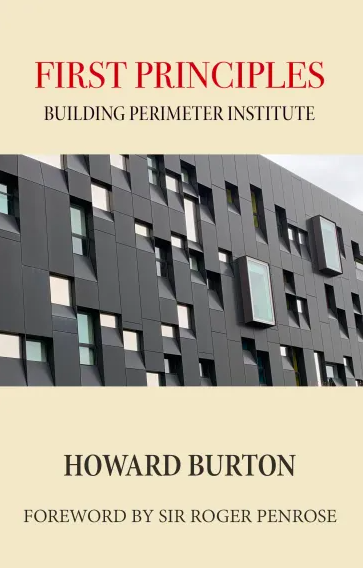
💡A provocative look at whether AI-inspired theories could reshape how researchers explain the universe.
⚡ 30-Second TL;DR
What Changed
Cosmological evolution proposes that universes reproduce and inherit small variations from progenitors.
Why It Matters
For AI researchers, the article illustrates how neural networks may serve not only as predictive tools but also as sources of conceptual inspiration in fundamental science. However, cosmological evolution remains speculative and outside mainstream astrophysics.
What To Do Next
Review recent machine-learning-for-science papers and test whether representation-learning methods can uncover interpretable patterns in open astronomical datasets.
Key Points
- •Cosmological evolution proposes that universes reproduce and inherit small variations from progenitors.
- •Natural selection could theoretically favor universes that generate more descendant universes.
- •A nontraditional researcher, poet Julian Gough, gained attention through predictions linked to new astronomical observations.
- •The article connects deep neural networks with the possibility of discovering new scientific theories.
🧠 Deep Insight
AI-generated analysis for this event.
🔑 Enhanced Key Takeaways
- •The theory of Cosmological Natural Selection (CNS), also known as the Fecund Universe hypothesis, was originally proposed by physicist Lee Smolin in the early 1990s, predating recent popular interest.
- •Smolin's hypothesis specifically posits that black holes serve as the mechanism for universe reproduction, where the physical constants of the 'offspring' universe are slightly mutated from the parent.
- •Julian Gough's recent contributions involve a speculative framework suggesting that the universe may possess a form of 'computational' or 'informational' memory, which he links to the emergence of complexity.
- •Recent JWST observations of early, massive galaxies have challenged the standard Lambda-CDM cosmological model, providing the empirical tension that allows alternative theories like CNS to gain renewed academic scrutiny.
- •The integration of machine learning in this context refers to 'symbolic regression' and AI-driven pattern recognition, which researchers are using to derive physical laws from massive astronomical datasets without human-imposed biases.
🛠️ Technical Deep Dive
- Cosmological Natural Selection (CNS) relies on the assumption that the parameters of the Standard Model of particle physics are not fundamental but are determined by the physics of black hole singularities.
- The mechanism requires that the transition from a collapsing star to a new universe involves a 'bounce' (Big Bounce) rather than a mathematical singularity, preserving information through the transition.
- Machine learning applications in this field utilize neural symbolic architectures to identify invariant relationships in high-dimensional cosmological data, effectively automating the discovery of conservation laws.
- The fitness function in this Darwinian model is defined as the number of black holes a universe produces, which is directly correlated with the longevity and star-forming capacity of that universe.
🔮 Future ImplicationsAI analysis grounded in cited sources
⏳ Timeline
Weekly AI Recap
Read this week's curated digest of top AI events →
👉Related Updates

AI-curated news aggregator. All content rights belong to original publishers.
Original source: 虎嗅 ↗