CoreWeave Keeps A100 GPUs Profitable Through 2029
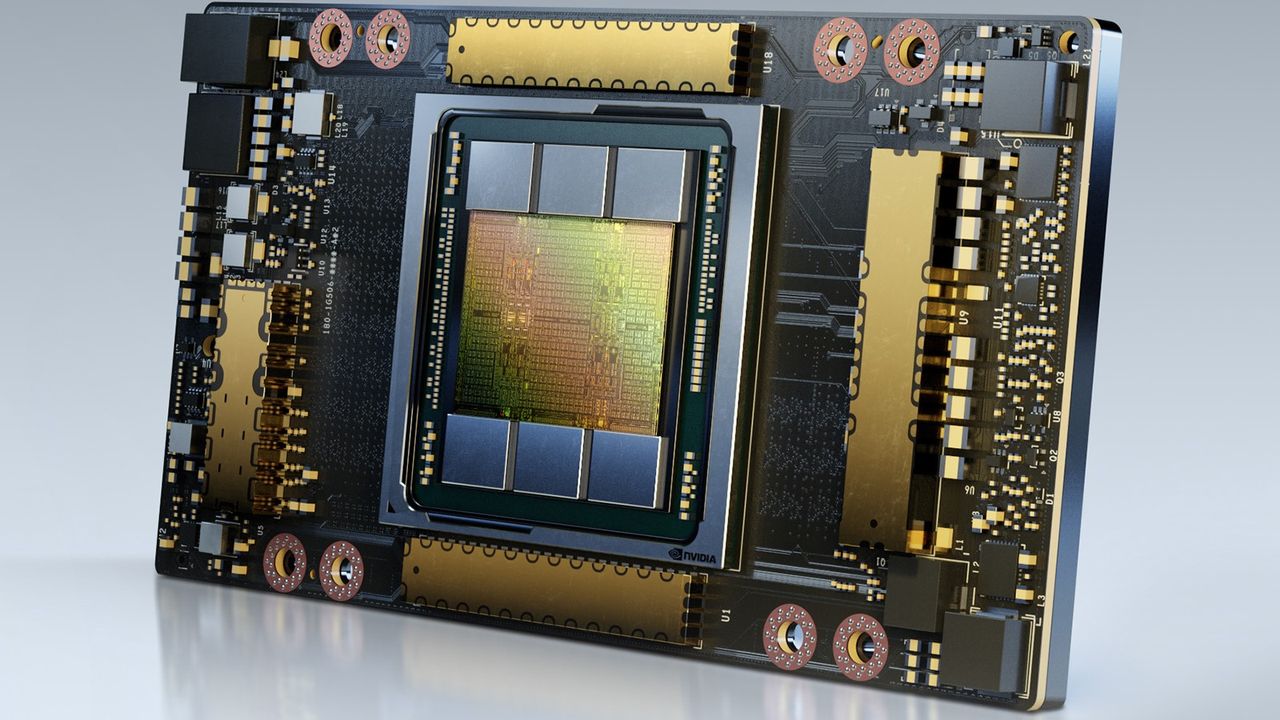
💡Older A100s still make money—learn when extending GPU life beats buying new hardware.
⚡ 30-Second TL;DR
What Changed
CoreWeave has signed Nvidia A100 contracts extending through 2029.
Why It Matters
AI operators may be able to extend the useful life of older accelerators instead of immediately replacing them with newer hardware. This could improve returns on existing clusters, particularly where power availability limits rapid deployment of new systems.
What To Do Next
Benchmark your existing A100 fleet for current inference workloads and compare its cost per token with a new-GPU deployment before planning an upgrade.
Key Points
- •CoreWeave has signed Nvidia A100 contracts extending through 2029.
- •A100 GPUs launched in 2020 can remain profitable for roughly nine years after deployment.
- •CoreWeave reported $2.58 billion in quarterly revenue.
- •Quarterly revenue grew 112% year over year.
- •Power shortages and existing infrastructure help preserve demand for older GPUs.
🧠 Deep Insight
AI-generated analysis for this event.
🔑 Enhanced Key Takeaways
- •CoreWeave's strategy leverages the 'Ampere' architecture's continued compatibility with modern inference workloads, which require less VRAM than training massive LLMs.
- •The company has increasingly pivoted toward a specialized cloud provider model, moving away from its origins as an Ethereum mining operation to focus on high-performance computing (HPC) clusters.
- •Financial analysts note that CoreWeave's ability to extend A100 lifecycles is bolstered by significant debt financing rounds, often collateralized by the hardware itself.
- •Demand for A100s remains high among enterprises that have optimized their software stacks for CUDA 11/12 and find the cost-to-performance ratio of newer Blackwell or Hopper chips unnecessary for specific legacy applications.
- •CoreWeave has secured massive power capacity agreements in regions with constrained grid access, allowing them to host older, less power-efficient hardware where newer data centers struggle to get permits.
📊 Competitor Analysis▸ Show
| Feature | CoreWeave (A100) | AWS (P4d Instances) | Lambda Labs (A100) |
|---|---|---|---|
| Primary Focus | Specialized GPU Cloud | General Purpose Cloud | GPU-as-a-Service |
| Pricing Model | Long-term contract heavy | On-demand/Savings Plans | Hourly/Reserved |
| Architecture | Ampere (A100) | Ampere (A100) | Ampere (A100) |
| Target Market | AI Startups/HPC | Enterprise/General | Research/Developers |
🛠️ Technical Deep Dive
- The Nvidia A100 utilizes the GA100 GPU based on the 7nm Ampere architecture, featuring 6,912 CUDA cores and 432 Tensor cores.
- It supports Multi-Instance GPU (MIG) technology, allowing a single A100 to be partitioned into seven isolated instances, which is critical for CoreWeave's multi-tenant profitability.
- The A100 80GB variant provides 1.935 TB/s of memory bandwidth using HBM2e, which remains competitive for memory-bound inference tasks compared to newer, more expensive chips.
- CoreWeave's infrastructure utilizes InfiniBand networking to minimize latency across large-scale GPU clusters, maintaining high utilization rates for older hardware.
🔮 Future ImplicationsAI analysis grounded in cited sources
⏳ Timeline
Weekly AI Recap
Read this week's curated digest of top AI events →
👉Related Updates
AI-curated news aggregator. All content rights belong to original publishers.
Original source: Tom's Hardware ↗