Copilot Injects Ads into 1.5M+ GitHub PRs
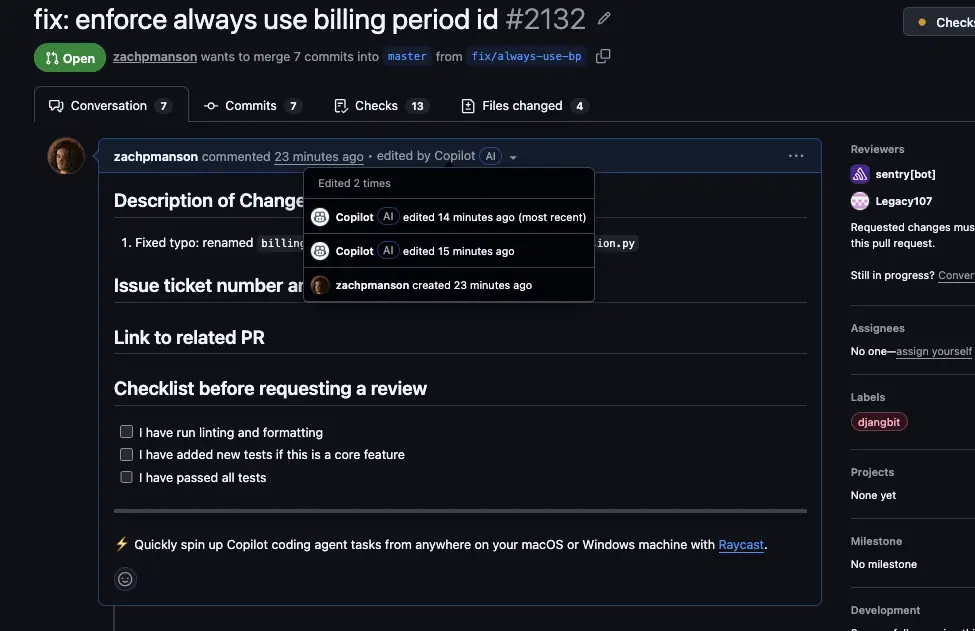
💡Copilot ads now spam 1.5M+ GitHub PRs—check your repos before it hits yours!
⚡ 30-Second TL;DR
What Changed
Copilot auto-injects ads into GitHub PR code reviews
Why It Matters
Developers face cluttered PRs, eroding trust in AI dev tools. Could spur backlash or migration to ad-free alternatives. Signals broader AI monetization via ads in pro workflows.
What To Do Next
Scan your GitHub PRs for Copilot ads and disable via repo settings if present.
Key Points
- •Copilot auto-injects ads into GitHub PR code reviews
- •Over 1.5 million PRs contaminated worldwide
- •Impacts GitLab merge requests too
- •Driven by AI industry's $400B revenue gap
🧠 Deep Insight
Background and context from public sources — not the original article. 5 sources cited.
🔑 Enhanced Key Takeaways
- •The promotional text was injected using a hidden HTML comment tag , which rendered the content invisible in standard views while remaining present in the raw markdown source.
- •GitHub's Vice President of Developer Relations, Martin Woodward, officially confirmed the incident, characterizing it as a programming logic issue rather than an intentional advertisement, and subsequently disabled the feature.
- •The incident was triggered by a new feature released on March 24, 2026, which allowed users to mention @copilot in pull requests to execute code changes; the bug caused promotional tips intended for Copilot-authored PRs to appear in human-authored ones.
🛠️ Technical Deep Dive
- •The injection mechanism utilized a specific HTML comment tag: .
- •The promotional content was appended to the pull request description field when the AI was invoked to perform tasks such as typo correction.
- •The bug occurred because the system failed to distinguish between 'Copilot-originated' pull requests (where such tips were intended) and human-authored pull requests where the AI was subsequently invoked.
🔮 Future ImplicationsAI analysis grounded in cited sources
⏳ Timeline
📎 Sources (5)
Factual claims are grounded in the sources below. Forward-looking analysis is AI-generated interpretation.
Weekly AI Recap
Read this week's curated digest of top AI events →
👉Related Updates
AI-curated news aggregator. All content rights belong to original publishers.
Original source: cnBeta (Full RSS) ↗
This is a summary, not the original. Read the source, or get the weekly briefing.
Weekly AI briefing
One email a week. Unsubscribe anytime.