SourcecnBeta (Full RSS)•Stalecollected in 71m
College Grads Hate AI Most Paradox
#ai-adoption#gen-z#survey-datachatgptchatgptpew-researchgallup
💡AI hate peaks among grads despite heavy youth usage—key for adoption
⚡ 30-Second TL;DR
What Changed
College graduates identified as most anti-AI group
Why It Matters
Reveals adoption-resentment gap in educated youth, key AI user base. Founders should address job fears in marketing to grads.
What To Do Next
Review Gallup's full 'Z Gen Voices: AI Paradox' report for user sentiment strategies.
Who should care:Marketers & Content Teams
Key Points
- •College graduates identified as most anti-AI group
- •Pew: 54% US teens use ChatGPT for academics
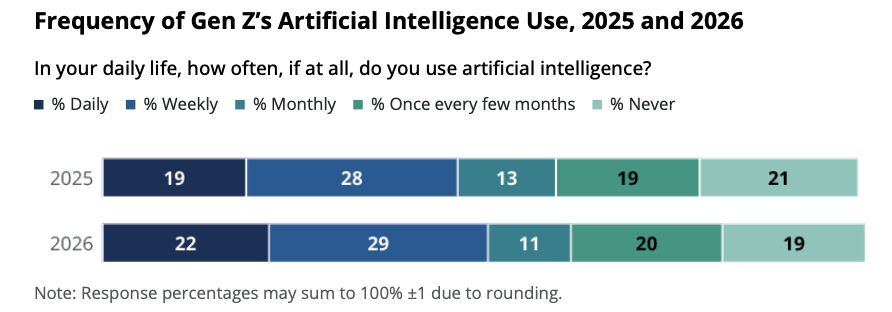
- •Gallup: 51% Z gen (14-29) use AI daily/weekly
- •AI paradox among internet-native youth
🧠 Deep Insight
AI-generated analysis for this event — not the original article.
🔑 Enhanced Key Takeaways
- •Research indicates that college graduates' skepticism is largely driven by concerns over 'credential devaluation,' where AI-generated content is perceived to undermine the labor market value of their specialized degrees.
- •Sociological studies suggest a 'competence-threat' mechanism, where highly educated individuals are more likely to perceive AI as a direct competitor to their cognitive labor, unlike younger cohorts who view it as a productivity tool.
- •Data reveals a significant divide in AI adoption based on field of study: STEM graduates report higher integration of AI tools in their workflows compared to Humanities graduates, who express higher levels of ethical and existential concern.
🔮 Future ImplicationsAI analysis grounded in cited sources
Higher education institutions will shift assessment models toward proctored, non-digital environments.
To combat AI-driven academic integrity issues and address graduate skepticism, universities are increasingly prioritizing in-person, handwritten, or oral examinations.
AI-literacy certifications will become a standard requirement for post-graduate employment.
Employers are responding to the anti-AI sentiment among graduates by formalizing AI-training programs to bridge the gap between academic skepticism and workplace necessity.
⏳ Timeline
2022-11
Public release of ChatGPT triggers widespread academic integrity debates.
2023-05
Initial surveys reveal a sharp divide in AI sentiment between Gen Z and older, highly educated demographics.
2024-09
Major universities release formal guidelines on AI usage, highlighting the tension between academic rigor and tool adoption.
2025-03
Gallup and Pew release longitudinal data confirming the persistence of the 'AI paradox' among college-educated cohorts.
📰
Weekly AI Recap
Read this week's curated digest of top AI events →
👉Related Updates
AI-curated news aggregator. All content rights belong to original publishers.
Original source: cnBeta (Full RSS) ↗
This is a summary, not the original. Read the source, or get the weekly briefing.
The weekly digest
One email a week. Unsubscribe anytime.